Bus passenger volume forecast to increase by 30% if tickets are free
Ho Chi Minh City once had a "golden age" of buses in 2012 with more than 413 million passengers. However, after this milestone, public passenger transport by bus began to enter a prolonged decline cycle. By 2019, the number of passengers was only about 195 million and fell to a record low of 47 million in 2021 due to the impact of the COVID-19 pandemic. In recent years, although there have been signs of recovery, output has not been able to exceed the 100 million passengers/year mark.
Meanwhile, a survey by the consulting unit preparing the Traffic Emission Control Project shows that motorbikes account for about 81% of the total daily trips. Personal cars are also increasing rapidly, with about 1.5 million trips/day. The demand for bus travel has decreased sharply, equivalent to the level of 2003, although the population size has nearly doubled. This trend reflects the increasing dependence on personal vehicles - a direct cause of increased congestion and environmental pollution.
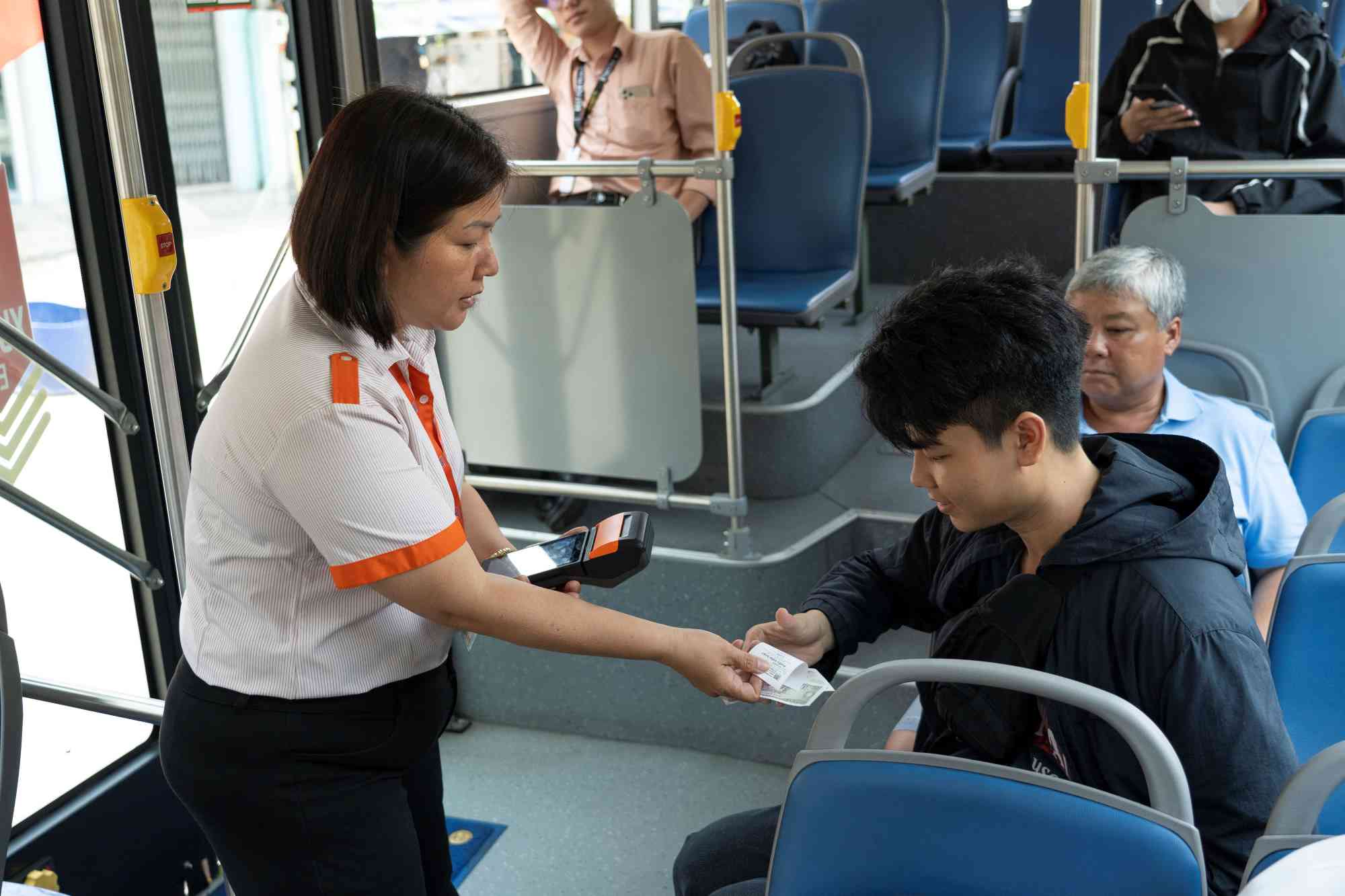
Mr. Bui Hoa An - Deputy Director of Ho Chi Minh City Department of Construction - informed that the plan to exempt all-people buses is being completed to be submitted to the Ho Chi Minh City People's Council for consideration at the meeting at the end of April. Currently, the entire system has about 179 routes with more than 2,100 vehicles, of which 1,301 are electric buses, accounting for about 62% of the vehicle fleet.
The free option is expected to be applied to all inter-provincial bus routes (about 135 routes), including both subsidized and non-subsidized routes. Inter-provincial routes, due to differences in financial mechanisms and operation, are not yet subject to consideration.
Currently, the city budget spends about 1,500 billion VND per year to subsidize buses. If completely free, the estimated cost will increase by about 7,000 billion VND/year. However, according to the assessment of the Department of Construction, the number of passengers may increase by about 30% compared to 2025.
The Ho Chi Minh City bus system is only operating at less than 50% capacity, so there is still room to meet demand. In case demand increases sharply, the city will adjust the scale of the bus fleet and operating frequency, especially on routes connecting schools and industrial parks - places with high travel demand.
Costs today, savings tomorrow
According to calculations by the Department of Construction, traffic congestion causes Ho Chi Minh City to lose about 6 billion USD/year (more than 140,000 billion VND), including lost time, fuel costs, production and business interruptions and many other indirect losses. In addition, research by the consulting unit preparing the Ho Chi Minh City Traffic Emission Control Project shows that air pollution from traffic causes economic damage of more than 3,000 billion VND/year.
In this context, the expenditure of about 7,000 billion VND to exempt buses is only a small part compared to the total "hidden cost" that the city is bearing.
Dr. Tran Quang Thang - Director of the Institute of Economics and Management of Ho Chi Minh City - said that for many years, the city has fallen into a familiar loop: Infrastructure expands to where, personal vehicles increase to that point. New roads quickly become overloaded, and congestion gradually become urban "specialties". In that context, bus free travel is not just a traffic policy, but a strategic choice to change travel behavior.
First of all, it is to reduce congestion. According to Mr. Tran Quang Thang, no major city in the world can solve traffic jams just by widening roads. Buses - with transport capacity many times higher than private cars on the same road surface - are solutions that can create substantive changes. Toll exemption is not simply an incentive, but a "property lever": When the cost of traveling by private car increases, while buses become convenient and free, people's choices will shift.
Regarding the environment, Ho Chi Minh City is facing a decline in air quality. Research shows that fine dust exposure is the cause of more than 80% of deaths related to air pollution in Ho Chi Minh City, equivalent to about 1,840 - 3,150 cases per year, many times higher than the number of deaths from traffic accidents. When people choose to take buses, reducing personal vehicles means reducing fine dust, emissions and noise - factors that directly affect public health.
From an economic perspective, Mr. Thang believes that Vietnam is still heavily dependent on gasoline and oil imports. Each saved fuel liter not only reduces costs but also reduces foreign currency pressure and risks in the face of global energy price fluctuations. "The budget expenditure for buses, therefore, is not "lost", but is indirectly profitable investment: Reducing fuel consumption, reducing medical costs, reducing damage from congestion and improving labor productivity" - Mr. Thang said.
Fair transportation and growth platform
Experts also said that Ho Chi Minh City's exemption from bus tickets has social significance when traffic is fair to everyone. Not everyone has the conditions to own a motorbike or car. For students, pupils and low-income people, buses are not only a means of transportation but also a "bridge" to education, employment and urban services. When public transport is more accessible, opportunities also become fairer.
However, according to Mr. Thang, bus fare exemption is only effective when it comes with key conditions: reasonable route network, high frequency, punctuality, priority infrastructure and good user experience. Otherwise, the policy will hardly attract people to abandon personal vehicles.
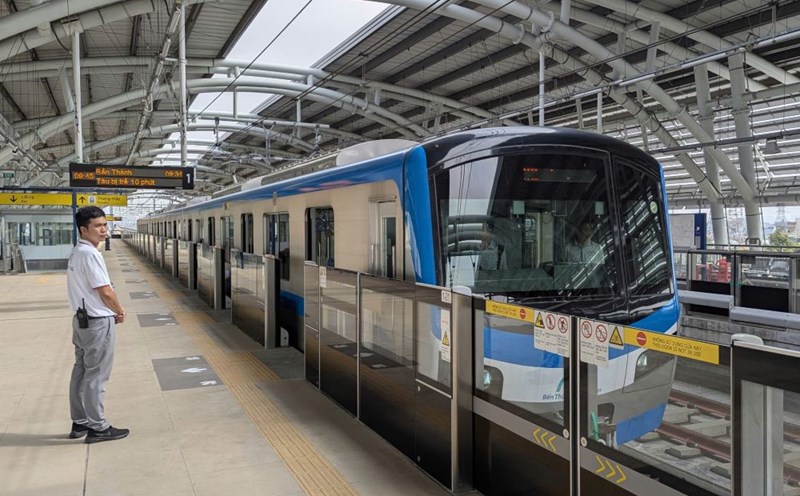
Reality shows that electric buses are gradually changing people's perceptions, especially young people. Nguyen Thanh Hien (21 years old, student at the University of Social Sciences and Humanities, Ho Chi Minh City) said that he has been using buses for the past two years and appreciates electric bus routes for their smoothness, cleanliness, WiFi and convenient payment. When Metro Line 1 went into operation, Hien often combined buses to travel between educational institutions.
The current ticket price is already cheap, but if it is completely free, it will definitely attract more students. The important thing is that the bus must be on time, clean and safe to maintain a long-term habit" - Hien said.
The Ho Chi Minh City Department of Construction has just submitted a report to the Ho Chi Minh City People's Committee, proposing to apply simplified procedures to develop a Resolution of the Ho Chi Minh City People's Council on bus ticket exemption policies.
According to the proposed plan, toll exemption will be applied to 135 bus routes operating in the city, including 109 subsidized routes and 26 non-subsidized routes; inter-provincial bus routes are not subject to application.
It is estimated that in the remaining 8 months of 2026, the total budget for policy implementation is about 930 billion VND from the city budget. Of which, 627 billion VND is for subsidized routes and 303 billion VND for non-subsidized routes. This budget does not include bus subsidies allocated for 2026 (about 1,334 billion VND).
The Department of Construction is expected to submit the policy to the Ho Chi Minh City People's Council for consideration and approval in April. If approved, bus ticket exemption may be implemented from May.
* Currently, the total volume of public passenger transport in Ho Chi Minh City (including metro and buses) has only reached about 340,000 trips/day - a very low level compared to the population size of more than 14 million people.
* According to Assoc. Prof. Dr. Vu Anh Tuan - Director of the Vietnam-Germany Transport Research Center (Viet Duc University) - this is also a very large growth potential if there is a strong enough policy.
Mr. Tuan shared that the biggest benefit of switching to public transport is not only in cost, but also in time. When traffic is more smooth, each trip is shortened by 10-20 minutes, it will help millions of workers get to work on time, reduce stress and increase efficiency, and the supply chain operate more stably. "Free public transport is actually a policy to improve urban productivity. The time "returned" to society is a huge source of profit, even if the budget is not collected directly" - Mr. Tuan emphasized.
Also according to Assoc. Prof. Dr. Vu Anh Tuan, the process of electrifying the bus fleet (currently accounting for about 62%) if going in parallel with the free ticket policy will create a dual effect: Both increasing the number of passengers and reducing emissions.