Possessing majestic riverine landscapes and unique cultural identity of the Muong and Dao people, the Hoa Binh hydropower reservoir area, Phu Tho province is expected to become a new growth pole of Phu Tho tourism after the merger.
However, the paradox that is happening is that right in the middle of the hydropower reservoir area, many tourist facilities are facing power shortages. The problem has become one of the biggest "bottlenecks" hindering development.
According to feedback from businesses and local authorities, the current electricity system only meets the living needs of rural and mountainous areas, and does not have enough capacity to serve rapidly developing tourism business activities.
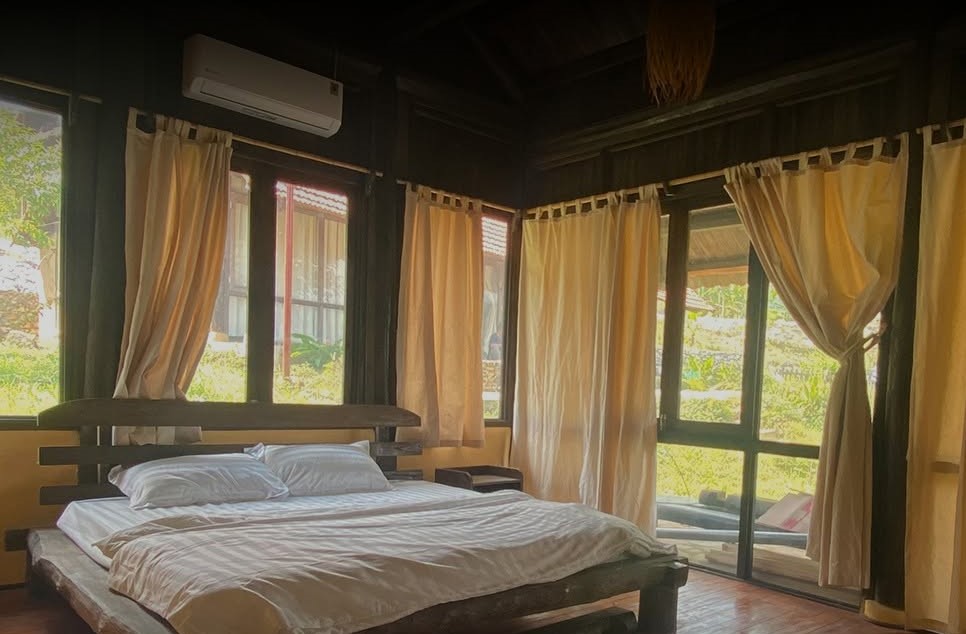
Ms. Ha Thuy Hanh, Operations Director of Ngu Mai Retreat, said that the resort has only been in operation for about a month but has received many booking calls, showing the attractiveness of the destination. However, the electricity infrastructure does not keep up with actual needs.
Currently, only about 30 out of 50 air conditioners can operate. This is an issue that businesses cannot overcome on their own. We have just received information that the area has an electricity upgrade project, but we do not know when it will be implemented," Ms. Hanh shared.
Not only lacking electricity, businesses also face many difficulties in transportation infrastructure and waste treatment.
The lakeside road still has many sections under construction, causing inconvenience for tourists. Meanwhile, the area still does not have a centralized waste collection and treatment point, causing accommodation establishments to have to fend for themselves to ensure environmental sanitation.
According to Ms. Ban Kim Quy, Chairwoman of Tien Phong Commune People's Committee, the locality has more than 3,000 hectares of lake surface and many unique cultural values of the Muong and Dao people. These are great advantages for developing ecotourism, community tourism and cultural experiences. However, infrastructure is still the biggest "bottleneck".
In addition to the weak power system, road and waterway traffic also have many shortcomings. The old Da Bac area currently does not have an inland waterway port serving tourism, while many accommodation points are located along the lake but boats do not have anchorages. Provincial road 433 along the lake, which has been under construction for many years, also significantly affects the tourist experience.
According to Mr. Ta Ngoc Doanh, leader of Thong Nhat ward, the lake area has many advantages in indigenous culture and is forming homestay models to attract international tourists. However, the infrastructure is not synchronized, tourism products are still few, human resources are limited, and the attraction of strategic investors has not met expectations.
Mr. Bui Xuan Truong, Deputy Director of the Department of Culture, Sports and Tourism of Phu Tho province, said that after the merger, the province has conditions to form a large-scale tourism ecosystem, connecting the Northern Midlands and Mountains with the Northern Delta. In which, Hoa Binh Lake area is identified as a key tourist area and a new growth pole of the tourism industry.
However, he also frankly acknowledged that electricity infrastructure is still weak, transportation connections are not synchronized, tourism products lack differentiation, the ability to attract strategic investors is still limited, and digital transformation has not met development requirements.
In the period 2026-2030, Phu Tho province will prioritize synchronous investment in transportation infrastructure, electricity, tourist ports; develop unique tourism products in the lake area; attract large investors.
The province will promote digital transformation and develop tourism associated with cultural preservation, improving livelihoods for people.
According to experts, early removal of "bottlenecks" in electricity and infrastructure is considered a prerequisite for the Hoa Binh hydropower reservoir area to fully develop its potential and become an attractive tourist destination in the Northwest region.