
Meeting the needs of inspection, flexible issuance of stamps, electronic certification
Recorded on March 3 at Registration Center 50-05V (Hong Ha street, Tan Son Hoa ward), dozens of drivers brought their vehicles to line up to wait for inspection early. Although the number of vehicles was large, the process took place in order.
Mr. Tran Dang Trai (50 years old, residing in Xom Chieu ward) brought his 2016 Toyota Fortuner diesel engine to the station from 5 am. Because the car had traveled 67,000km, he proactively maintained it carefully in advance, so by 8:30 am he had completed the procedures. Just counting the time to check the items on the chain, it took about more than 20 minutes. "The number of vehicles is large, so the vehicle registration officer instructed me to just drive home after pasting the stamp, then go to the application of the Vehicle Registration Department to automatically enter information to get the electronic certificate," Mr. Trai said.
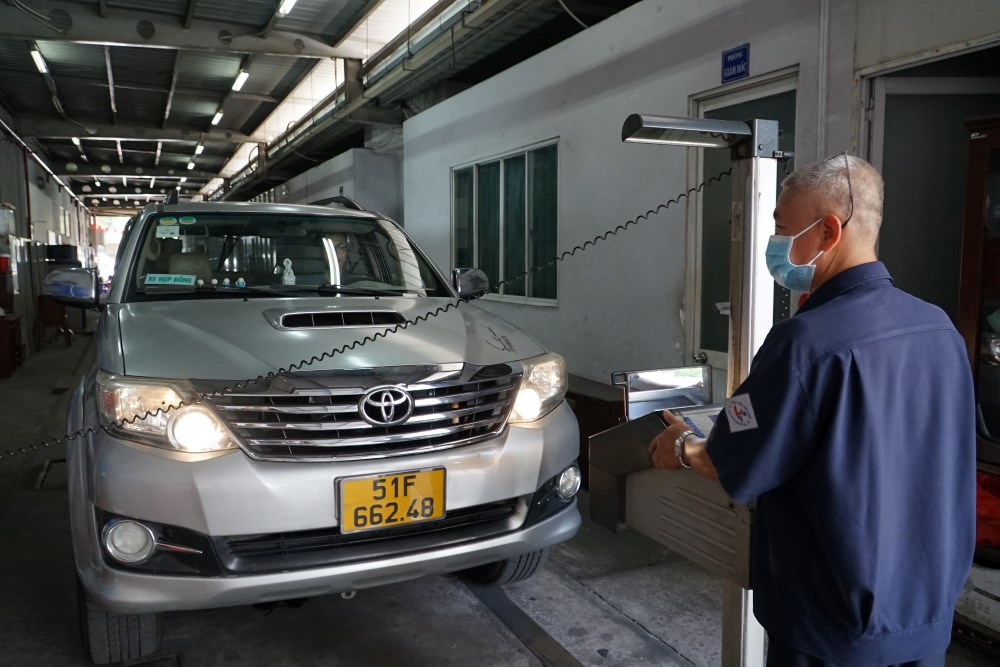
A vehicle registration officer at the center said that although the network congestion situation has improved, there are still many objective factors that make inspection work not really smooth. However, the Vietnam Register and vehicle registration facilities have implemented many flexible measures to help reduce waiting times and meet the inspection needs of the people.
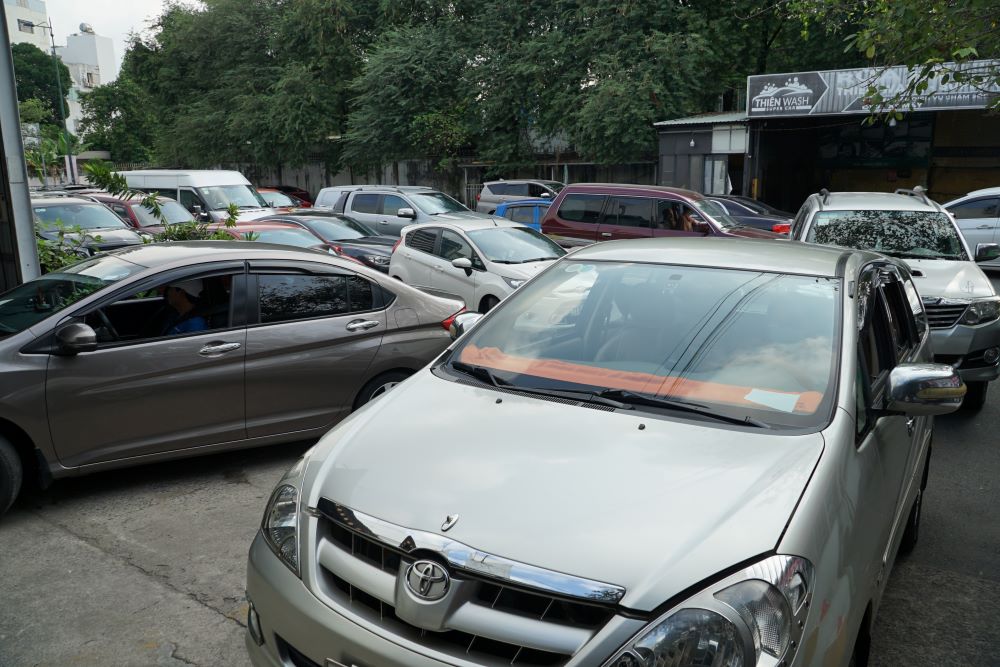
Meanwhile, at Registration Center 50-03S (National Highway 13, Hiep Binh ward), cars also lined up waiting for their turn. The inspection time for each car only takes about 15-20 minutes. However, the stamp printing and re-stamping stage encountered software errors, causing drivers to wait for a long time.
Mr. Tran Manh Tien (35 years old), a driver waiting to receive stamps, shared: "The inspection stage on the production line is very fast, but the waiting time for stamp printing and pasting takes up to 40-60 minutes. Calculated from the time of entry to the time of taking the car home is also more than an hour". However, Mr. Tien still expressed satisfaction because the process is more transparent. Representatives of the leadership of center 50-03S said that registration inspectors are making maximum efforts to quickly handle each stage, limiting people's waiting time.
The truth about the risk of engine failure and the "commitment" to measure oil engine emissions
The application of the new emission control process (free acceleration item) makes many oil engine car owners worried that the operation of "pressing the throttle" will cause the engine block to break, the belt to bend, along with information that they must sign a voluntary commitment to take risks.
Explaining this issue, a long-time vehicle registration inspector in Ho Chi Minh City said: Making a commitment applies to cases where the engine cannot determine the maximum engine speed that the manufacturer stipulates or if the vehicle owner is not sure about the maintenance history.
"The commitment is not for the inspector to shirk responsibility.Before measuring emissions, we still have to check the general condition of the vehicle.If abnormal metal tapping sounds are detected, insufficient temperature or amount of oil, and many other phenomena, the vehicle registration facility will refuse inspection even if the vehicle owner makes a commitment.Conversely, if ignoring these professional inspection steps and still measuring emissions leading to damage, the inspector must still bear full responsibility regardless of whether the vehicle owner signs a commitment or not," this person affirmed.
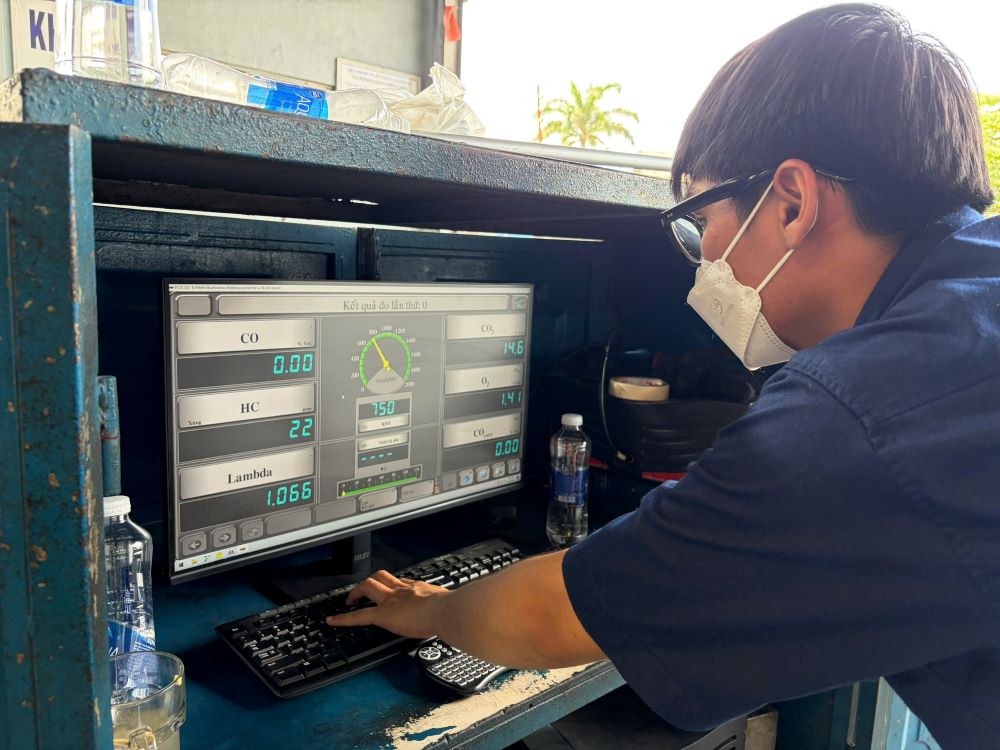
Regarding the "gas pedal pedaling" process, this expert explained that this is a mandatory operation: pedal the entire accelerator pedal in 1 second, then release it, so that in the next 5 seconds the car achieves the maximum speed of the engine (overcoming the minimum rev to achieve maximum power, for example 3,750 rpm).
With a well-maintained car, even when the throttle is pressed to the floor, the accelerator on a diesel car (usually limited to 5,000-6,000 rpm) will automatically slow down the rotation, ensuring mechanical durability, without causing damage. Danger only occurs when the accelerator is damaged during use, causing fuel to continue to spray, causing the rotation to increase beyond the mechanical threshold, leading to engine breakage; or in older cars, the curoa cam (cam chain) is broken, causing the cylinder and piston to collide," the inspector analyzed.
In fact, the rate of cars encountering this problem is very rare. The registration agency recommends that instead of worrying, car owners should proactively maintain, replace oil, clean the fuel chamber and check the accelerator system before going for inspection to ensure that the machinery operates stably and easily passes the emission test.


