
On June 23, in Da Nang, the Vietnam Medical Informatics Association in coordination with Health & Life Newspaper and TPP Company - UK organized an international conference "Medical Digital Transformation and Building Smart Hospitals: International Experience and Deployment in Vietnam".
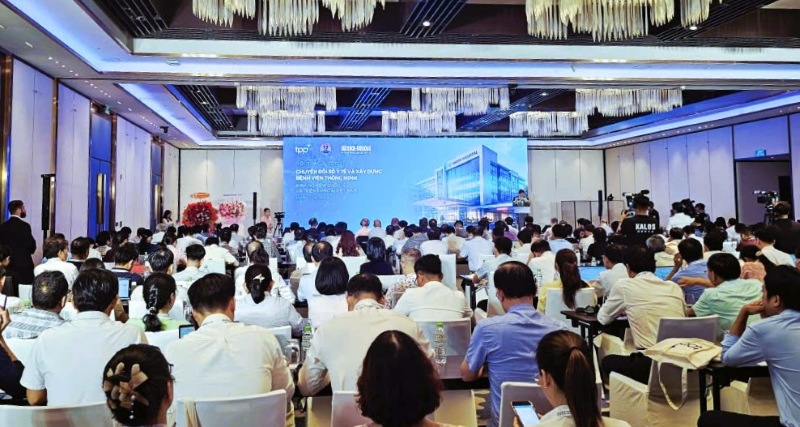
The event gathered representatives of the Ministry of Health, Departments of Health, hospitals in the Central - Central Highlands region and international experts. From the story of electronic medical records, delegates raised a bigger issue: how to make medical data not only stored, but also "live", connected, analyzed and returned to serve patients.
Assoc. Prof. Dr. Tran Quy Tuong - Chairman of the Vietnam Medical Informatics Association - emphasized that electronic medical records are not the destination, but the starting point. According to him, if only stopping at digitizing records, data will not create value. The next stage must be comprehensive digital transformation of hospitals, towards smart hospitals, where medical examination and treatment, management, and operation are all based on data.

According to the report at the conference, by June 18, 2026, the whole country had 1,238/1,650 hospitals announcing the deployment of electronic medical records, reaching about 75%. However, the number of hospitals that actually completely abolished paper medical records accounts for only about 20%. This figure shows that the transition is clear, but the road to hospitals without papers, without manual waiting lines, without re-entering data for the same patient is still challenging.
In Da Nang, BS.CKII Tran Thanh Thuy - Director of the City Department of Health - said that after merging the locality, the health sector is facing the requirement to synchronize the system from commune and ward health stations to leading hospitals, both public and private. The city has 100% of hospitals publishing electronic medical records from 2025, creating 95% of electronic health records, piloting remote medical examination and treatment in managing some mental illnesses and applying AI in diagnostic imaging.
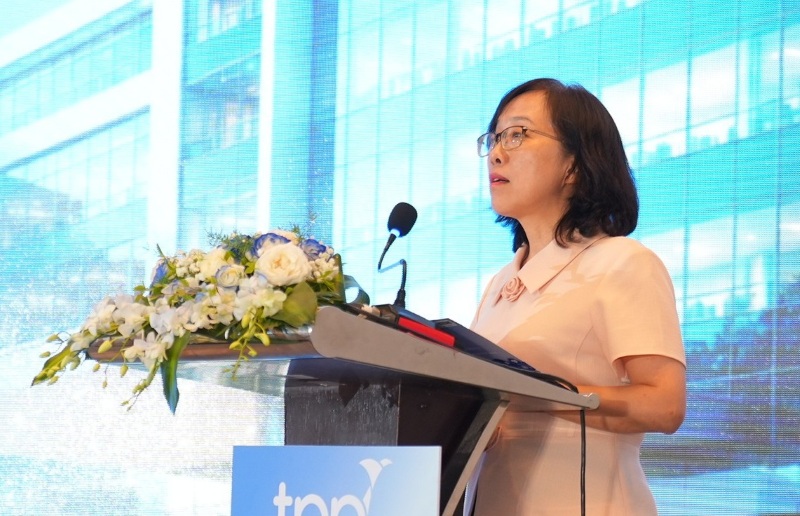
However, according to the leader of Da Nang Department of Health, difficulties still lie in uneven technology infrastructure, unsynchronized data standardization, lack of information technology human resources, pressure to ensure personal data security and incomplete financial mechanisms for digital health transformation.
From international experience, Mr. Frank Hester OBE - founder of TPP - believes that the core point of digital healthcare is "information must follow patients". Paper records may be lost, missing or cannot be shared in time. But when each citizen has a unified health record, doctors at the grassroots level or upper-level experts can access the necessary information to make better treatment decisions.
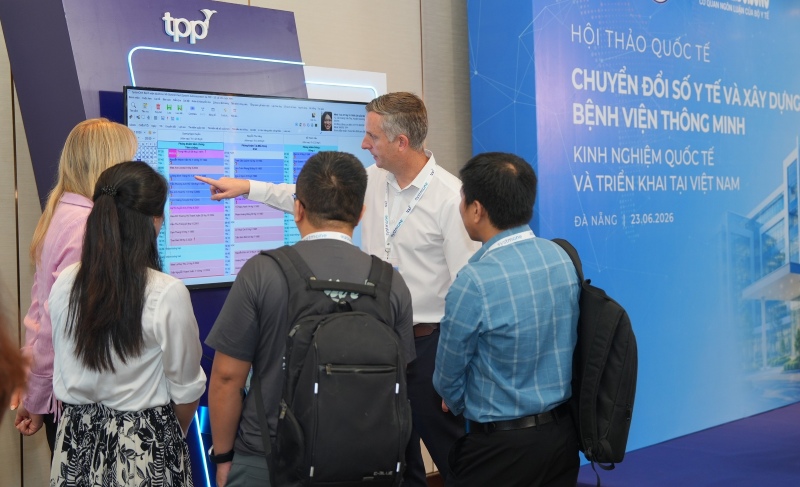
The conference in Da Nang is therefore not just about software or devices. Behind the story of electronic medical records is a major change in thinking: shifting from passive treatment to proactive care; from paper management to data management; from digital hospitals to smart hospitals, where patients are the center and technology serves people in a humane way.


