
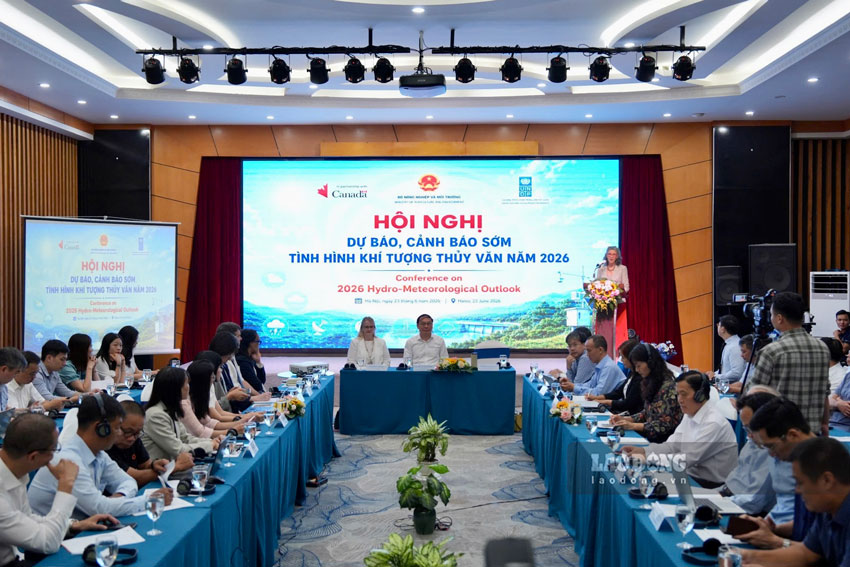
On the morning of June 23rd in Hanoi, the Department of Meteorology and Hydrology (Ministry of Agriculture and Environment) in coordination with the United Nations Development Program (UNDP) in Vietnam organized the Conference "Early Forecasting and Warning of Meteorological and Hydrological Situations in 2026".
El Nino increases sharply related to rain shortage trend
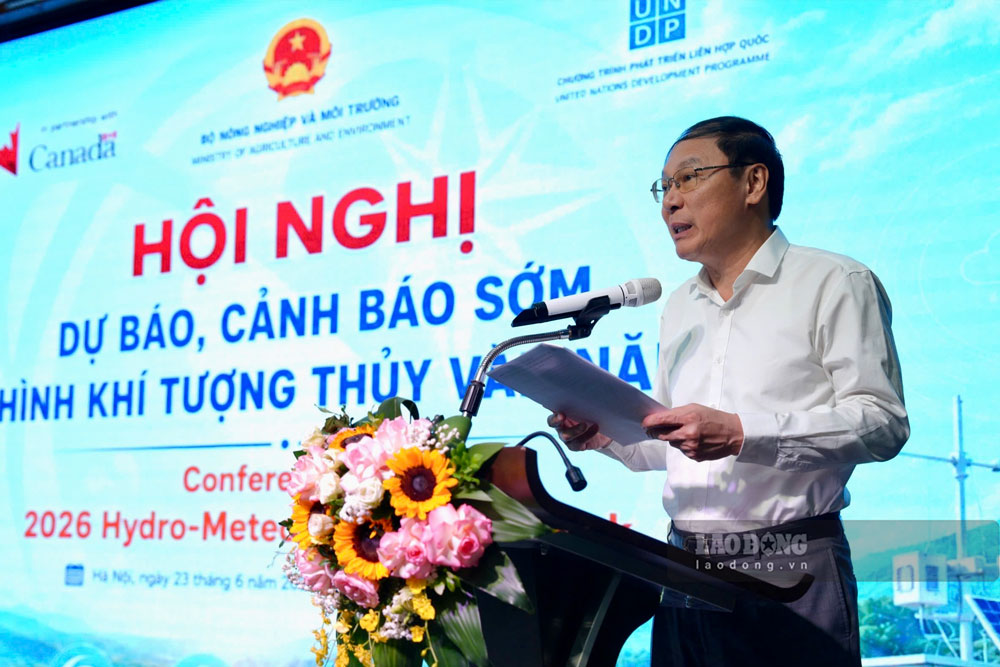
Speaking at the opening of the conference, Deputy Minister of Agriculture and Environment Le Cong Thanh said that the global climate system is increasingly complex, extreme and irregular.
In particular, domestic and international climate monitoring models unanimously agree on the formation and clear development of the El Nino phenomenon from the second half of 2026. The synergy between the high-intensity El Nino cycle and the global warming trend opens up a major risk of the appearance of one of the strongest El Nino waves ever recorded, posing an urgent requirement to proactively monitor the risk of prolonged heat, drought, water shortage and saltwater intrusion.
The lesson from ten years ago is still valuable, when severe drought and saltwater intrusion, especially in the South Central Coast, Central Highlands and Mekong Delta, caused more than 100,000 hectares of rice to be damaged, over 210,000 households lacked domestic water and disrupted key agricultural supply chains.
However, reality also proves that El Niño not only brings drought, but also comes with irregular phenomena contrary to regulations, typically the historic flood in Quang Ninh in mid-2015.
According to the Deputy Minister, from a macro management perspective, the risks from meteorology and hydrology today are no longer a separate problem of a single industry or field but have become a systematic challenge to national sustainable development.
However, the Ministry of Agriculture and Environment recognizes that in challenges, there are always opportunities if we proactively strategize to adapt. The national competitive advantage in the context of the global climate crisis does not lie in whether we are affected more or less, but in the ability to forecast earlier, act faster, manage more scientifically and have better resilience" - the Deputy Minister emphasized.
Improving early warning capacity, proactively responding to natural disasters
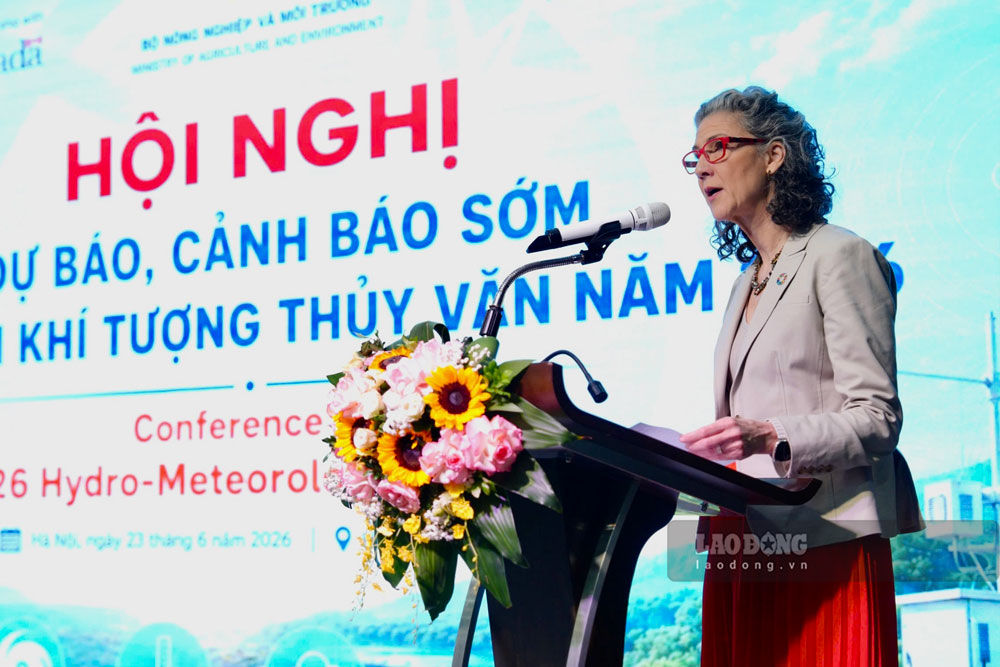
At the conference, Ms. Ramla Khalidi, UNDP Resident Representative in Vietnam, said that extreme climate phenomena are gradually becoming a "new normal state". This requires countries to change their approach from passive response to proactive forecasting and early preparation.
According to Ms. Ramla Khalidi, the United Nations is implementing the global initiative "Early Warning for Everyone", with the goal that by 2027 all people will have access to effective early warning systems. In Vietnam, UNDP has coordinated with partners to implement many programs to improve forecasting capacity and adapt to climate change. Among them, 44 monitoring stations have been installed in 9 coastal provinces with the support of the Government of Canada and the Green Climate Fund.
However, Ms. Ramla Khalidi emphasized that data and technology are only truly effective when they reach people and are transformed into specific actions. "The ultimate goal of the forecasting system is not only to improve accuracy but also to contribute to protecting people's lives, property and livelihoods," Ms. Ramla Khalidi said.
Ms. Emilie Carrier, Senior Trade Counselor of the Canadian Embassy in Vietnam, said that one of the biggest challenges today is narrowing the "final stage gap" in disaster warnings, that is, ensuring that forecast information reaches the most vulnerable communities and helps them take timely response actions.
At the conference, Deputy Minister Le Cong Thanh gave orientations for the coming time. Especially emphasizing the strong shift from phenomenon forecasting thinking to impact-based forecasting (emphasizing specific impacts on people's livelihoods, agriculture, energy, and transportation).
In addition, promote the application of technology; complete the inter-sectoral coordination mechanism and build a real-time data sharing system to activate early response scenarios at the grassroots level.


