
AI applications help improve patient treatment quality
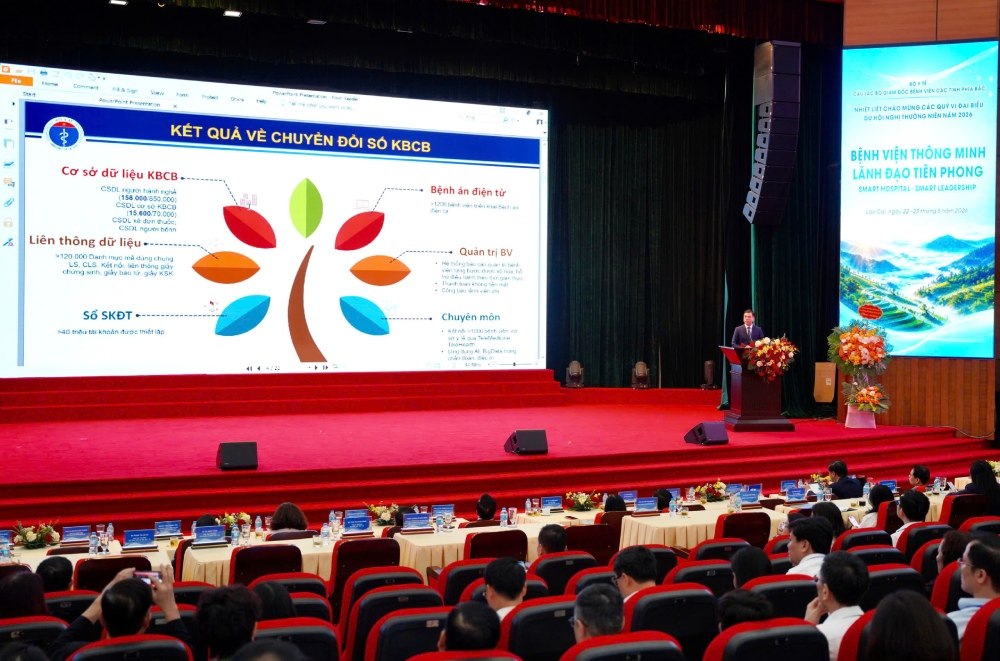
This is also the main content of the theme "Smart Hospitals and Pioneering Leadership" of the 2026 Annual Conference of the Club of Hospital Directors of Northern Provinces held on May 23rd in Lao Cai province.
Assoc. Prof. Dr. Dao Xuan Co - Director of Bach Mai Hospital, Chairman of the Hospital Directors Club of Northern provinces - emphasized: Digital transformation is no longer a trend of the future but has become an inevitable requirement to improve the quality of medical examination and treatment, optimize operating procedures and improve patient experience.
Assoc. Prof. Dr. Dao Xuan Co said that artificial intelligence (AI) is opening up many great opportunities for the healthcare sector, especially in supporting diagnostic imaging, electronic medical record data management, medical examination and treatment coordination and the development of smart healthcare models. However, to build an effective smart hospital, the decisive factor is still the pioneering role of the hospital leadership team.
The leader must be the leader of innovation, dare to think big, dare to act and be ready to adapt to new technologies. Digital transformation is not only about investing in equipment but also changing management thinking and hospital operations," Assoc. Prof. Dr. Dao Xuan Co emphasized.
Many patients have been detected early with dangerous diseases thanks to the application of advanced technology and AI in medical examination and treatment.
Patient M.V. T (40 years old, Thanh Hoa) was diagnosed with colorectal cancer through a general examination with the support of AI. This technology helps analyze data, support diagnosis and personalize treatment regimens based on gene factors.
Assoc. Prof. Dr. Pham Cam Phuong - Director of the Center for Nuclear Medicine and Oncology, Bach Mai Hospital - said that AI is playing an important role in cancer treatment through supporting diagnostic imaging, pathology and gene data analysis, thereby helping to choose optimal treatment methods, reduce side effects and improve the quality of life for patients.
Not only in the field of cancer, AI is also widely applied in many other specialties. At the Stroke Center, Bach Mai Hospital, AI supports doctors to update modern treatment methods and improve the effectiveness of stroke patients' care.
Digital transformation must start from interconnected data
In the context of strong digital transformation taking place globally, Vietnam's healthcare industry is also entering a phase of comprehensive innovation with the increasingly clear appearance of the smart hospital model. From operational management, data storage to supporting diagnosis and patient care, AI is becoming the "key" to promoting the technological revolution in the healthcare sector.
2026 is considered an important milestone when many medical facilities across the country accelerate investment in digital technology to improve the quality of medical examination and treatment and optimize patient experience. In this "AI race", hospitals are not only competing in facilities but also in the ability to apply modern technology to professional operations and management.
One of the most concerned contents is the application of AI in supporting diagnosis and treatment. Current technology solutions can analyze medical images, support early disease detection, optimize medical examination and treatment procedures and reduce pressure on the medical staff. In addition, electronic medical record systems, centralized data management and digital healthcare platforms are also gradually changing the traditional operation of hospitals.
Not only stopping at technology, digital transformation also poses the requirement to innovate management thinking and leadership roles in the healthcare industry.
Assoc. Prof. Dr. Dao Xuan Co added that the core of digital transformation is data interconnection and building a synchronous electronic health record system from the grassroots level to the central level. When data is connected, doctors can comprehensively track people's medical history, helping to improve treatment quality and save resources for society.
However, according to Assoc. Prof. Dr. Dao Xuan Co, no matter how developed technology is, the medical industry must still maintain its core values of humanity and dedication to patients. Modernization does not mean losing the value of a doctor.


