
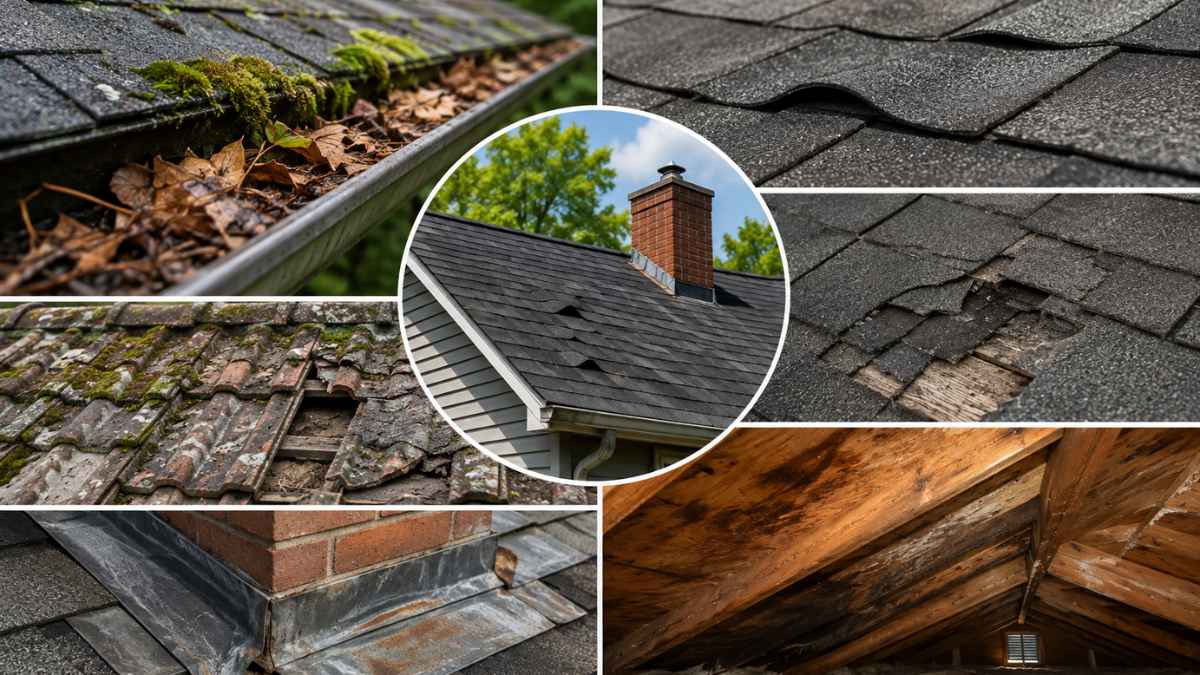
Observe moss, algae and leaves accumulating on the roof
Dried leaves, branches, moss or algae clinging to the roof can retain water, causing moisture to soak into the lower layer of the roof, increasing the risk of mold and wood structure rot.
If you have binoculars, you can check the roof from the ground. Clean up leaves and accumulated garbage as soon as possible. For newly appeared moss, you can use specialized treatment solution combined with a brush to clean. When changing the roof, consider using materials that are resistant to moss and algae to increase durability.
Check if the tiles are bent or deformed
Curved, deformed, or twisted tiles are signs that the roof has deteriorated, often due to high temperatures or harsh weather. This condition can reduce water resistance, cause leaks, and affect the durability of the roof.
If the number of damaged tiles is too large, it may be necessary to replace the entire roof instead of just repairing each tile.
Detecting cracked, broken or missing tiles
Observe if the roof tiles are cracked, cornered, broken, or completely lost. For metal roofs, it is necessary to check for signs of rust, corrosion, or deformation.
For asphalt tiled roofs, pay attention to the amount of gravel falling into the gutter. If many gravel appear, this may be a sign that the material has deteriorated and needs to be carefully checked.
Check for easily leaking locations
If you can access the roof safely, check the area around the chimney, roof windows, vents, and waterproofing panels. These are locations prone to leaks if the metal layer is cracked, loose, or corroded.
When damage is detected, it should be repaired or replaced promptly to prevent rainwater from seeping into the internal structure.
Observe the attic after the rains
If the house has a attic, check after each heavy rain to detect early signs of leaks such as water stains, damp wood, mold, or odor.
Periodic inspection of this area will help detect damage early, limit repair costs and extend the life of the roof.


