
Construction progress is not uniform
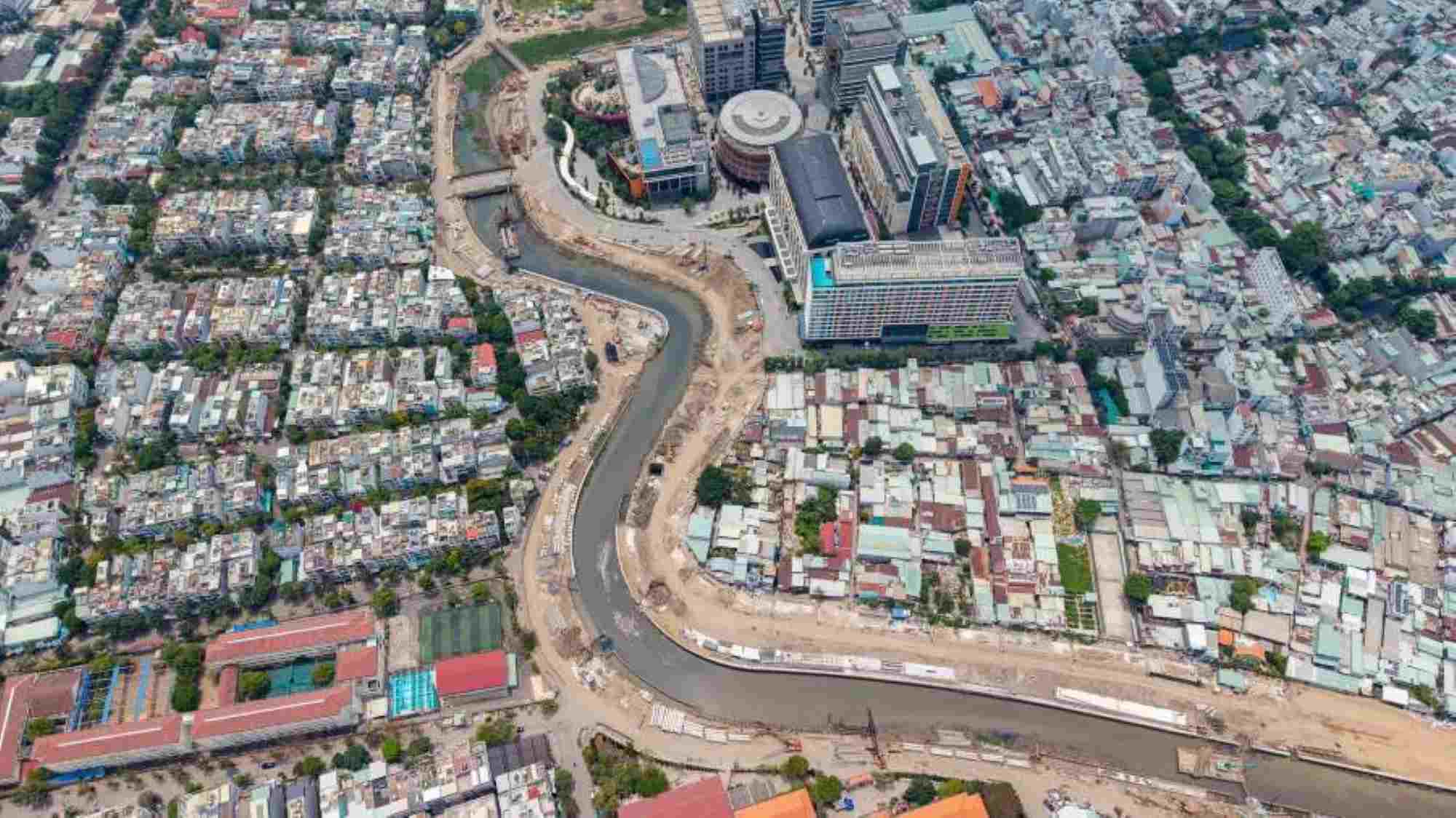
Records along Xuyen Tam canal show that the construction progress is still inconsistent: Some sections have been embanked, dredged, and machinery is operating continuously; but some sections have houses still clinging to the water's edge, and narrow walkways.
At package XL03 through An Nhon ward, the construction site is quite bustling. This package started construction on May 15, 2025, construction time is 450 days. The section through Van Lang University is expected to be technically opened in April and basically completed in June. The entire package XL03 aims to be completed in November 2026.
An Nhon is the first locality to complete compensation and hand over land for the project. The route passes through the affected area in 138 cases, with a recovered area of nearly 25,000m2, total compensation, support, and resettlement costs of nearly 500 billion VND.
Mr. Duong Van Kim - Vice Chairman of An Nhon Ward People's Committee - said that the effectiveness of compensation depends on the closeness of leaders and the proactiveness of civil servants. He directly dialogues with households with large areas and special circumstances to remove obstacles and create consensus.
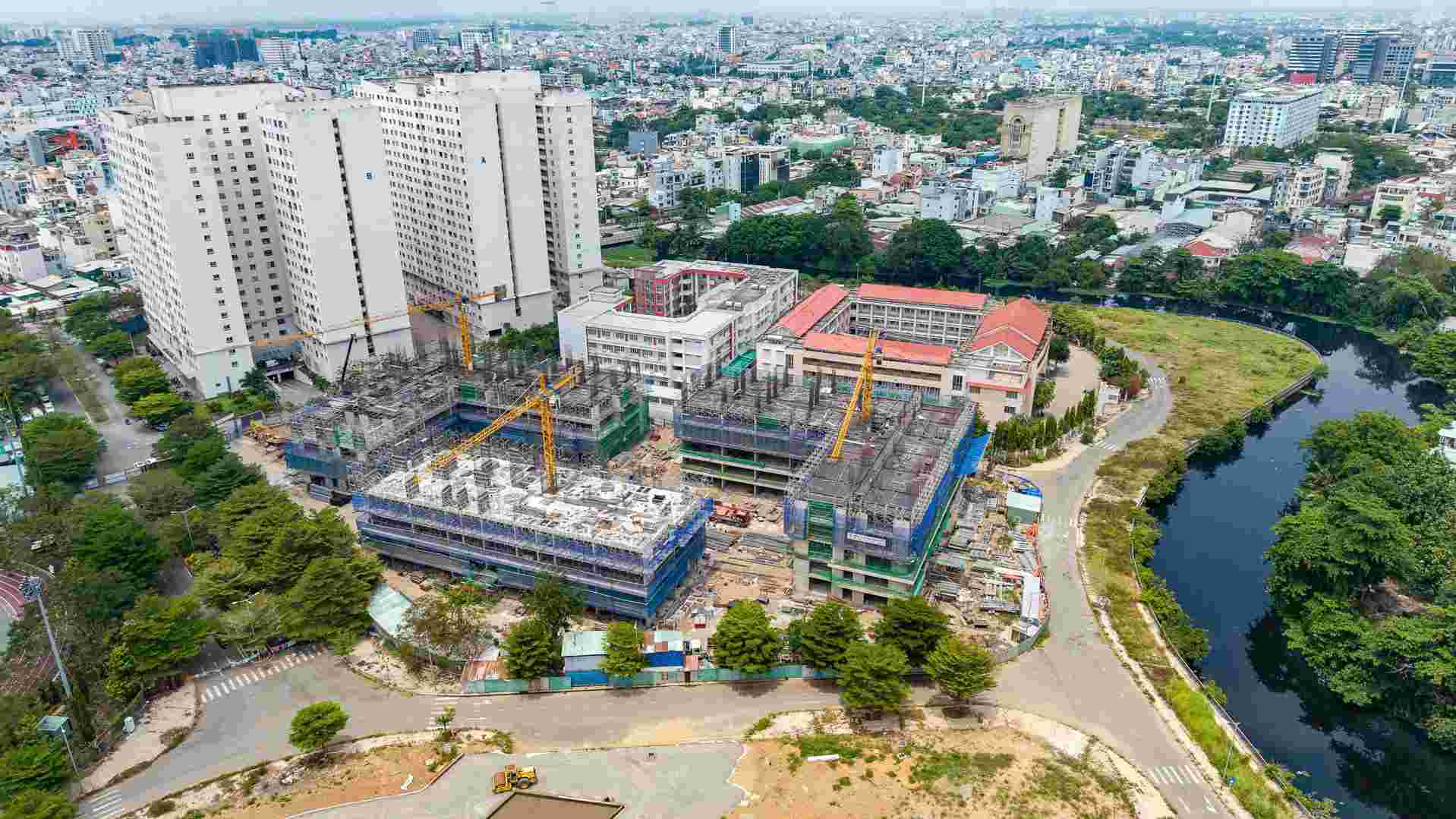
According to him, it is necessary to put understanding of the people first, and at the same time quickly solve essential needs such as construction permits, repairs, and re-issuance of papers. Localities also mobilize socialization to renovate resettlement houses, helping people stabilize their accommodation.
Conversely, at package XL01 (section from Nhieu Loc - Thi Nghe canal to Bui Dinh Tuy bridge), the life along the canal has almost not changed. Many houses still maintain their original state, interspersed with some households that have been dismantled and are relocating, causing construction progress to be stalled.
The Xuyen Tam canal project has a total investment of more than 17,000 billion VND, of which compensation, support and resettlement costs account for nearly 14,000 billion VND. The entire project has 2,190 affected cases, including 1,293 cases of full clearance.
In the Binh Thanh area (old), now divided into Binh Thanh, Gia Dinh and Binh Loi Trung wards, there have been 2,011 households receiving compensation money, but only 787 households handed over land. Faced with this reality, Chairman of Ho Chi Minh City People's Committee Nguyen Van Duoc requested localities to be determined to complete site clearance in June this year.
According to Mr. Phan Quang Khanh - Chairman of Binh Thanh Ward People's Committee, many households are still considering financial plans because compensation money is not enough to buy resettlement apartments. There are many cases of property disputes and inheritance disputes, so they cannot agree on relocation.
To remove difficulties, Binh Thanh ward has applied the "on-site temporary residence" mechanism - allowing people to temporarily stay in resettlement apartments while waiting for procedures to be completed.
Not only Xuyen Tam canal, the project to renovate the North bank of Doi canal is also facing site clearance issues. The project is about 4.3km long, passing through Chanh Hung and Phu Dinh wards, with a total capital of more than 7,300 billion VND. Of which, compensation costs account for 5,575 billion VND.
The project affects 1,604 cases with a recovered area of 5.85ha. To date, 1,475 cases have handed over land (reaching about 92%), and the remaining 129 cases have not been completed. The investor requested localities to handle them thoroughly in March and April 2026 to ensure progress, aiming to complete in August 2027.
Need for a "breakthrough" in site clearance
Although many projects have been launched and have changed, site clearance bottlenecks are still key problems. With the goal of relocating 20,000 canal-side houses by 2030, Ho Chi Minh City needs more flexible mechanisms for compensation and resettlement, and at the same time have solutions to support people to stabilize their lives.
According to a survey by the Ho Chi Minh City Institute for Development Studies, the whole city currently has more than 34,700 houses located on and along canals and ditches. However, only about 25% have valid construction permits. This is a major "bottleneck" that causes difficulties for many projects, because most cases do not meet the conditions for compensation according to regulations.
Mr. Nguyen Toan Thang - Director of Ho Chi Minh City Department of Agriculture and Environment - said that Ho Chi Minh City has issued a new policy on compensation, support and resettlement when the State recovers land. A noteworthy point is that land areas originating from rivers, streams, canals, ditches, streams or specialized water surfaces that have been encroached upon and self-changed for other purposes of use (including the area that has been leveled and the area that has not been leveled but has houses, works or architectural structures) will be supported at a higher level than before.
Non-agricultural land used before October 15, 1993 is supported 70% of the land price; from October 15, 1993 to before July 1, 2004 is supported 56%; from July 1, 2004 to before July 1, 2014 is supported 42%. For agricultural land, the support level is equal to 70% of the land price approved by competent authorities.
The city also supports 60% of the house value for the area located in the canal and ditch protection corridor, while ensuring a minimum resettlement rate for people. If the compensation money is lower than the resettlement rate, the State will support the difference. The resettlement rate can be in land, house or money, in which the minimum apartment has an area of 30m2.
Notably, the city also applies a bonus mechanism for cases of early site handover, with a maximum level of 50 million VND for households whose land is completely recovered and 25 million VND if a part is recovered; organizations can be rewarded up to 100 million VND.


