
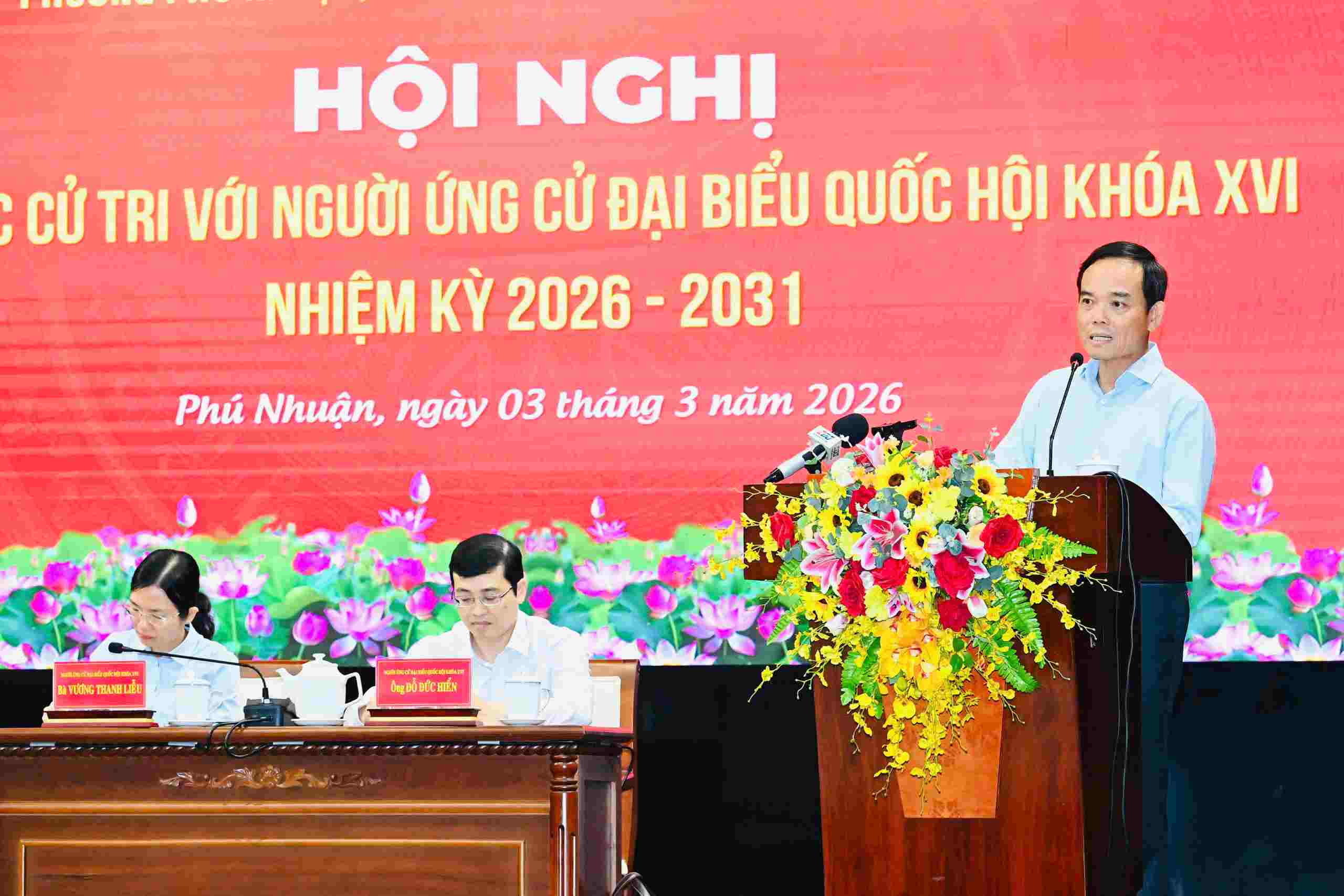
The information was shared by Secretary of the Ho Chi Minh City Party Committee Tran Luu Quang at a meeting with voters before the 16th National Assembly election, held on March 3.
At the conference, Mr. Tran Luu Quang said that Ho Chi Minh City will handle long-standing problems, including 4 "bottlenecks" pointed out by General Secretary To Lam, including: Flooding, traffic jams, pollution and drugs.
To fundamentally solve the problem, Ho Chi Minh City has hired more than 30 leading international consulting units to build a master development plan, integrating socio-economic planning with construction planning. The goal is to complete the plan by the end of this year.
Regarding transport infrastructure, according to the plan to 2035, Ho Chi Minh City will have 27 urban railway lines.
Mr. Tran Luu Quang said that in this term, Ho Chi Minh City strives to complete 3 important routes: Ben Thanh - Tham Luong, Ben Thanh - Thu Thiem and Thu Thiem - Long Thanh airport.
In parallel, Ho Chi Minh City will invest in underground parking lots at Park No. 1 Ly Thai To, September 23 Park and Le Van Tam Park. These parking lots can be combined with commercial centers to increase exploitation efficiency and attract socialized resources.
Notably, the Secretary of the Ho Chi Minh City Party Committee said that Ho Chi Minh City has a roadmap to relocate some higher education institutions, colleges, vocational training and medical facilities to suburban areas to solve traffic jams and pollution problems.
The new facilities will be planned to follow urban railway lines, ensuring convenient travel for students and people and reducing the amount of personal vehicles pouring into the core center every day.
Along with that, Ho Chi Minh City will rearrange the public housing and land fund in order of priority for education, health and green space development.
Previously, the Standing Committee of the Ho Chi Minh City Party Committee agreed on the policy of researching and developing a Project to relocate and expand educational and medical facilities out of the inner city area according to a suitable roadmap, ensuring synchronization with the overall plan. The organization of implementation will be carried out according to a suitable roadmap until 2030 and the following years.
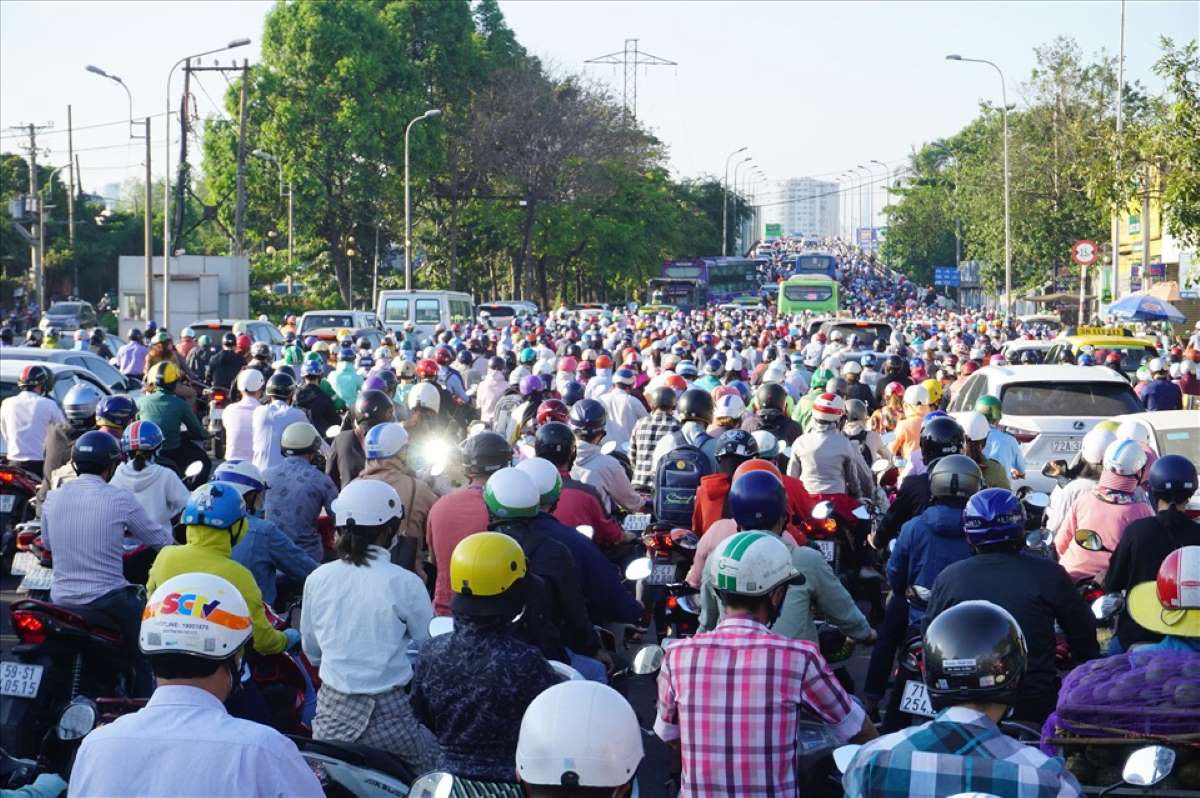
According to the Ho Chi Minh City Department of Construction, after merging with Binh Duong and Ba Ria - Vung Tau, Ho Chi Minh City currently manages more than 12.8 million vehicles, including more than 1.4 million cars and nearly 11.4 million motorbikes.
The demand for parking in the central area is very high, while the system of underground, above-ground, and multi-layered parking lots is still seriously lacking. The situation of occupying sidewalks and roadways for parking is common, narrowing the road surface and increasing the risk of congestion.
In addition, urban planning still has many inadequacies. The proportion of land for transportation and public works does not meet development requirements. With a centrifugal urban structure, most high-quality jobs, a large university system, end-line hospitals, financial - commercial, administrative centers and industrial parks, export processing zones such as Tan Thuan Export Processing Zone are still concentrated in the urban core.
This forces people from the suburbs to move to the center every day, increasing congestion and pollution.
According to the assessment of the Department of Construction, in the long term, Ho Chi Minh City needs to adjust the planning in the direction of equitable development, dispersing urban functions, and reducing pressure on the central area.
In which, the study of relocating schools, hospitals and industrial parks out of the urban core is considered an important and sustainable solution to solve the traffic congestion problem.


