
The bathroom is often damp, so the material used needs to be waterproof and slippery, especially the floor area. The floor should be made of slippery material, and about 10-20 mm lower than the surrounding areas to limit water overflowing. Drainage pipes should be arranged about 10 mm lower than the floor, helping water drain quickly and limit water accumulation.
Bathroom walls should be tiled completely to increase moisture resistance. A sink can be installed on a pedestal, prioritizing materials such as marble or granite. Reference dimensions of the pedestal include a height of 750-800 mm, a width of 500-550 mm and a length of 1,000-1,200 mm.
The bathtub should not be installed too high, usually about 500 mm from the floor surface. To increase safety when using, especially in a humid environment, you can arrange anti-slip handles. The bathroom ceiling should use moisture-proof materials, with durability suitable for environments that are often steamy.
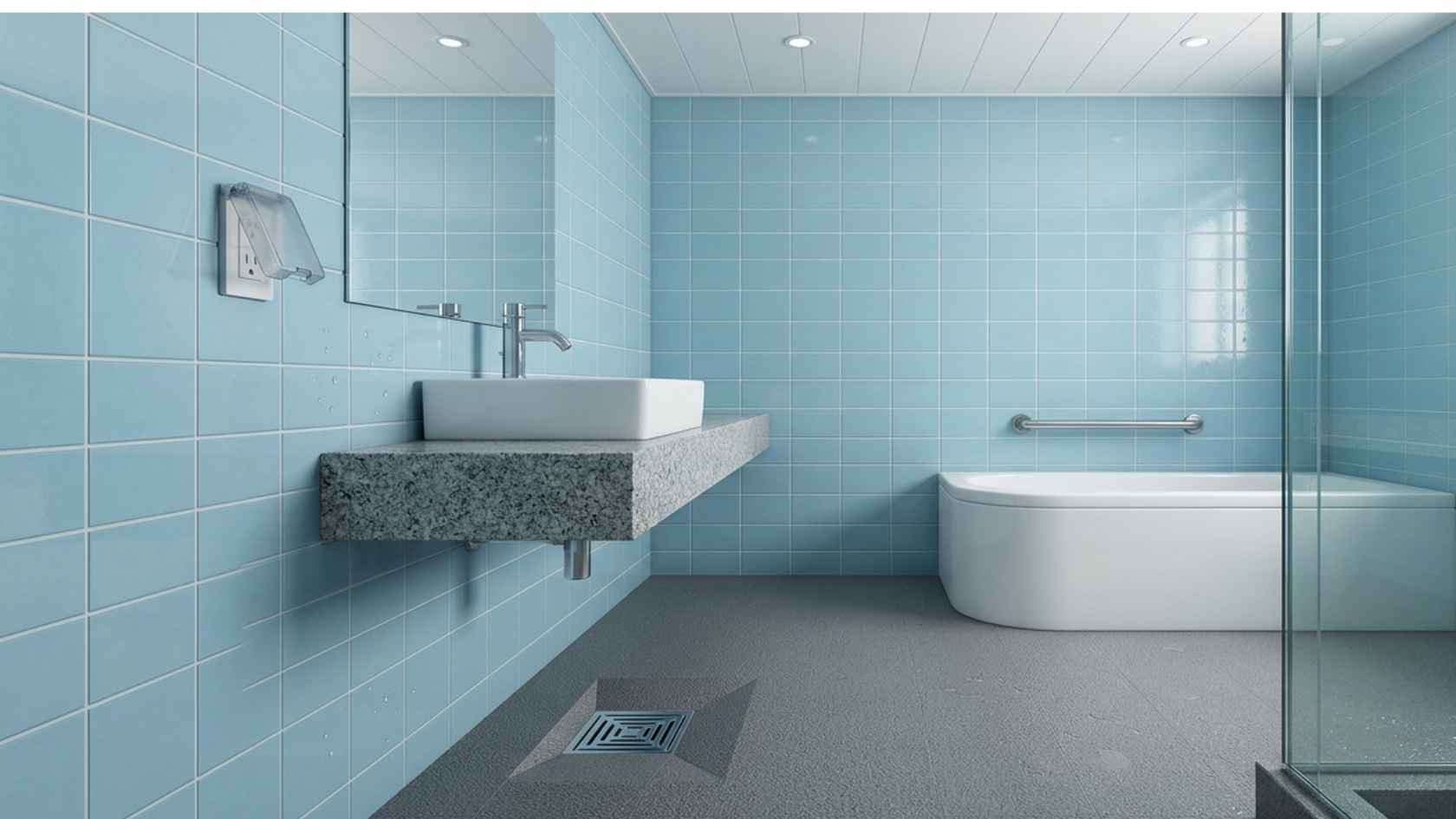
The electrical system also needs special attention. Due to high humidity, water vapor can enter the socket and switch if not shielded, increasing the risk of electrical leakage. Therefore, the socket in the bathroom should have a lid or anti-humidity protection device, and must be installed according to electrical safety standards.
If using glass doors, you should choose tempered glass or suitable materials that can limit the risk of injury when the glass is broken. In particular, absolutely do not use phones or inappropriate electrical appliances when in the bathtub or bathroom, to avoid the risk of electric shock and fire.


