
National land data standardization
On June 23, in an exchange with Lao Dong Newspaper, Mr. Nguyen Van An - Director of the Land Registration Office of Quang Tri province said that the locality is implementing a peak period of "30 days and nights" to clean up and complete the national land database according to the direction of the Government, the Ministry of Agriculture and Environment and the Provincial People's Committee.
According to Mr. An, the goal of the peak period is to build a synchronous and modern land database, effectively serving state management, people and businesses in the context of digital transformation being promoted nationwide.
The consistent criterion is defined as "right - sufficient - clean - living". In which, "right" is to ensure accurate land plot information about users, area, type of land, location, boundaries and assets attached to land. "Sufficient" is data that is fully updated with information fields according to regulations. "Clean" is data that has been reviewed, standardized, eliminated errors and duplication, ensuring consistency between paper records and electronic data, and has been matched with national population data. "Living" is data that is operated centrally, updated regularly when there are fluctuations.

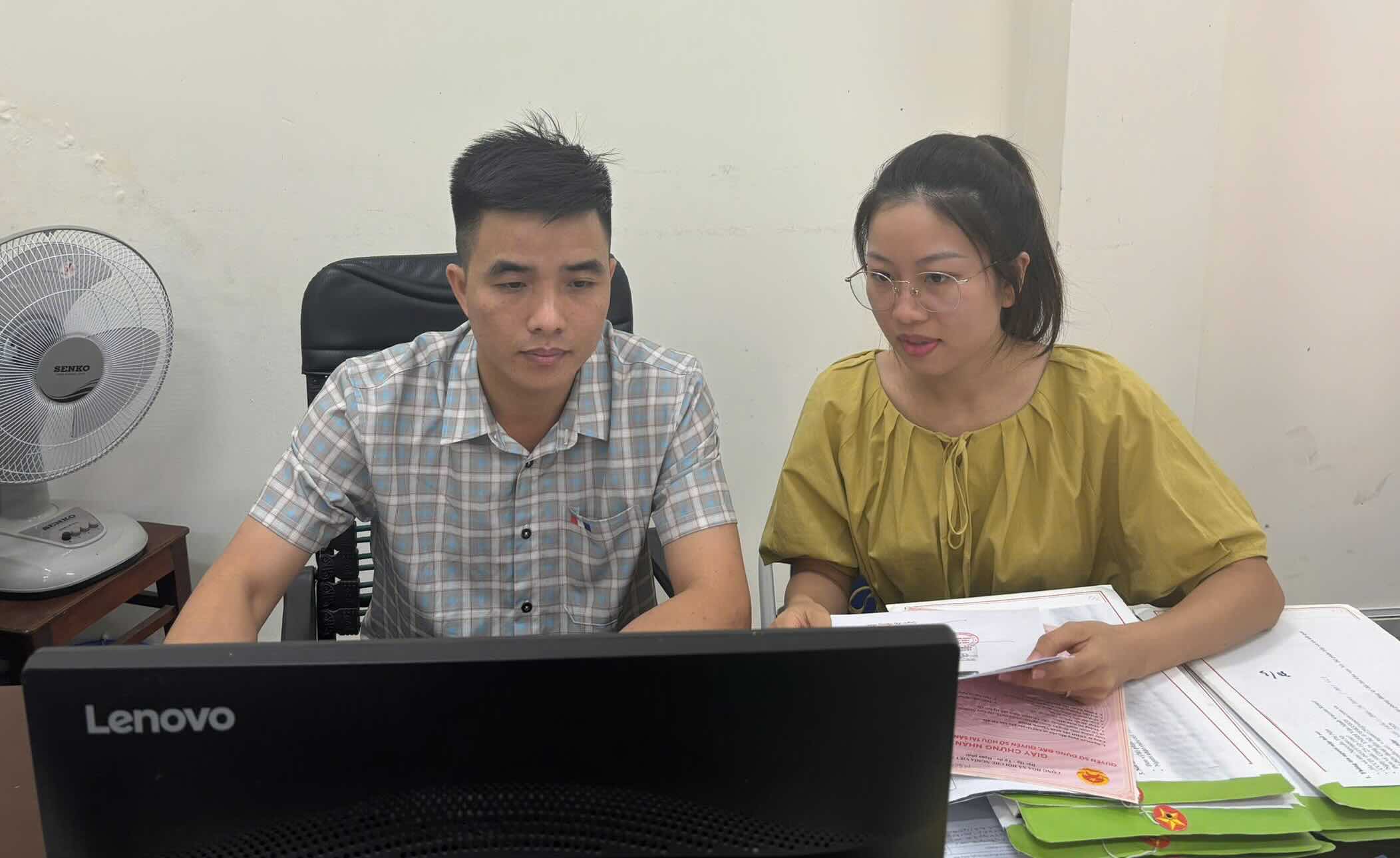
According to the document of the Provincial People's Committee, the peak period is being implemented to focus resources on handling existing issues, completing the land database, striving to have over 50% of land plots meet the criteria "right - sufficient - clean - living" by the end of June 2026.
Mr. Nguyen Van An said that the workload during the peak period is very large, while the time is short and the data quality requirements are high, creating significant pressure for the implementing unit.
The implementation of cleaning and standardizing land data in Quang Tri is facing many difficulties simultaneously from many sides. First of all, the issue of data forming through many stages, from paper records, cadastral maps with different reference systems to digitized data, but has not been updated synchronously, leading to inconsistency.
Mobilizing total personnel
In addition, the volume of dossiers and land plots that need to be reviewed, inspected, and standardized is very large, while many changes in land use rights have arisen in reality but have not been registered or updated in time, causing the verification and supplementation of information to be prolonged.

Regarding technology infrastructure, VBDLIS software is in the process of upgrading, so errors still arise, especially in the phase of synchronizing data to the national system. The system also lacks automatic features such as duplication filtering, data standardization or error warning, and has not supported inter-sectoral cross-checking, forcing officials to handle manually, taking a lot of time.
In addition, the locality still has limitations in professional human resources and information technology infrastructure, while still having to ensure regular administrative procedures. Some old dossiers, missing components or with differences between reality and archived dossiers continue to put pressure in the process of verifying and updating data.
In terms of expertise, the unit conducts data classification by group for appropriate processing. Cases that can be completed quickly are prioritized for resolution first, while complex and incorrect dossiers are focused on processing separately.
At the same time, information technology is strengthened to be applied to review and detect duplicate and inconsistent data, reducing dependence on manual processing.
The Office also closely coordinates with local authorities and relevant agencies in verifying and supplementing information; and monitors the progress daily to promptly remove obstacles.


