
According to Lao Dong reporters, the old Trung Tu apartment building (Dong Da district) with an area of 40m2 is being sold by the owner for 2.7 billion VND, equivalent to 68 million VND/m2.
According to the owner for sale, the apartment has 2 bedrooms, the actual usable area is about 80m2, including the expanded areas in the hallway and the balcony tiger cage.
Another old apartment building in Kim Lien (Dong Da district) with an area of 83m2, is being advertised for 6.3 billion VND, equivalent to more than 75 million VND/m2, surprising many people with its severe deterioration.
Or the 71m2 Nghia Tan apartment building (Cau Giay district) is also being offered for sale by the owner for 4.3 billion VND, equivalent to more than 61 million VND/m2 despite being in use for decades.
Mr. Nguyen Manh (36 years old, living in Nghia Tan apartment building) informed that he felt very shocked when he heard the selling price of the old apartment building in the district.
Mr. Manh described that many houses in Nghia Tan apartment complex are in a state of disrepair, with small areas, but are being advertised for sale at prices exceeding 60 million VND/m2, which surprised many people living here like him.
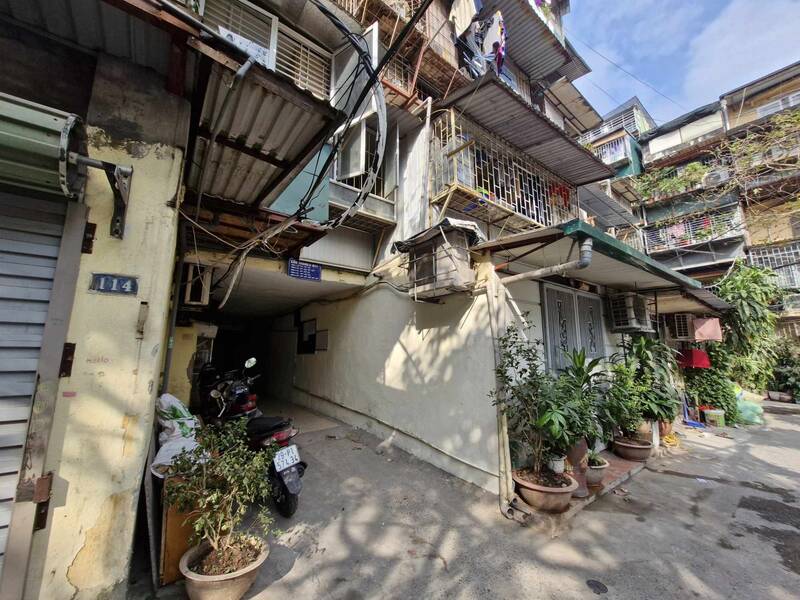
Many real estate experts believe that the reason for the high price of old collective houses in Hanoi is their central location.
In addition, the price of this segment is also high due to the influence of apartment and house prices in alleys in recent times. However, there are many cases of degraded collective houses being advertised for sale at unreasonable prices.
Experts also acknowledge that with old collective houses in central districts of Hanoi such as Dong Da, Thanh Xuan, Cau Giay..., buying and selling and liquidating are often very easy and quick, which is also one of the reasons why house prices in these areas are often pushed up very high.
Mr. Nguyen The Diep - Vice President of Hanoi Real Estate Club - commented that although the collective house segment is located in the center of Hanoi, when buying and selling old collective houses, buyers need to pay attention to the actual area.
Because, during their stay, many households have expanded tiger cages of tens of square meters, reducing the value when the owner wants to transfer. Buyers also need to note that renovation and expansion are common in old collective housing areas, causing the area in the red book to be much smaller than the area for sale.


