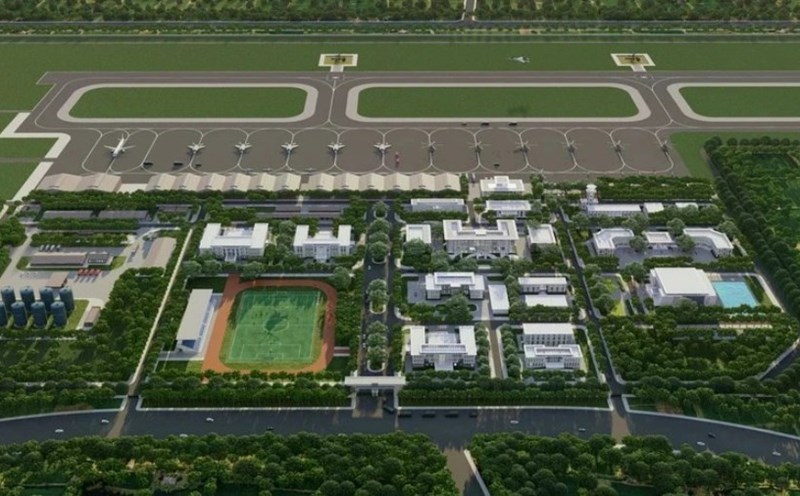
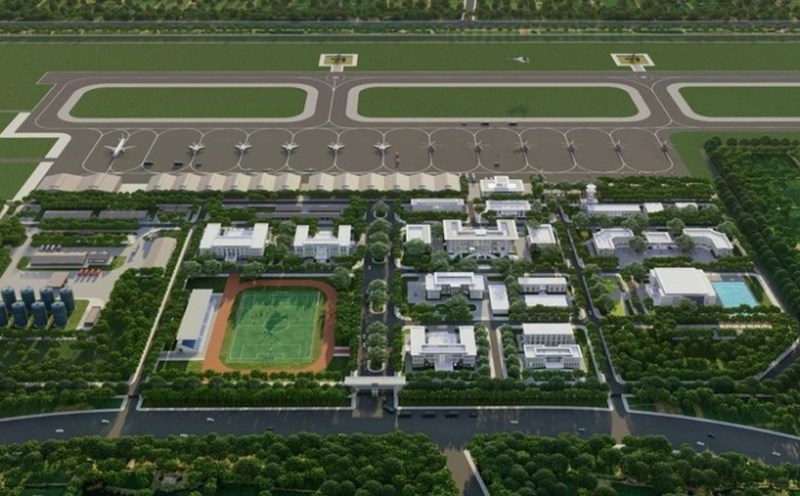
On the afternoon of December 8, the National Assembly discussed the investment policy for the Gia Binh International Airport construction investment project (Gia Binh airport).
Commenting on the scale of the project and technical standards, delegate Nguyen Tam Hung (HCMC delegation) agreed with the determination of Gia Binh airport as a level 4F airport and oriented to become a passenger and cargo transit center for the Asia-Pacific region.
However, the delegate suggested that the drafting committee consider adding a mechanism to review technical standards after each 5-year cycle corresponding to the vision to 2050, because aviation technologies, especially artificial intelligence in flight operations, optimizing passenger flow, automating parking lots and safety standards of the International Civil Aviation Organization (ICAO) are changing rapidly.
Therefore, when stipulating the periodic upgrading mechanism in the Resolution, the project will always keep up with the trend of international aviation development and avoid the situation where the project has just been put into use and is outdated.
Regarding the need to use land and convert rice-growing land, the delegate suggested considering adding the requirement for independent supervision of the area of 922.25 hectares of 2-crop rice land.
According to the delegate, rice land is a strategic resource to ensure national food security; the change of land use purpose must go hand in hand with the plan to restructure production areas and change people's livelihoods. Recognizing an independent monitoring mechanism will help limit prolonged complaints, reduce social risks and ensure the rights of people whose land is recovered.
Regarding the special policy to allow the relocation of historical and cultural relics, the delegate suggested considering adding criteria for publicizing the scientific records of each relic before and after relocation, clearly stating solutions to preserve the original value and plans to promote the relics after relocation.
This approach will ensure the harmony of development - cultural benefits, avoid people's concerns and create higher social consensus during the implementation process.
Regarding the mechanism of responsibility in monitoring and preventing loss and waste, the delegate agreed to stipulate that the Government is responsible to the National Assembly and the People's Committee of Bac Ninh province is responsible for site progress.
However, to ensure the binding implementation, it is recommended to add a quarterly progress assessment mechanism according to the KPI set on compensation, resettlement, disbursement, and key infrastructure construction progress.
When progress and responsibility are measured by index, the supervision of the National Assembly and the people will be more effective, while reducing the risk of delays as has occurred in some other national-scale infrastructure projects.
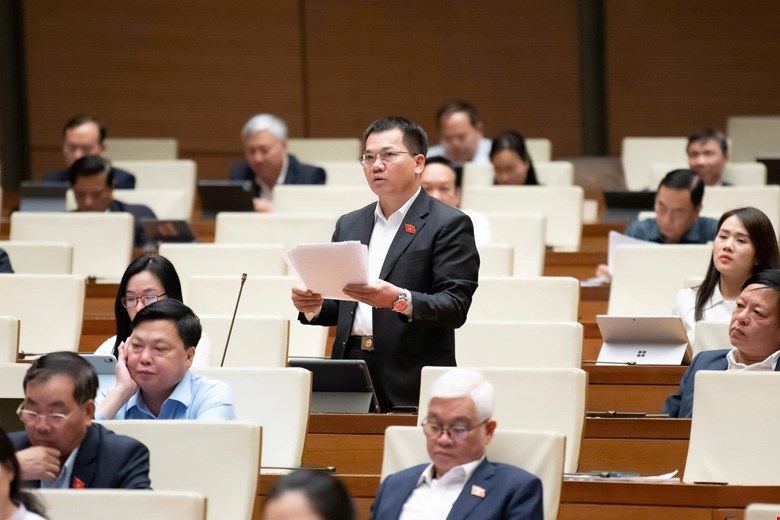
Regarding the planning, delegate Duong Khac Mai (Lam Dong delegation) proposed to continue reviewing to ensure consistency with the planning of Bac Ninh province and some specialized plans.
According to the delegate, this is an important requirement because the scope of land use is very large, especially double-crop rice land - a type of land that is especially important for national food security.
Regarding scale and goals, the delegate suggested clarifying the quantity of technical indicators, especially 5-star international standards and Net Zero targets; clarifying the suitability with financial and technical conditions.