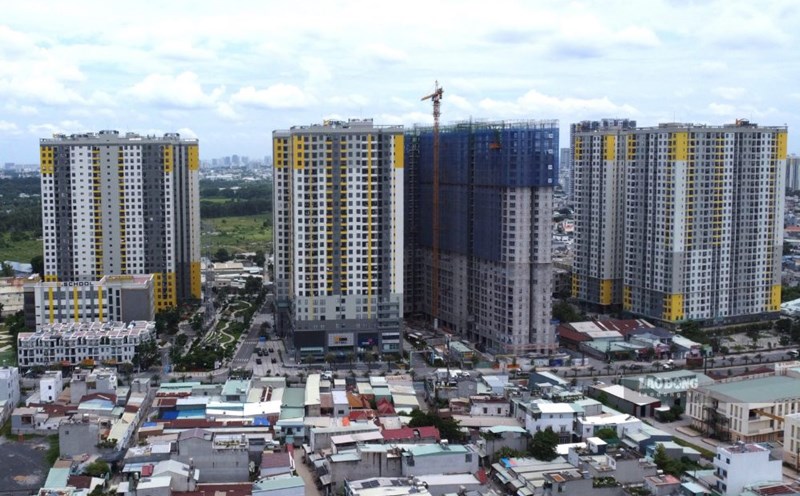
On August 18, the Vietnam Fatherland Front Committee of Ho Chi Minh City organized a social criticism conference on the draft master plan of Ho Chi Minh City for the period 2025-2050, 100-year vision. The conference was attended by leaders of the People's Council, the Vietnam Fatherland Front Committee of Ho Chi Minh City, the City Development Research Institute, along with experts, scientists, lawyers and people from all walks of life.
TOD urban development associated with the 15-minute urban model
At the conference, Dr. Sc. Architect Ngo Viet Nam Son emphasized the strategy of planning TOD (Transit-Oriented Development) dynamic corridors along the metro system closely linked to the "15-minute urban" model.
According to experts, Ho Chi Minh City is facing the problem of managing a large megacity and the goal of maintaining double-digit growth. The key solution is to build urban routes towards complete infrastructure, helping residents easily access essential social utilities within a radius of 15 to 20 minutes from the station.
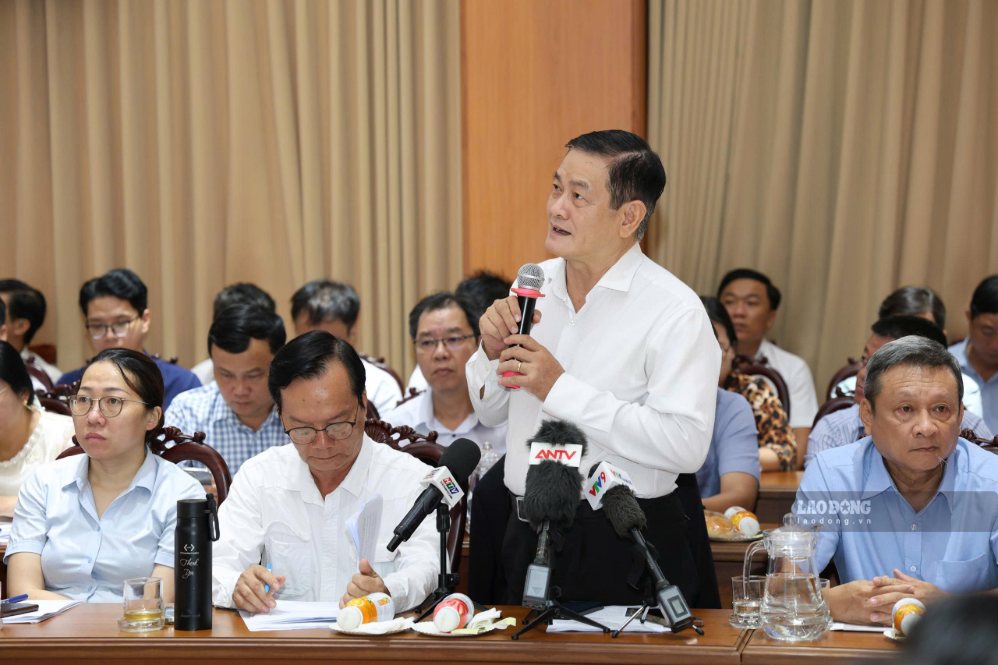
To effectively implement this model, Mr. Son proposed that the city prioritize adjusting the route direction of metro lines that have not yet started construction. The new route needs to pass through potential TOD land funds with low compensation and site clearance costs, and at the same time approach near existing social infrastructure projects.
In addition, the development of the 15-minute urban model requires the city to soon establish a clear public-private partnership (PPP) mechanism, share financial responsibilities and share benefits between parties in investment and operation plans.
This strategy also needs to be synchronously integrated with a multi-modal logistics system, zoning 7 socio-economic areas and a plan to preserve heritage spaces and green spaces on both banks of the Saigon River to reduce traffic congestion concentrated in the center and create sustainable breakthrough momentum for the city.
Linking planning with climate resilience and circular economy
Also at the conference, Dr. Tran Van - former Deputy Chairman of the National Assembly's Committee for Finance and Budget acknowledged that the planning dossier needs to consolidate arguments about the needs and ability to mobilize investment resources, and at the same time clearly define the order of priority for works and projects. In addition, the planning also needs to clarify the capital needs associated with the scale of the economy, budget revenue capacity and resource attraction capacity.
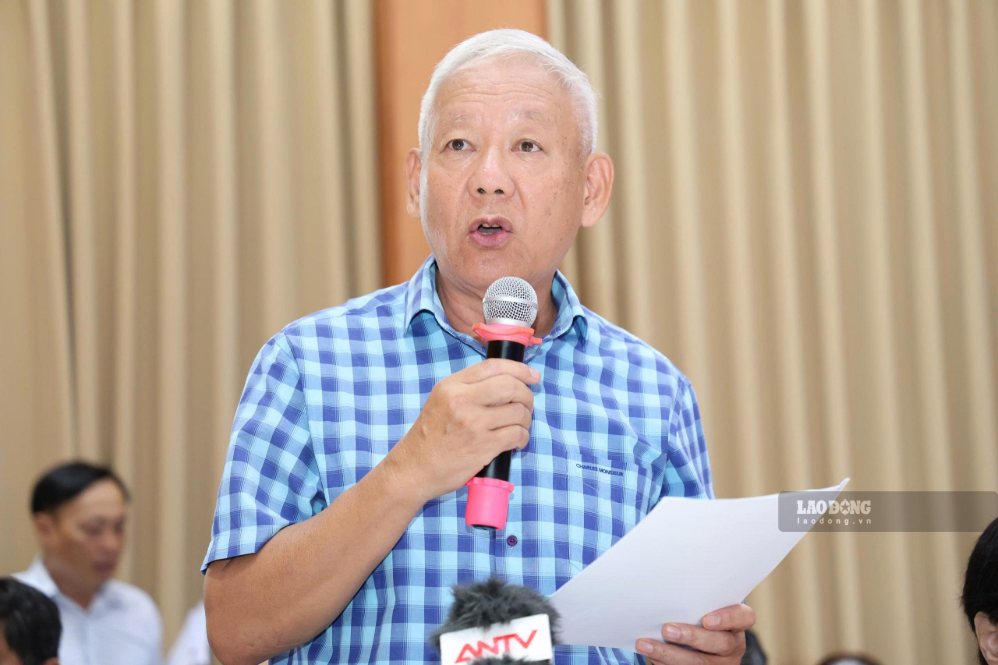
According to Dr. Tran Van, the draft plan has not fully demonstrated the ability to absorb capital sources as well as the actual implementation capacity. Meanwhile, for many years, the disbursement progress of public investment in Ho Chi Minh City has not reached the plan. Therefore, the plan needs to clearly state the scenarios in case resources cannot be mobilized as expected and how this will affect development goals.
If the planning does not closely calculate the ability to mobilize resources and determine the specific level of priority, this may lead to major consequences for the city's investment and finance.
Prof. Dr. Nguyen Van Phuoc - Chairman of the Ho Chi Minh City Union of Science and Technology Associations, said that the multi-polar urban structure and regional linkage are important prerequisites to help the city aim for double-digit growth. However, planning needs to take into account territorial spatial diversity and resilience to climate change.
According to Prof. Dr. Phuoc, urban space must be zoned according to each group of risks: areas with high resilience will prioritize arranging growth poles and strategic infrastructure; conversely, high-risk areas must apply special control mechanisms, limiting construction density and population size.