
Speaking at the opening, Deputy Minister Nguyen Van Sinh emphasized that building materials (VLXD) are an important sector for socio-economic development and infrastructure construction. However, practice also raises many issues that need to be further improved in terms of institutions, from development orientation, supply-demand balance, technology innovation to economical and efficient use of resources, energy and environmental protection.
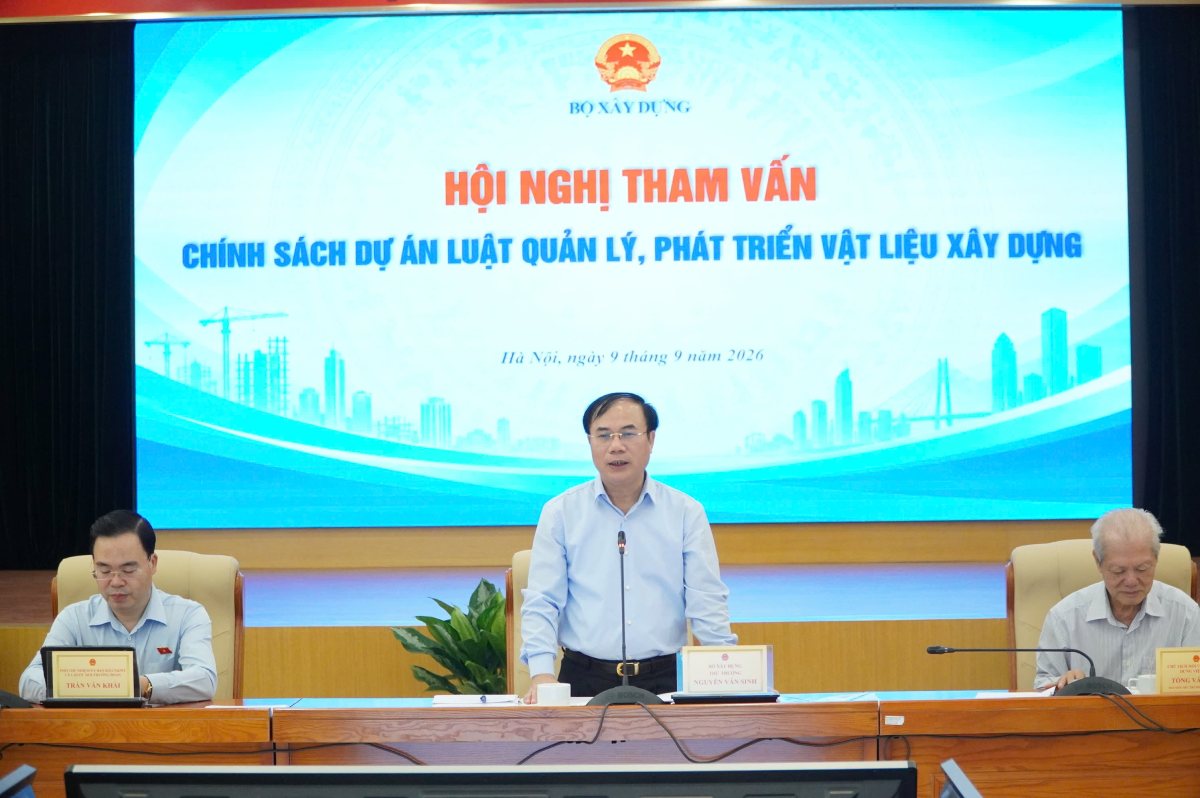
Reporting at the Conference, Mr. Nguyen Huu Tho - Deputy Director of the Department of Science and Technology, Environment and Building Materials - said that the task of building the Law has been identified in Conclusion No. 17-KL/TW, Plan No. 64/KH-UBTVQH16, Resolution No. 185/NQ-CP and Decision No. 527/QD-TTg. The Ministry of Construction has organized a summary of practice, reviewed the relevant legal system to correctly identify gaps that need to be legalized, avoiding re-regulating contents that have been adjusted by specialized laws.
The goal of the policy is to form a synchronous and stable legal framework for building material management and development; promote industry development towards modernity, greenness, circulation, and efficient use of resources and energy; improve quality, competitiveness and ensure supply for construction needs. At the same time, innovate state management methods in the direction of decentralization, digitization, data management and strengthen post-inspection.
According to the drafting agency, the 6 groups of policies being studied include: completing strategic tools, planning, and construction material development plans; developing construction materials in the direction of technological innovation, efficient use of resources and energy and promoting new materials and green materials; managing raw materials and ensuring supply; using construction materials in construction; promoting the recovery and recycling of waste as raw materials, developing circular economy; state management, digital transformation and building a database on construction materials.
One of the important principles is that the new policy does not give rise to the "ask - give" mechanism, does not re-establish product planning, does not create additional licenses, capacity confirmation procedures or separate incentive procedures. For the supply of ordinary building materials, the orientation is to strengthen monitoring, forecasting, early warning and coordination on the basis of data, instead of administrative allocation of material sources.
Concluding the Conference, Deputy Minister Nguyen Van Sinh requested the presiding agency to continue to clearly prove each legal loophole that needs to be legalized, not to re-regulate the contents that have been fully regulated by other laws; clearly define the boundaries of 6 groups of policies, ensuring no duplication or overlap.
The Deputy Minister emphasized the requirement to ensure the spirit of development and market mechanism; not design product planning, administrative allocation of capacity or material sources; not create "sub-licenses", procedures for approving materials, business conditions or new reporting obligations if not really necessary. The construction of the database must aim to connect, share, and reuse existing data, serving management and reducing compliance costs for people and businesses.


