
Imported frozen chicken is half the price of domestic goods
According to data from the Customs Department, in the first 7 months of the year, Vietnam imported 595,700 tons of meat and meat products, worth more than 1.7 billion USD, an increase of 11.4% in volume and 32.4% in value compared to the same period last year.
In which, the group of meat and edible by-products after slaughter of poultry accounts for 36.5% of the total imported meat volume, equivalent to nearly 217,400 tons. Chicken meat alone accounts for over 90% of this commodity group, showing that this is a key commodity in the imported poultry volume. The import value of this commodity group reached 221.1 million USD, accounting for 13% of the total import turnover of meat and meat products.
The structure of imported goods also shows that most of the chicken meat entering Vietnam is frozen, cut into parts before being put on the market. On average, each kg of imported meat and poultry by-products costs about 1.02 USD, equivalent to 26,500 VND.
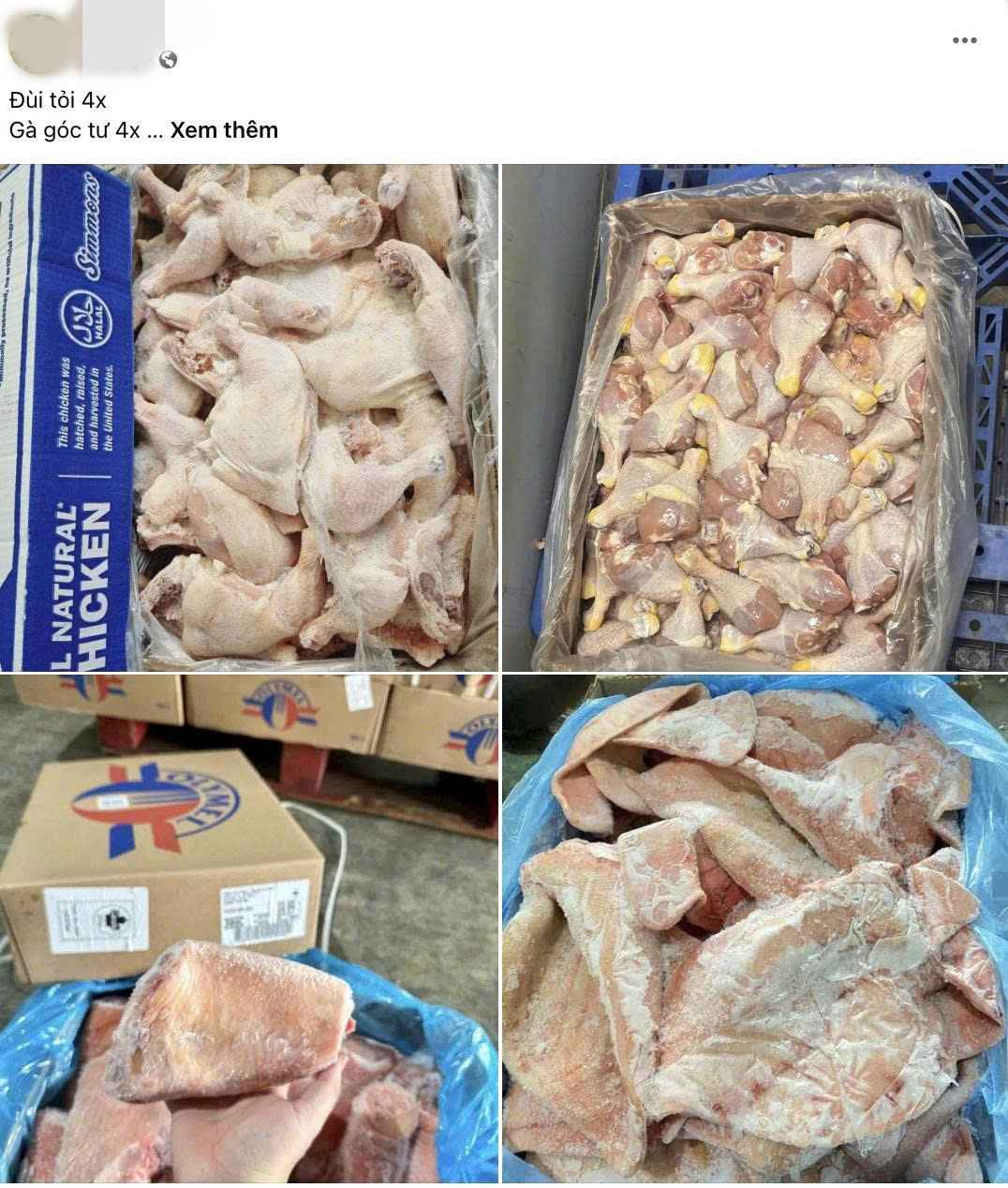
A survey by Lao Dong Newspaper reporters at some sources specializing in supplying imported frozen chicken also confirmed that many imported frozen chicken codes currently cost only about half of Vietnamese goods.
Ms. Thu Thao - a focal point specializing in supplying frozen chicken meat - said that imported frozen chicken is mainly supplied to food processing units and serves industrial meals.
According to Ms. Thao, the prices of these products are usually about 40-50% lower than domestic industrial chickens.
In which, large garlic thighs are priced at 48,000 VND/kg, boxed 15 kg; small garlic thighs are priced at 50,000 VND/kg, boxed 10 kg. Whole chickens are priced at 50,000 VND/kg, boxed from 12-14 kg. According to the seller, this type of chicken has chewy meat, not mushy, and can be used to process whole grilled chicken.
Meanwhile, the price of industrial chicken thigh portions in the country currently ranges from about 70,000 to 100,000 VND/kg depending on the type (garlic thigh, thighside, or corner thigh) and the selling location.
According to Ms. Thao, the chicken products imported into Vietnam are mainly tough Korean chickens. Most customers are people who buy them for processing or serving business activities.
What does Vietnam's livestock industry need to do to compete?
Talking to Lao Dong Newspaper, Mr. Nguyen Tri Cong - Chairman of Dong Nai Livestock Association - said that the domestic chicken farming industry in recent years has had a fairly rapid growth rate. At the same time, the consumption trend of Vietnamese people, especially young people, is shifting to using more chicken meat.
According to Mr. Cong, about 4-5 years ago, the average consumption of chicken was only above 10 kg to about 20 kg/person, but now it has increased to nearly 27-28 kg/person. This shows that the demand for domestic chicken consumption is gradually increasing and chicken is increasingly occupying a significant position in the food consumption structure.
Explaining the reason why some imported chicken meat products have low prices, Mr. Cong said that in many exporting countries, consumers tend to prefer belly. Therefore, businesses keep this meat to consume in the domestic market at high prices. Meanwhile, parts such as thighs, necks, wings and by-products are exported to Vietnam at lower prices.
However, according to Mr. Cong, imported frozen meat is still mainly consumed at collective kitchens, worker kitchens and units serving large quantities of meals. Meanwhile, the taste of the majority of Vietnamese consumers still leans towards fresh meat and cool meat products.
Referring to the amount of imported meat and the low prices that are being concerned about, Mr. Cong said that it is necessary to look at the issue in the context of Vietnam's participation in trade agreements. When participating and implementing trade commitments with countries, Vietnam must comply with those commitments.
Therefore, the important issue for the domestic livestock industry is to change breeds, farming methods and production organization to reduce costs and improve competitiveness with imported products.
For the domestic livestock industry, we must improve breeds, improve productivity to gradually bring costs closer to imported products. Because imports are an issue associated with trade commitments, and what we need to do is improve productivity. When productivity increases, production costs will decrease," Mr. Cong analyzed.


