
Except for European teams that have to participate in the play-offs, most teams have been able to freely face opponents from other continents during the FIFA Days at the end of March. This means that South American representatives on the journey towards the World Cup also have the opportunity to try their hand at European teams, except for one special case.
Argentina was scheduled to face Spain in the Finalissima match - the confrontation between the EURO and Copa America champions. However, tensions in the Middle East make Qatar no longer a feasible destination, while alternative options have not been agreed upon.
This pushes Argentina into a difficult problem. What will they do in the last period of FIFA before entering the preparation phase for the World Cup?
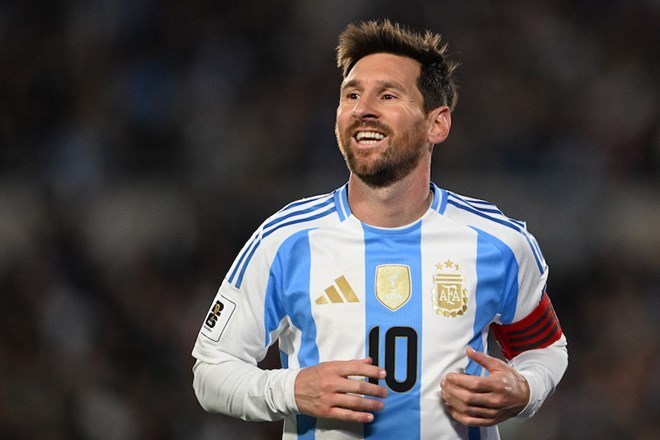
The solution proposed is to bring the whole team back to Buenos Aires. The players have time to rest with their families, interspersed with training sessions and a few friendly matches to create opportunities for fans to say goodbye, and at the same time show gratitude to Lionel Messi - possibly in his last time wearing the national team jersey at home.
However, the problem arising is where to play and who to meet?
Monumental Stadium - Argentina's familiar home stadium - cannot be used because it has been scheduled for AC/DC concerts. Therefore, they are forced to move to La Bombonera, Boca Juniors' stadium with significantly smaller capacity.
Initially, the opponent was chosen to be Guatemala, but FIFA did not approve because the team had a schedule in Italy. This violated the rule of not being allowed to play in two different continents in the same FIFA phase.
In the end, Argentina was forced to choose the "firefighting" solution of a friendly match with Mauritania and then Zambia. This is clearly not an ideal preparation, as their recent opponent list includes Venezuela, Puerto Rico, Angola and two more African representatives - teams that are not strong enough to compete for World Cup tickets.
In theory, Argentina may not be too concerned. Since winning the 2022 World Cup, they have maintained impressive form: successfully defending the Copa America 2024 crown and leading the South American regional qualifiers. They even proved that they can play well without completely depending on Messi, such as the 4-1 victory over Brazil when he was absent.
However, the challenges ahead are very large. In history, only Italy (1938) and Brazil (1962) have successfully defended the championship, and no team has done that outside of their continent. Argentina is facing the opportunity to rewrite history, but clearly they need more difficult tests.
There are three major issues to consider.
First is Messi's role. There has been no official confirmation of whether he will participate in the World Cup or not. When turning 39 during the tournament, Messi was no longer at his peak, although he still possessed genius moments. But Argentina's failure to face European teams since the 2022 World Cup final makes it really difficult to assess his ability.
The victory over Mauritania showed that Argentina played well when Julian Alvarez was still on the field, but significantly slowed down when Messi came on as a substitute. Partly due to collective psychology, partly because his teammates were too eager to create opportunities for Messi to score.
However, one thing is increasingly clear that Alvarez is becoming the most important spearhead. When combined with Messi - like in the match against Zambia - this duo still makes a difference with effective combinations.

Second is the gap left by Angel Di Maria. Although still playing impressively in Rosario Central's colors, he has no intention of returning to the national team. Replacements like Alejandro Garnacho have not met expectations, while Valentin Barco is beginning to show potential to become a breakthrough card.
Finally, and perhaps most importantly, is the defense. At the 2022 World Cup, Argentina repeatedly revealed their fragility against Australia, the Netherlands and even in the final match against France. And it is worrying that after nearly 4 years, they have not yet found a new solution.
In recent friendly matches, especially in the second half against Mauritania, Argentina is still vulnerable to counter-attacks. If that happens at the World Cup, the consequences could be very serious, especially when the new format is longer and harsher.
Currently, Lionel Scaloni almost still has to place his trust in the old squad from Qatar. A familiar squad, but it also means that they are entering a new journey with many unsolved questions.


