
Coach Luis Enrique created a tactical turning point in Paris Saint-Germain's victory over Nice last month when constantly swapping player positions. Nuno Mendes pushed high as a striker, Lucas Beraldo played midfielder, and Khvicha Kvaratskhelia played as a center forward. That flexibility helped PSG win 4-0 and completely disrupt the opponent.
That is not a temporary experiment, but reflects Enrique's clear philosophy. He wants to build a team with every player who can take on many different roles. "My dream is to have 20 players who can play in any position" - he shared.
This is an approach that shows that top football is moving away from fixed patterns. For Enrique, the system is not in the diagram, but in the way players understand space, read the game and make decisions in an instant.
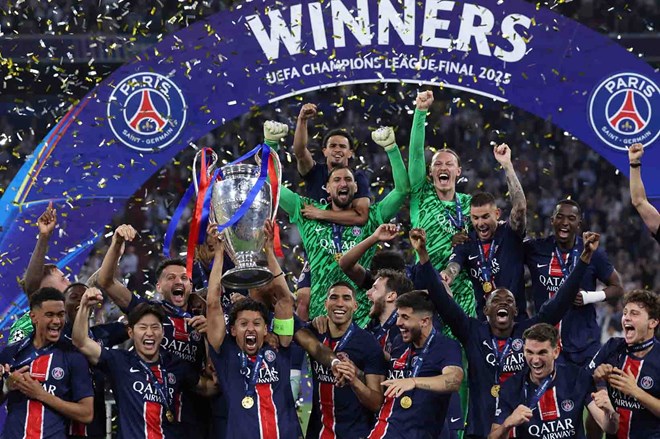
Even when PSG returns to a more traditional squad in the UEFA Champions League, flexibility is still the core factor. Against Liverpool, the attack with Ousmane Dembele, Kvaratskhelia and Desire Doue continuously swapped positions, causing the opponent's defense system to be stretched and lost direction. There is no longer a clear line between winger, center forward or attacking midfielder, instead all blend into a flexible attacking flow.
That playing style also appeared on the Bayern Munich side of coach Vincent Kompany. According to Sporting Director Max Eberl, traditional roles have almost disappeared. Harry Kane is no longer just number 9, Joshua Kimmich moves between defender and midfielder, and wingers like Michael Olise or Luis Diaz are not tied to the wing.
One of the typical examples is Konrad Laimer - from midfielder to full-back, even taking on many roles in the same match. That versatility is becoming a new standard, where the value of a player is not only in skills, but also in tactical adaptability and spatial thinking.
This trend is not limited to PSG or Bayern. Liverpool has Dominik Szoboszlai, Manchester City owns multi-role players, and Arsenal has Declan Rice and Kai Havertz - people who can take on many positions without reducing operating efficiency.
Even more typical is Federico Valverde of Real Madrid - a player who can appear at any hot spot in midfield and right flank, always perfectly adapting to tactical requirements. Such players not only help the team become more flexible, but also make opponents almost unable to read them.
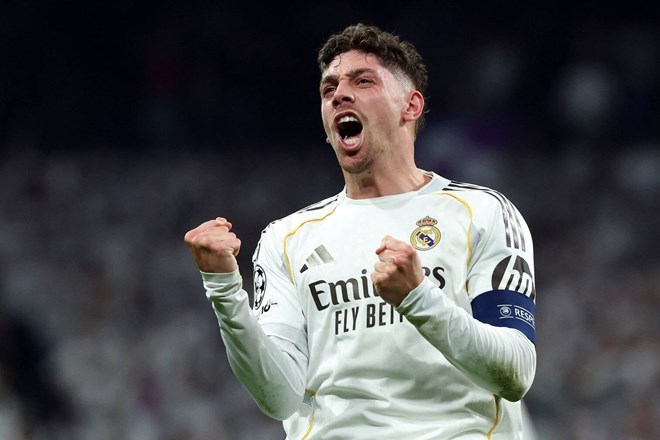
Modern football is clearly transforming. From a fixed system to a flexible space. Diagrams such as 4-3-3 or 4-2-3-1 are now only for reference, because the reality on the field always changes with each ball. The ability to constantly swap positions creates a tactical advantage, helping the team control the game without relying on a rigid structure.
In that context, players who are only good at one role are gradually becoming obsolete. Instead, there is a generation of "all-round" players - people who have both technique, tactical thinking, and the ability to adapt quickly. This is not just a trend, but is becoming a new standard to shape success in top football.


