
The Premier League title 2012-2013 was the last title in Sir Alex Ferguson's illustrious coaching career and was once seen as a miracle. However, looking back at the Manchester United squad at that time, perhaps it is necessary to reconsider the opinion that Ferguson created a miracle from an ordinary team.
Man United at that time actually still possessed many quality players, and David Moyes' failure in the next season may not completely reflect the true quality of the squad he took over.
A newly released documentary reveals that Jose Mourinho once reached an agreement with Man United to take over the team in 2013, before deciding to return to Chelsea. This detail shows that Moyes' choice may not be the only option that Man United's board of directors is considering.
Moyes' appointment at that time was seen as a continuation of tradition. Man United chose a talented Scottish coach, who was successful at Everton, instead of looking for a top European name. Gary Neville once called this a "victory for sobriety in football". However, with what happened afterwards, this decision became increasingly suspicious.
If Mourinho had taken over Man United instead of Moyes, things might have been different. The 2012-2013 season championship squad still has many quality factors. Robin van Persie just had an excellent season with 30 goals. Wayne Rooney is only 27 years old, although signs of dissatisfaction have appeared. Michael Carrick is still a pillar in midfield, while the defense, although old, is still solid enough. Antonio Valencia and Ashley Young are also capable of creating breakthroughs.
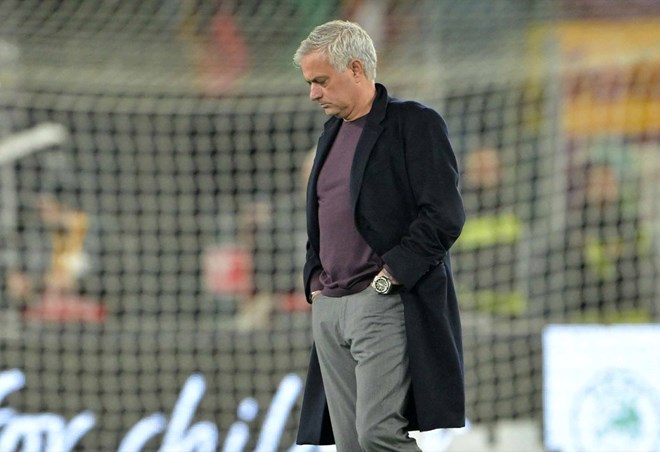
In fact, before the 2013-2014 season, the "Red Devils" were still considered one of the championship candidates. Therefore, their finishing of the season in seventh place, 15 points behind the Champions League group, is clearly not only explained by the quality of the squad.
Moyes also made many mistakes in management. One of the reactionary decisions was that he brought in a new coaching staff and removed many of Ferguson's close assistants such as Mike Phelan, Eric Steele and Rene Meulensteen. This made the already difficult transition process even more unstable.
Of course, Moyes was not entirely lucky either. Van Persie declined significantly after injury problems, while the transfer of power at the top of Man United took place at a sensitive time. David Gill left the position of CEO, Ed Woodward took over, and Moyes' first transfer window quickly became a disaster. Man United failed in their efforts to recruit Cesc Fabregas, while Marouane Fellaini was the most notable signing.
Therefore, there will never be an answer to the question of how much better Mourinho can do than Moyes if he actually succeeds Ferguson. Mourinho will certainly also face enormous pressure from Ferguson's legacy. However, his experience and position can help Man United have more time and patience when the results are not as expected.
Moyes' failure is not only because of the poor quality squad or Ferguson's too big shadow. Decisions on personnel, dressing room management, season start and transfer activities all contribute to pushing Man United into a spiral of crisis.
That is also the reason why the hypothesis that Mourinho led Man United in 2013 is still of interest to many people. He may not create a "second Ferguson", but it is likely to help the "Red Devils" achieve better results than what Moyes has done.


