
No team in the top 5 European leagues has conceded more goals from set pieces (12) than Liverpool this season. This has become Arne Slot's systematic weakness.
Newcastle, Crystal Palace, Manchester United, Brentford, Manchester City, Nottingham Forest, Leeds, Tottenham and most recently Wolves have all exploited this weakness of The Kop this season. Some teams have even done it more than once.
Before the match against Wolves last weekend, after Liverpool conceded another goal from a corner kick, Slot described set pieces as just "supplements". In the modern Premier League, that view easily creates a discrepancy with reality, as "dead balls" are increasingly seen as a tactical component that can decide points.
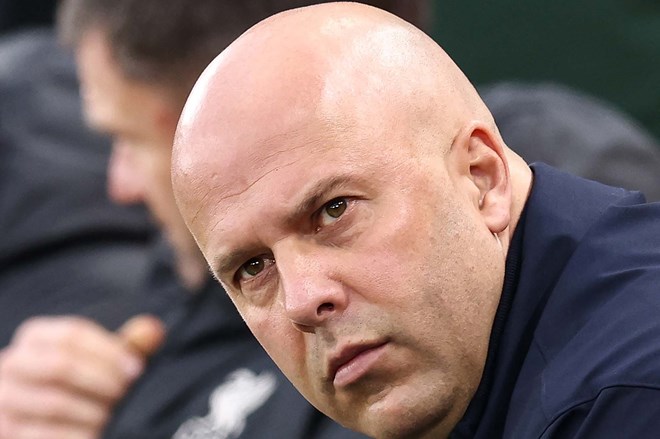
There is no doubt that Liverpool's ability to handle set-piece situations at both ends of the field has not yet reached the necessary threshold to compete for the top group. If the number of goals scored from set-piece situations is used as a measure to convert positions in the rankings, Slot's team will be in the bottom group.
So where are they making mistakes?
The problem with corner kicks
Only West Ham (10) conceded more from corner kicks than Liverpool (7) this season, a rate that Slot admitted is "almost ridiculous".
Since the beginning of the season, Liverpool has faced 85 corner kicks (the average of the league) but conceded about 12 once. West Ham suffered 114 corner kicks and on average about 11 conceded a goal. To compare, Arsenal only had to defend with 55 corner kicks.
A noteworthy point is that Liverpool does not often lose right from the first touch of the ball. This explains why their xG from corner kicks is not too high, and also raises the issue of the second phase - that is, the situation after the ball is cleared, rebounded or regained by the opponent around the penalty area.
Van Dijk called this a fatal weakness, reflecting the slowness in reaction and organization of cover when the defensive state shifted from initial interception to second-hand tackles.
The late goal conceded against Man United at Anfield in October is a typical example. Liverpool was not directly defeated by a header from the first cross. Instead, the risk appeared in a sequence after the initial pass was blocked, creating conditions for Fernandes to make a cross in the second half and Maguire to take advantage of it successfully.
Liverpool is lagging behind the rest of the league
In the context that more than half of Liverpool's goals conceded this season originated from set pieces (including penalties), it is a potentially risky approach. Losses are not only in goals conceded, but also in the team being dragged into a state of prolonged tension, having to defend many second-footed shots and losing control of the pace of the match.
More worryingly, The Kop not only defends poorly but is also ineffective at the other end of the field. While the league witnesses a trend of increasing goals from set pieces, teams that take advantage are usually those in the top group.

Man United leads the Premier League in goals from set-piece situations (13), while Arsenal closely follows (12). Chelsea (11) and Aston Villa (9) are also in the effective group. Leeds (12) is a rare "standard deviation" case when high set-piece productivity but overall position does not reflect commensurate.
Slot admitted to being extremely uncomfortable with the organizational quality, but the level of improvement is still limited. The noteworthy detail is that Liverpool has appointed Aaron Briggs for this field. However, his professional profile is mainly analysis and general coaching roles, instead of a specialized roadmap for fixed situations.


