
In mid-January 1996, Newcastle United led the Premier League with a 12-point gap from Manchester United when both teams played 23 matches together. At that time, the championship seemed to be just a matter of time for the Northeast team.
Three decades have passed, history records the complete opposite. Newcastle could not win the championship, while Man United reversed the situation to win the championship after one of the most dramatic races in the history of the tournament.
2 years later, Arsenal of Arsene Wenger was left 12 points behind Man United in February of the 1997-1998 season, but in the end still won the championship with a gap of exactly one point.
Therefore, when the "Red Devils" fans sang loudly "we will win the tournament" after the breathtaking 3-2 victory over Arsenal right at the Emirates last weekend, it was not necessarily just a spontaneous emotion.
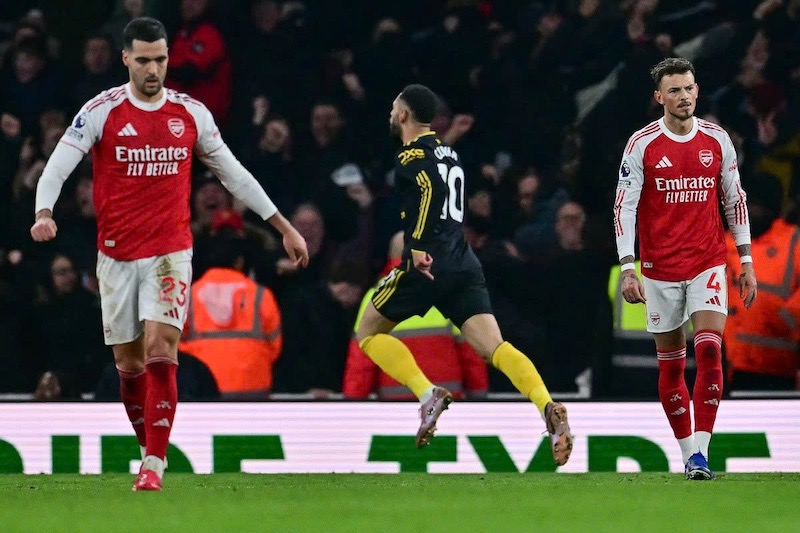
This victory puts Man United up to fourth place in the rankings. They are 12 points behind the leading team Arsenal, 8 points behind Man City and Aston Villa, but only 1 point ahead of Chelsea and 2 points ahead of Liverpool in the top 4 race.
In theory, that gap seems too large to think about the championship. However, in a turbulent season, where no team can show the stability of a true champion, that crazy scenario cannot be completely ruled out.
Even interim coach Michael Carrick quickly extinguished his excitement after the victory over Arsenal. He emphasized that Man United's realistic goal is still the top 4 and a Champions League spot. But it is the prolonged problems of the leading group that have made the race more unpredictable than ever.
Arsenal is still at the top of the table, but recent form shows that they are vulnerable to pressure. In the last 3 rounds of the Premier League, Mikel Arteta's team has only won 2 points and scored only 2 goals.
Worry is evident in the Emirates stands in the match against Man United. The fear of losing the top spot seems to be strangling Arteta's players.
Arsenal's biggest problem lies in attack. Not owning a center forward who scores 20 goals each season, the "Gunners" are relying on unstable names. Leandro Trossard and Viktor Gyokeres are the two players who have scored the most goals in the Premier League this season for Arsenal - each with only 5 goals.
Bukayo Saka has been goalless for 13 consecutive matches in all competitions. Gyokeres has not scored from open situations in the last 11 matches in the domestic league. Gabriel Martinelli and Noni Madueke have also seriously declined.
Man City, the team currently in second place and only 4 points behind Arsenal, has just ended a 4-match winless streak with a 2-0 victory over Wolves. However, five defeats since the beginning of the season have made them never feel like a true champion.
Despite adding center-back Marc Guehi in the winter transfer window, Man City still has problems in defensive and midfield ability. Erling Haaland has scored 20 goals in the Premier League, but only has exactly one goal in the last 9 matches in all competitions.
Aston Villa is also emerging as a potential candidate. Unai Emery's team is currently third, 4 points behind Arsenal and has defeated The Gunners, Man City, Man United and Chelsea this season.
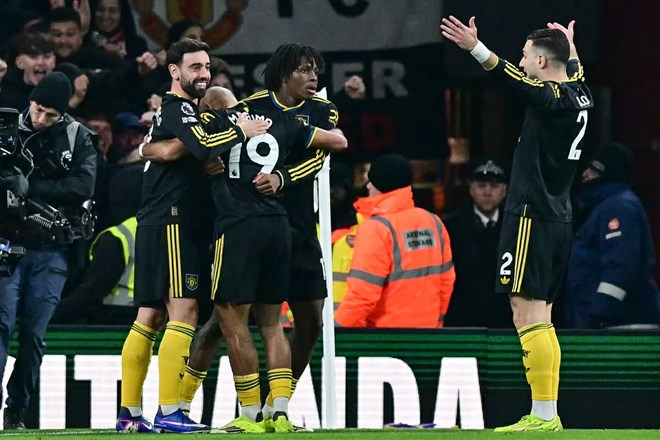
However, the unexpected 0-1 defeat to Everton at home last week made them miss the opportunity to assert their ambition. With a thin squad and a harsh end-of-season schedule, Villa still faces many risks.
Unlike previous seasons - where a team early broke through and maintained the momentum of victory - the 2025-2026 Premier League is witnessing candidates take turns falling whenever they have the opportunity to create a gap.
That is what opened the door for Man United. Two consecutive victories against Man City and Arsenal completely changed the atmosphere at Old Trafford, bringing Carrick's team from chaos back to a state of trust.
Man United winning the championship is still a very unlikely scenario. But as long as the top 3 teams have not shown the bravery of a true champion, this crazy season may still have another historic turning point.


