
Just a few days before the 2026 World Cup kicks off, journalist Truong Anh Ngoc has entered the final preparation stage for a working trip lasting more than a month in North America.
For him, the World Cup is not simply a story of matches but also a challenge in terms of fitness, adaptability and skills of journalists.
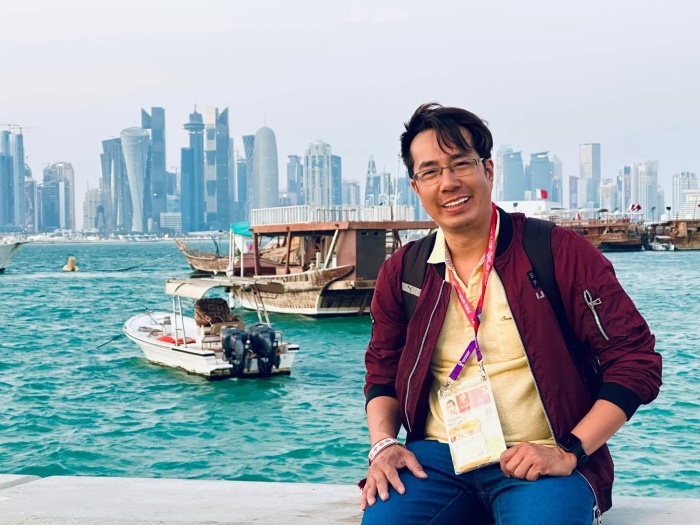
Lessons from World Cups
After many consecutive World Cups directly working, journalist Truong Anh Ngoc believes that the most important thing is not football knowledge but the ability to adapt to surprises.
His most memorable memory is the 2010 World Cup in South Africa. When leaving Europe in the summer weather and setting foot in Johannesburg in the middle of winter with a temperature of -2 degrees Celsius, he almost went fever the next day because he did not prepare enough warm clothes.
Before leaving, I studied very carefully, read the information very carefully. However, there is one thing that no matter how carefully I read it, I was still not well prepared, which is physical fitness. I flew from Europe in the summer, landed in Africa in the winter. And the temperature when I left the plane was -2 degrees. The next day I almost went fever...", journalist Anh Ngoc recounted.
Not only facing harsh weather, he also experienced a dangerous incident when he almost became a victim of an armed robbery in the suburbs of Cape Town.
It was these experiences that changed his way of preparing for major tournaments later. According to him, physical training is maintained for many months before each World Cup with running, mountain climbing and cycling exercises to be able to work continuously in dense travel conditions.
Journalist Anh Ngoc said: "From that trip, all the trips after that I practiced like... "infantry soldiers". Running, cycling, mountain climbing, in short, doing many things to gain endurance, ability to withstand weather changes to be able to work 24/7".
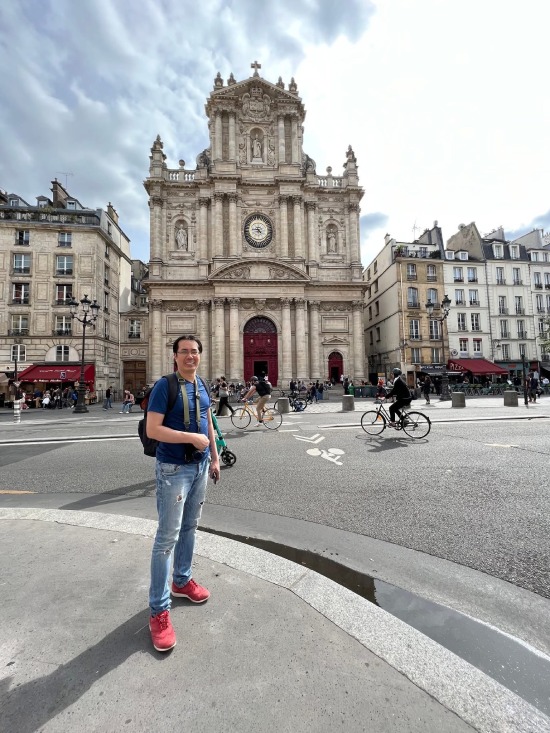
Luggage for the 2026 World Cup
The 2026 World Cup is considered the most special in history when it gathers 48 teams, taking place in 3 countries: the US, Mexico and Canada with a total of 104 matches.
Journalist Truong Anh Ngoc is expected to be in Mexico for the opening match, before continuing to move through many other cities in the US. He said that working on about 20 to 25 matches is already a very large workload in the context that the distance between the venues is much longer than the 2022 World Cup in Qatar.
In addition to professional equipment, journalist Truong Anh Ngoc's luggage also includes many health items.
He revealed: "I have to prepare a lot of things that even when I say it, readers sometimes don't understand why I have to do so many things. For example, there is one thing that I definitely have to bring with me, which is a tube of Vaseline to apply to my legs, then put on socks to avoid injury. Because on average, I will have to walk about 20 to 25km a day".
In addition, he also prepared energy bars and many items to support physical recovery. Experience from the 2022 World Cup made him pay more attention to health issues.
Since the 2022 World Cup, I realized one more thing, which is weather changes, if you don't get used to it right away, it will have a huge impact. 4 years ago, 3 of our colleagues did not return home, because they had a stroke and collapsed right on their desk. We feel that we must be careful to leave and return," journalist Anh Ngoc expressed.
For this veteran journalist, the 2026 World Cup is still an opportunity to tell stories outside the field, from the lives of fans to the little-known hidden corners of the biggest football festival on the planet.


