
After the Lionel Messi era, where will MLS go? That is not only a question for American football, but also reflects the common concern of the entire football world in the post-superstar Argentine era.
For many years, football has always tried to find "the next Messi", but the special class of the Argentine player makes that task almost impossible. And if the whole world has not found a solution, MLS will have even less chance of recreating the effect that Messi created in the US.
Messi's appearance has completely changed the MLS' position. The number of spectators has skyrocketed, Inter Miami jersey sales have exploded, and media coverage has far exceeded every previous period of the league. But perhaps the MLS does not need to look for a "new Messi".
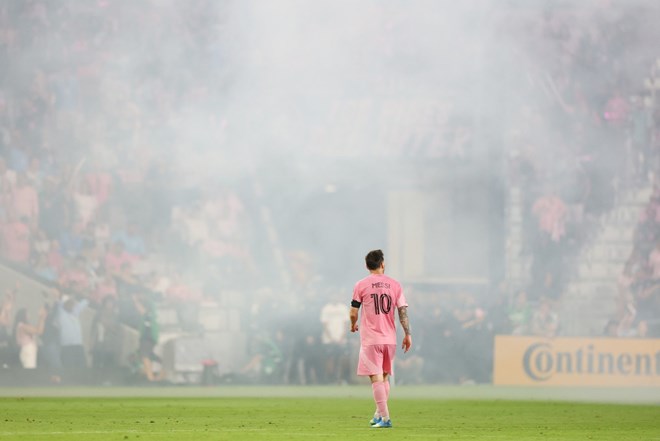
A more reasonable solution could be to find another symbol to lead the tournament into the next chapter, and Pep Guardiola emerged as the perfect candidate.
Guardiola's departure from Manchester City after 10 years opens up many possibilities for the future of the Spanish strategist. After conquering all major titles in Europe, trying his hand at a completely different environment may be an attractive challenge for him.
Instead of looking for a new football superstar, MLS can completely set a goal to make Guardiola the next "precious gem" of the league.
No one understands Messi better than Guardiola - who once contributed to making him the greatest player in Barcelona history. And not many coaches have enough global influence to maintain attention to the MLS after Messi's era.
Guardiola himself also has many connections with the United States, especially New York. After leaving Barcelona in 2012, he spent nearly a year living in New York before taking over Bayern Munich. According to close associates, Guardiola chose this city as a place to recharge energy, broaden thinking and find new inspiration.
Interestingly, the time Guardiola left Man City also coincided with the period when New York City FC - a team belonging to City Football Group - was preparing to move to a new specialized stadium in Queens.
Currently, Guardiola will take on the role of global ambassador for City Football Group after leaving Etihad, and also provide professional advice to clubs in the system, including New York City FC. Of course, Guardiola once affirmed that he wanted to rest after a long period of stress at Man City.
I need to rest, breathe and relax" - he said after announcing his farewell to Man City.
But for a coach who is always obsessed with learning and innovating like Guardiola, the possibility of him returning to a different project is still entirely possible. MLS also brings a special tactical challenge that Guardiola has never experienced.
Unlike Europe, the MLS operates under a salary ceiling and limited squad model. This forces coaches to adapt, be creative and build a more efficient system instead of just relying on huge budgets.
This is also the question Guardiola often faces: what will he do if he no longer owns almost unlimited resources?
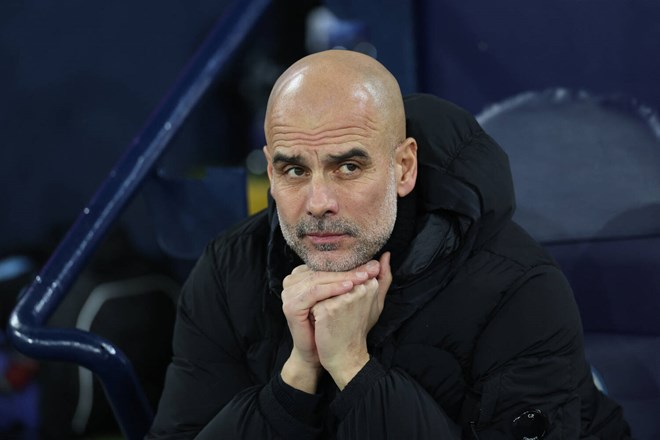
In the MLS, Guardiola can prove his ability to develop football in a more balanced environment. More importantly, the United States is still considered a potentially rich market that has not been fully exploited for football. This is not a country where football dominates absolutely, but it has a large fan base and extremely large commercial potential.
If Messi helps MLS explode in terms of image and media, Guardiola can create a deeper impact in terms of expertise, tactics and football development structure.
MLS may never find a second Messi. But they can completely own someone who contributed to creating Messi.


