
This is not the first time in recent years that Chelsea have struggled with disciplinary issues.
The 1-1 draw with Arsenal was a result that just a few weeks ago was still considered very positive for Enzo Maresca and his team. But since then, Chelsea have climbed to second place in the Premier League title race.
They entered round 13 in good form and 6 points behind Arsenal - the team that had to travel to Stamford Bridge without both centre-backs William Saliba and Gabriel Magalhaes. A clear opportunity has opened up for the home team.
Chelsea came into the game as a team that truly believes they can take all three points. They attack first, creating strong pressure. By the 38th minute, Arsenal had 3 players receiving yellow cards, while the home team was superior in all indicators: leading 4-1 in the number of shots and improving in xG.

But then a turning point happened. Moises Caicedo rushed into a dispute with Mikel Merino for too much restraint. Referee Anthony Taylor initially showed a yellow card, but VAR suggested reviewing. The image shows Caicedo's foot trampling Merino's ankle, forcing the referee to change to a red card for Chelsea's most important midfielder.
However, The Blue did not collapse. They defended strongly and even took the lead early in the second half thanks to a header from Trevoh Chalobah. Merino equalized not long after, but Chelsea still kept 1 point and created a few more situations that made Arsenal feel heartbroken despite playing with one less player.
However, given the way the Blues started the game and dominated the game for most of the time before losing a player, the final draw still felt like a missed opportunity. This is not the first time this season that Chelsea have dropped points for a red card. And this time, the decision to remove Caicedo has changed the situation.
More worryingly, it was Chelsea's fourth red card in just 14 Premier League games this season. On average, they lose one player per 3.5 games (equivalent to 0.285 red cards per game) - the highest rate in Premier League history. If they maintain this pace, Chelsea will have about 10.8 red cards by the end of the season, surpassing the current league record of 9 red cards, held by Sunderland (2009-2010) and QPR (2011-2012).
In addition to Premier League games, Chelsea's disciplinary problems have been revealed in many other fronts. Nicolas Jackson was sent off in the Blues' only defeat in their 2025 FIFA Club World Cup journey.
Joao Pedro also received a red card after coming off the bench in the Champions League against Benfica. Most recently, Liam Delap was sent off after two consecutive yellow cards in the League Cup defeat to Wolves - cards that Maresca flatly called "very foolish".
"After the first yellow card, I told him four or five times to calm down. But Liam is the type of player who plays instinctively, and he often doesn't listen to reminders from the outside. It is a honor to receive such a red card. Two cards in seven minutes, both of which could have been avoided," Maresca said.
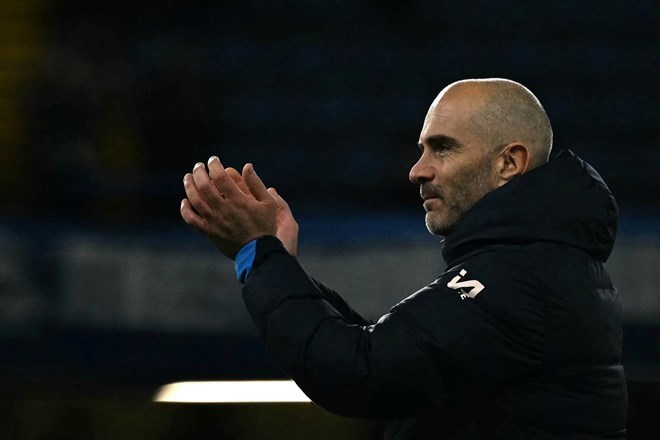
In fact, it may be Maresca's emotional coaching style that is partly influencing the players' behavior. No manager has picked up more free kicks in the Premier League since the start of last season - eight, equal to Brighton's Fabian Hurzeler. In this season's Champions League, Maresca also received yellow cards in matches against Barcelona and Bayern Munich, topping the list of coaches who were carded in the tournament.
Maresca clearly has not been able to control an existing problem since he took over at Chelsea. Under Mauricio Pochettino, Chelsea are also the team that has received the most yellow cards in Premier League history over 20 matches. This is a sign that Chelsea's disciplinary illness is not new, but is getting worse.


