
On May 26, the Vietnam Football Federation (VFF) officially announced Phenikaa University Hospital to become a member of the Sports Medicine Network program coordinated and developed by the VFF Sports Medicine Department.
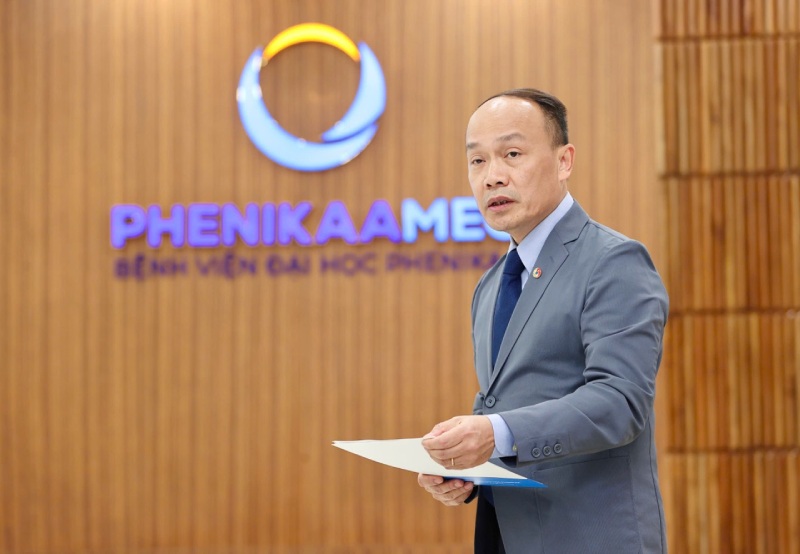
Speaking at the ceremony, VFF General Secretary Nguyen Van Phu said that expanding the sports medicine network is part of the strategy to improve the health care system for football players and athletes nationwide.
According to VFF's assessment, Phenikaa University Hospital fully meets professional criteria to participate in the network with many specialized departments operating in depth such as orthopedic trauma, cardiovascular, respiratory, rehabilitation and physical therapy.
The professional team directly participating in the network of Phenikaa University Hospital are doctors and technicians who are well-trained and have rich practical experience.
Typical examples include Prof. Dr. Cao Minh Chau - leading expert in the field of Rehabilitation and M.Sc. Dr. Nguyen Ba Son - specialist in Orthopedic Trauma and Sports Medicine.
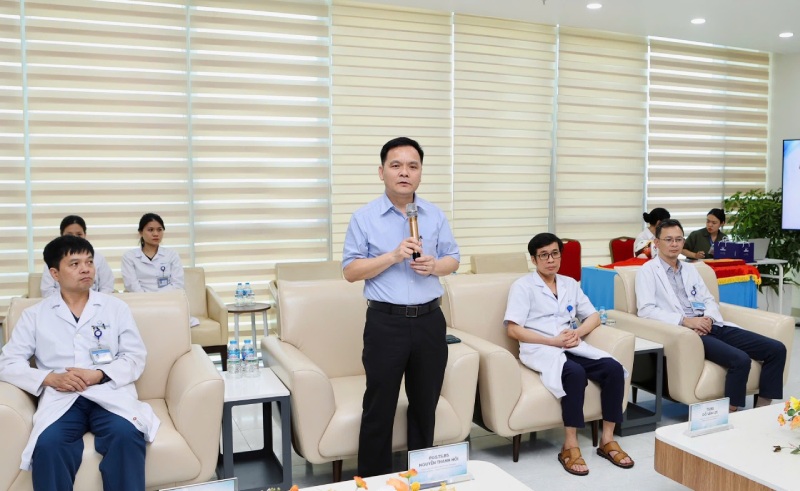
With a professional foundation from arthroscopy to sports medicine, the team of experts from Phenikaa University Hospital will coordinate with VFF to build individualized treatment and rehabilitation programs, aiming to help athletes maximize their mobility, and soon return to training and competition safely.
Phenikaa University Hospital currently owns many modern diagnostic and treatment support devices such as 1.5 Tesla MRI, 3.0 Tesla MRI, PACS integrated CT Scanner and specialized motor recovery technologies.
According to the VFF's orientation, the Sports Medicine Network will continue to be expanded in the coming time to build a synchronous and modern healthcare system for Vietnamese national teams and football clubs.
MSc.BS Nguyen Ba Son - Deputy Head of General Surgery Department, specialist in Orthopedic Trauma and Sports Medicine, Phenikaa University Hospital said, aiming to build a comprehensive, modern and synchronous health care system for Vietnamese football players.
Not only focusing on injury treatment, the program also promotes preventive activities, long-term health monitoring, rehabilitation, sports nutrition and improving the capacity of football medicine in a systematic and professional direction.
This enhanced cooperation is expected to contribute to improving the professional quality in the work of caring for and protecting players' health. This is also an important foundation for Vietnamese football to continue to develop sustainably, towards higher goals in the future.


