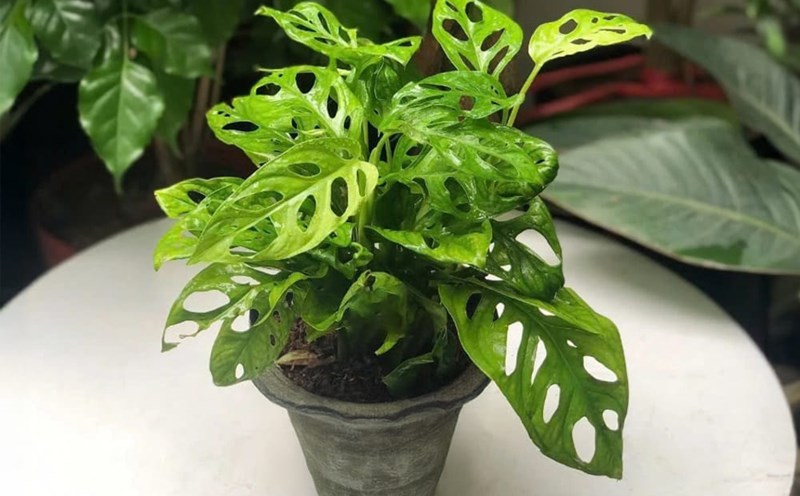
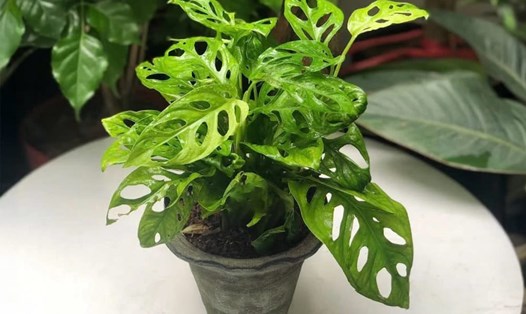
The orange-legged rose tree is favored by many families and is chosen to be grown at home. However, the plant is of tropical origin and is sun-loving, so it is easy for leaves to fall or the roots to rot when the weather turns cold.
To keep the orange-legged ruoi cay lush, housewives need to pay special attention to the following methods:
Maintain stable temperature, avoid wind reversal
As a warm sunflower plant, the orange-legged rosewater needs an ideal temperature of 18°C to 28°C. In the living space, the location of the plant is also quite important as it is absolutely not left in the direction of many winds, which will cause cold air, making the leaves susceptible to drop and rot.
At the same time, do not place the plant too close to heat-mitting equipment such as fireplaces, kitchens or direct hot air from two-way air conditioning. The local temperature difference will make the orange-legged carp tree easily dehydrated, quickly drying out the leaf trunks.
The most ideal location is in the middle of the living room or near a closed window, where the air circulates gently and the temperature is maintained at a stable level.
Understanding trees when the soil is dry
Winter is the time when the orange-legged ruoi tree has a slow metabolism. The common mistake of many housewives is to rain too much water on the plants, leading to flooding.
To ensure safety, housewives should only water when checking and finding that the soil layer has completely dried. Avoid using water that is too cold, which will cause heat shock to the root system. The amount of water needed to moisturize the soil is just enough, do not water too much as it will not bring the desired results.
Optimizing light
Despite the cold winter wind, the orange-legged rose tree still needs light energy to maintain its life. During the cloudy winter days, try to choose places where the plant can get the most natural light.
Cleaning the leaves should be done regularly to remove the layer of dust on the leaf surface. This will reduce the photosynthesis process of the plant when the weather turns cold.
Housewives should use a soft cloth towel soaked in warm water to gently dry the surface of each leaf periodically every week. This not only helps the plant grow better but also eliminates pathogens, waxworms... Consider temporarily stopping chemical fertilization during this period to avoid causing root burns due to excess salt.