
On December 23, information from the Khanh Hoa Provincial People's Committee said that Vice Chairman of the Khanh Hoa Provincial People's Committee Nguyen Thanh Ha has just signed and issued a project to develop labor relations in Khanh Hoa for the period 2025-2030.
The project aims to build a labor relations system in line with the socialist-oriented market economy and international labor standards that Vietnam has committed to.

Along with the goal of 80% of enterprises having trade unions signing collective labor agreements, the province also sets many specific targets such as: 100% of labor relations officers are trained; 65% of grassroots trade union officers are trained in skills; 100% of labor mediators are trained; 100% of labor arbitrators are perfected to limit disputes...
With 6 groups of solutions set out, the project is expected to create a foundation for a stable and sustainable working environment in the new development stage of Khanh Hoa.
According to the assessment of the Provincial People's Committee in the project, the reality in recent times shows that labor relations in the province still have many challenges in the new context.
In recent years, the Provincial Party Committee, the Provincial People's Committee and sectors and levels have implemented many solutions to build harmonious labor relations.
The awareness of employees, employers and relevant agencies about the role of labor relations is increasingly enhanced.
The activities of the Trade Union organization have gradually promoted its role in representing and protecting the legitimate and legal rights and interests of workers.
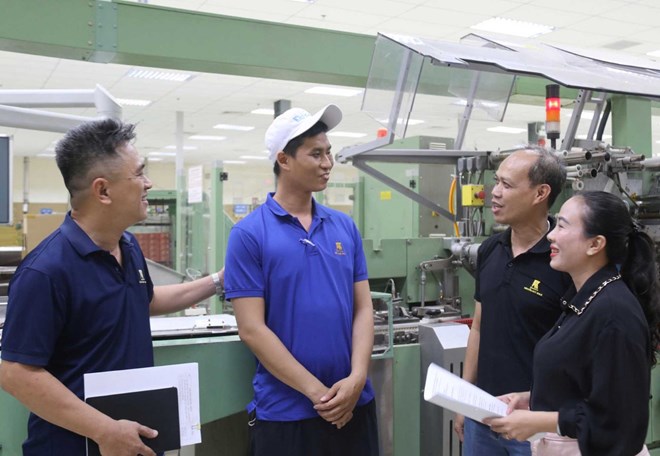
Notably, the number of strikes in recent times has tended to decrease, collective labor relations have been basically maintained stably, and the material and spiritual life of workers has gradually improved.
These results have contributed to improving production and business efficiency, maintaining social security and order and increasing attractiveness in attracting investment, especially foreign investment in the province.
However, due to the rapid development of the socio-economy, the labor market still has many limitations.
In particular, the role of State management agencies in building institutions to support labor relations is still lackluster; the representative activities of grassroots trade unions in some enterprises are ineffective; dialogue at the workplace and grassroots democracy regulations are not substantial.
Collective labor agreements at some enterprises have not accurately reflected the results of the negotiation process.
Unstable labor conditions still occur, strikes in the wrong order and legal procedures still pose a potential risk of complication.
In particular, labor dispute settlement institutions such as the Labor Arbitration Council have not been effective, especially in resolving collective labor disputes.
These limitations will also be a challenge in the new development stage of the locality. The project will contribute to solving the above bottlenecks to contribute to building a stable and sustainable working environment in the new development stage.


