
Doing a lot but difficult to accumulate
Most flexible workers do not participate in social insurance, unemployment insurance, and even many people do not have health insurance. When they are sick, injured, or lose their jobs, they have to bear all costs and risks themselves.
Ms. Le Kim Anh (from Dung Tien commune, Phu Tho province) used to work as a teacher at a private kindergarten in Ha Dong ward (Hanoi). After 6 years of attachment to her job, in March 2024, Ms. Kim Anh quit her job.
My salary when I quit my job was 9.5 million VND/month, plus overtime childcare fees and some allowances, total income is less than 11 million VND/month. After 6 years of working, my salary is only half that of many peers. Not to mention, the working environment is also not promising for promotion and other opportunities, so I decided to quit," Ms. Kim Anh said.
After quitting her job, Ms. Kim Anh did not go to work but decided to stay at home to take care of and take her children to school, and at the same time trade agricultural products from her hometown to Hanoi for sale. Ms. Kim Anh sells sticky rice, wine, vermicelli, local chicken... season after season.
Income from trading is better than her old job, and she is proactive in time, so Ms. Kim Anh is very excited. However, in October 2025, she became ill and was diagnosed with uterine fibroids, and was prescribed surgery.
At that time, I suddenly remembered that when I quit my job, I had completed procedures to receive unemployment insurance and did not participate in social insurance. After surgery and post-operative hospitalization, I spent half of the savings after a year and a half of hard work," Ms. Kim Anh said.
Ms. Dam Thi Bich Linh - Head of Human Resources Department of Viet Anh Mechanical and Metal Co., Ltd. (Hoang Mai ward, Hanoi) shared that after working as a staff member and witnessing the job transfer process of hundreds of people, she realized that when switching to flexible work, if there are illnesses or accidents, workers not only lose income but also face large treatment costs, without allowances or compensation like official labor.
A common paradox is that flexible workers often have to work at high intensity, extending working hours to ensure income. However, unstable income makes it difficult for them to accumulate and does not create a long-term financial foundation. When working age increases or health declines, flexible working ability will decrease sharply. At that time, returning to the official labor market becomes difficult due to lack of professional skills and recognized experience," Ms. Bich Linh said.
Social breakdown – social consequences
Mr. Le Quang Trung - former Deputy Director in charge of the Department of Employment, said that if the trend of young workers leaving the insurance system continues to prolong, the risk of social security breakdown is very clear. Without pensions, without allowances in old age, this group of workers may become the most vulnerable subject in the future.
Mr. Trung recalled the context in recent years, when many young workers actively left their official jobs – where there are labor contracts and social insurance – to switch to flexible and free forms of employment. This decision helps them solve the immediate income problem, but also trades long-term social security benefits. When not participating in social insurance, workers mean excluding themselves from the "social security net" designed to protect them when encountering risks.
The most obvious consequence is the risk of not having a pension when they are old. For young workers today, the retirement age is still very far, making many people not really interested in long-term benefits. However, if they do not participate in social insurance or do not pay continuously, by the end of their working age, they will not be eligible for pensions, forced to manage themselves with personal savings - which is very difficult for workers with precarious incomes," Mr. Trung said.
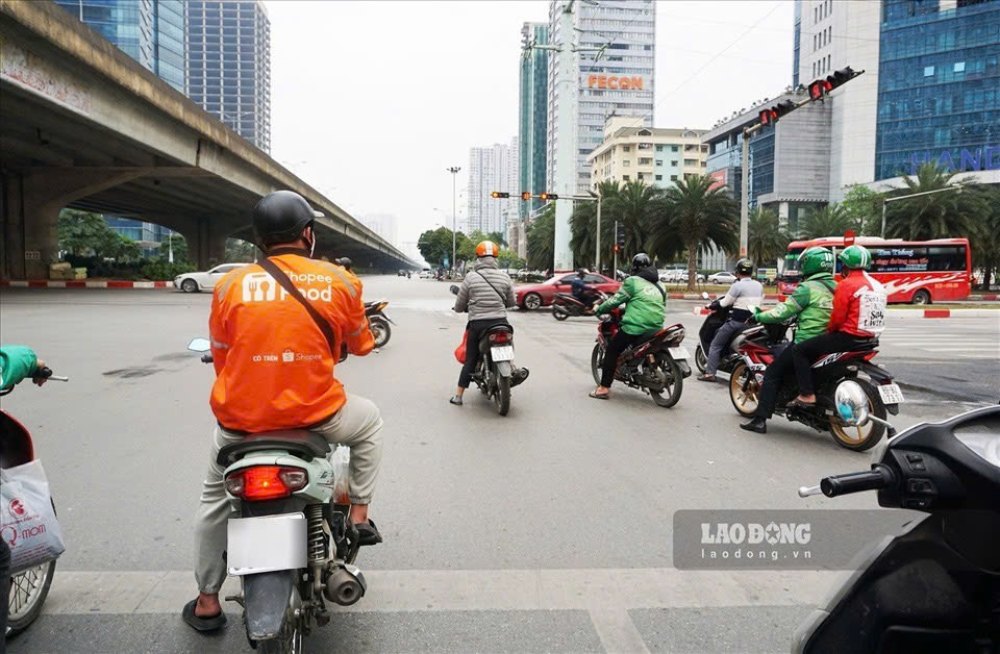
In fact, not only pensions, leaving the insurance system also means losing important allowance regimes such as illness, maternity, occupational accidents, unemployment. When risks occur, workers have no support, are prone to difficulties, and even become poor. In the long term, this group of workers may become the most vulnerable subject in society, dependent on family or receiving unfrequent social support.
More worryingly, if a large proportion of young workers stand outside the insurance system, the social security fund will be under great pressure. The number of contributors decreases while the number of people in need of support increases, which will weaken the sustainability of the system. At that time, the social security problem is not only the responsibility of workers, but becomes a burden on the State and the whole society.
Experts warn that social security breakdowns do not occur suddenly, but happen silently through each decision to leave insurance of workers. If there is no timely solution, the consequences will be clearly revealed after many years, when today's young generation of workers enters old age without a social security foothold.


