
Many years ago, every year-end occasion, Mr. Kim Sang's family (Thoi An Hoi commune, Can Tho city) was busy packing luggage from Binh Duong to return to their hometown for Tet. After Tet, he hurriedly left home, continuing the cycle of making a living in a foreign land. That scene of going back and forth repeated for many years, both costly and making reunion days short.
In recent years, when the locality promoted the export of star apples, Mr. Sang got a job right in his hometown. In addition to 5 acres of cultivated fields, he participated in caring for and preliminary processing star apples for export.
Each year, the star apple crop lasts about 6 months. Washing trees, weeding, mud filling... are paid 300,000 VND/day. Being close to the family, the cost is less and the income is more stable. The most important thing is not having to go far, Tet comes without the scene of rushing back and then hurrying away," Mr. Sang shared.
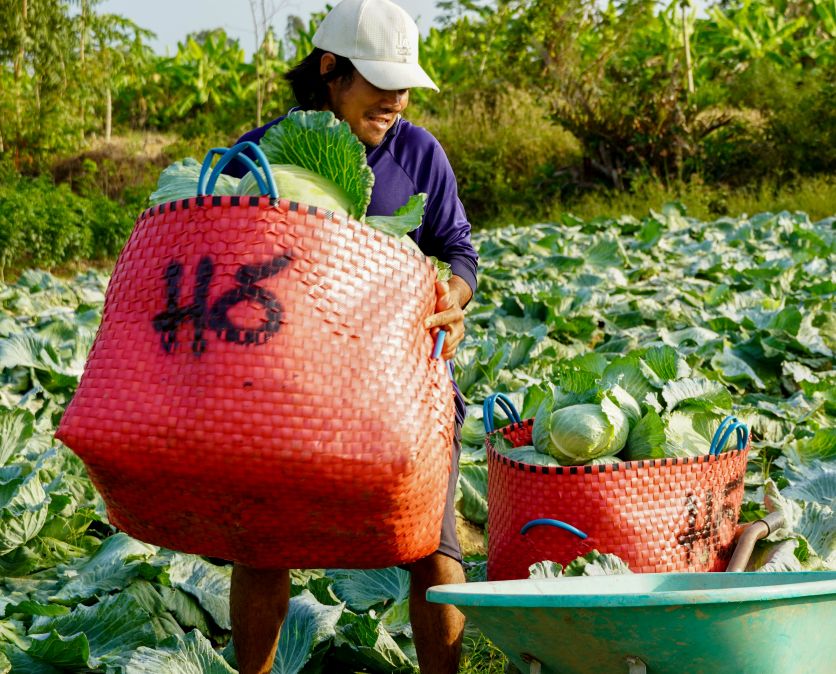
Similarly, Mr. Nguyen Van Tam in My Xuyen ward (Can Tho City) used to be a worker in Binh Duong. Every Tet holiday, he has to jostle on buses returning to his hometown. For the past three years, he has stayed in the locality to grow vegetables and do part-time work such as spraying chemicals, fertilizing, carrying rice, earning 200,000 - 500,000 VND/day. In the recent Tet vegetable crop, 1 cong of cabbage brought in about 10 million VND, helping the family celebrate Tet more fully.
“Here, work is all year round, not rich but stable. When Tet comes, I stay home to prepare, after Tet I still stay home to continue working, there is no longer the scene of going far away,” Mr. Tam shared.
Reality shows that in the past, many rural workers had to leave their hometowns to go to provinces and cities to work as hired laborers and workers to earn a living. At the end of the year, they rush back to their hometowns for Tet, and after Tet, they continue to pack their bags and go far away. Year-end buses are packed with people and right after the short holiday, they quietly leave their homes, leaving behind their families and fields.
Currently, although work in the countryside is not really regular all year round, thanks to cooperative groups and cooperatives organizing systematic production, rotating according to the season, many workers have been able to stick to their own fields and gardens.
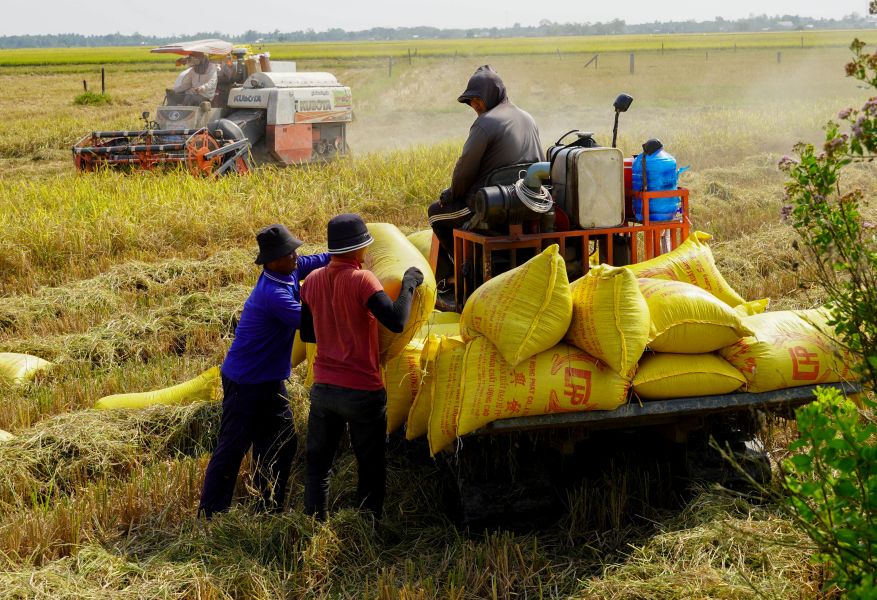
Mr. Nguyen Van Dam - Director of Tin Phat Agricultural Cooperative (Ke Sach commune, Can Tho city) said - currently the cooperative regularly uses about 20-25 male workers for loading, unloading, transporting, and harvesting, and 20-22 female workers for transplanting, mowing, and collecting rice in warehouses. The average income of female workers reaches 8-10 million VND/month, male workers 10-12 million VND/month.
Although it is not yet possible to ensure year-round jobs for all workers, the Cooperative tries to rotate work so that workers have more income outside the rice fields," Mr. Dam said.
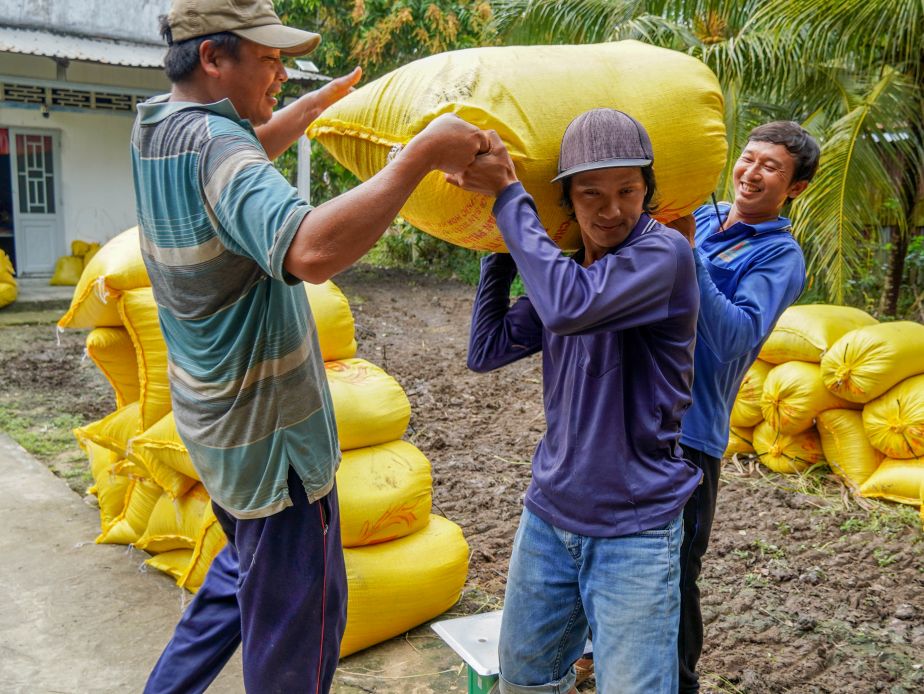
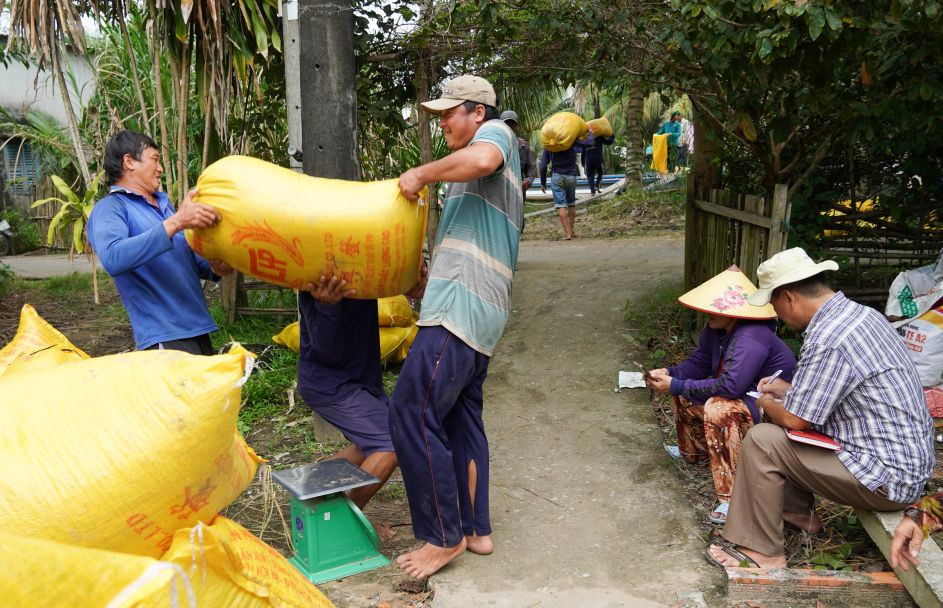
Mr. Le Minh Chi - Head of the 30/4 Cooperative Group, Ho Dac Kien commune (Can Tho City) - said that with a production area of about 2,000 workers at peak times, each worker can earn nearly 1 million VND/day. Although it is seasonal, the job helps workers have income to cover living expenses and take care of their families.
At the beginning of the season, I work a lot to save, at the end of the season I still have money to spend. Compared to working freelance before, the income is much more stable," Mr. Chi shared.
Mr. Tran Van Phuc - representative of San Tien Co., Ltd. (Cu Lao Dung commune, Can Tho city) - said that in the San Tien pink plum specialized area of about 50 hectares, there are about 50 - 80 local workers working regularly every day, with a peak of nearly 100 workers/day, earning from 8 - 12 million VND/month. Workers are fully insured, taking on the stages from care, harvesting to post-harvest preservation, packaging and transportation.
The greatest joy is that people have jobs right in their hometowns, without having to leave their hometowns to work far away. When creating value on their own land, they will have conditions to hire labor and develop the local economy," Mr. Phuc shared.


