
On the weekend afternoon, in an old level 4 rented room in Bau village, Thien Loc commune (Hanoi), Ms. Lo Ha Quy, a worker in Thang Long Industrial Park, lay down on a single bed after a week of continuous night shifts.
The room, less than 15m2 wide, was rented for 1.2 million VND/month, excluding electricity and water bills. In addition to some essential household items, her most valuable asset is probably a smartphone.
For Ms. Quy, when she comes home from work, she has no strength to do anything else, she just wants to fall asleep.
The disrupted work schedule makes her daytime almost entirely devoted to sleep. On weekends, instead of going out or meeting friends, she stays in her room to rest to save money.
Not knowing where to go, and not having enough conditions to participate in expensive entertainment activities, her joy is just watching TV dramas and game shows on her phone to "burn" time.
Ms. Quy's story is not an isolated case. In many times of working to record the lives of workers in boarding houses, reporters encountered many similar cases.
At another worker dormitory in Hanoi, Mr. Pham Van Nam (from Yen Bai) also only knows how to entertain himself through his phone after work.
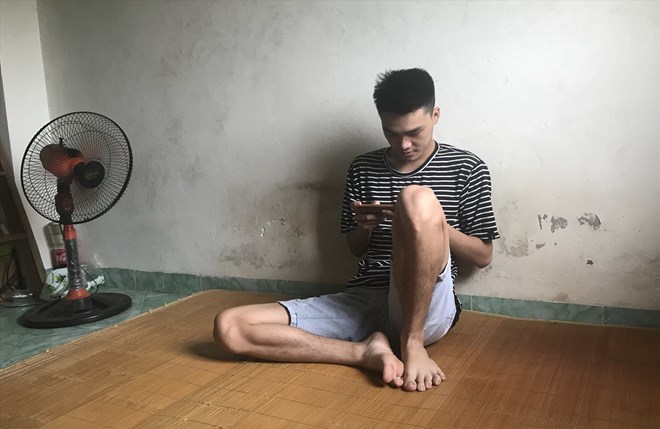
Mr. Nam said that after work, returning to his rented room, he often plays games. On days when it's too hot and he can't sleep, the brothers in the row invite each other to the alley entrance to drink a cup of iced tea. The money earned must be saved and sent back to his hometown for his parents to treat their illnesses.
Many times surfing social networks, seeing friends checking in at famous tourist destinations, he also felt sad. "I also like to go here and there but I don't dare to think about it. At the end of the month, I still have to worry about rent, food, and money to send back to my hometown," he said.
In workers' boarding houses, the image of workers with phones after work has become familiar. Small rooms lacking common living space, lacking playgrounds, libraries or sports areas make the spiritual life of many workers increasingly narrower.
Many workers said that after an 8--12 hour shift, what they need most is rest. Work pressure and worries about living expenses make the need for entertainment and recreation gradually become a luxury.
For many workers like Ms. Quy or Mr. Nam, the joy of weekends is still very simple. That is to sleep a few more hours after tiring shifts, to call home to ask about family or simply watch a favorite movie on an old phone.
According to records, many workers far from home currently live in crowded boarding areas but lack community living spaces. On weekends, they only stay between factories and rented rooms.
Simple entertainment activities such as watching movies on the phone, playing games, surfing social networks or sitting for iced tea at the alley entrance have become the most popular way to relax.
But behind the brightly lit phone screens in workers' dormitories is still a very real aspiration for healthy cultural and entertainment spaces.
I hope that weekends are not only a time for rest, but also a time to live more fully with my spiritual life. Especially having more playgrounds and giao lưu places for healthy workers near the accommodation" - Ms. Quy expressed.


