
Businesses shrink production, workers suffer direct impact
Mr. Dam Quang Duc - a worker at a company specializing in plastic production in the craft village cluster of Phuong Liet ward (Hanoi) said that from August 2025, his income decreased by 20-30% per month because the company did not have many orders. In the first months of 2025, Mr. Duc had a total income of about 13 million VND/month; by December 2025, he received more than 9 million VND.
Mr. Duc said that working as a worker at the company for nearly 6 years, he has never had as many weekends off as in the last months of 2025.
On days when I don't go to work, I don't dare to leave my rented room, because I know that leaving home will cost money...", Mr. Duc said.
These days, Ms. Bui Phuong Lan - Director of Thanh Lan Fine Arts Export Company (Ngoc Hoi commune, Hanoi) is also restless because she is worried about orders, debt recovery and Tet for workers and laborers.
Ms. Lan's company has about 80 people, of which the direct production department is more than 60 people. In the past half year, export orders have decreased, Ms. Lan has carried on and collected in every way to both retain workers and not reduce the income of workers.
Now, even if there are difficulties, we have to try to shoulder them because it is easy to let workers take leave, when recruiting again, it is extremely difficult because not everyone is used to doing these specific items," Ms. Lan said.
According to Ms. Lan, from the end of September 2025, her company's workers lacked jobs. Previously, the company gave workers Saturday afternoons and Sundays off. From the beginning of October 2025, workers took 2 full weekend days off, some chains and departments took 1 day off in the middle of the week because there was no work.
Limitations from the workers are a "bottleneck
Ms. Nguyen Thu Ha - Human Resources Director of Phu Binh Group (Xuan Dinh ward, Hanoi) analyzed that the increasing job shortage, caused by workers themselves, also accounts for a significant proportion.
From the perspective of Phu Binh Group itself, Ms. Ha assessed that while businesses "thirsty" for high-quality human resources, many workers can only do simple jobs with low incomes and unstable working hours.
In addition, the economic restructuring is happening faster than the rate of skill improvement of the labor force, causing the unemployment rate to tend to increase, although the total number of employed people is still maintained.
Ms. Ha said that a part of workers, especially in middle-aged and rural areas, are slow to adapt to the new requirements of the market. Digital skills, foreign languages and the ability to operate modern machinery are still weak, making it difficult for them to switch to stable jobs with high incomes. The psychology of reluctance to change makes many people accept prolonged job shortages instead of learning new professions or changing jobs. Some young workers, despite limited qualifications, have high expectations about salaries and working conditions, leading to job shortages when they do not achieve their desired results.
From the perspective of a unit connecting labor supply and demand, Mr. Vu Quang Thanh, Deputy Director of the Hanoi Employment Service Center, said that lack of labor market information is also a weakness of workers. Many people do not have access to official recruitment information, do not know which industries are in need of people, and which areas have demand, making it difficult to make appropriate transition decisions.
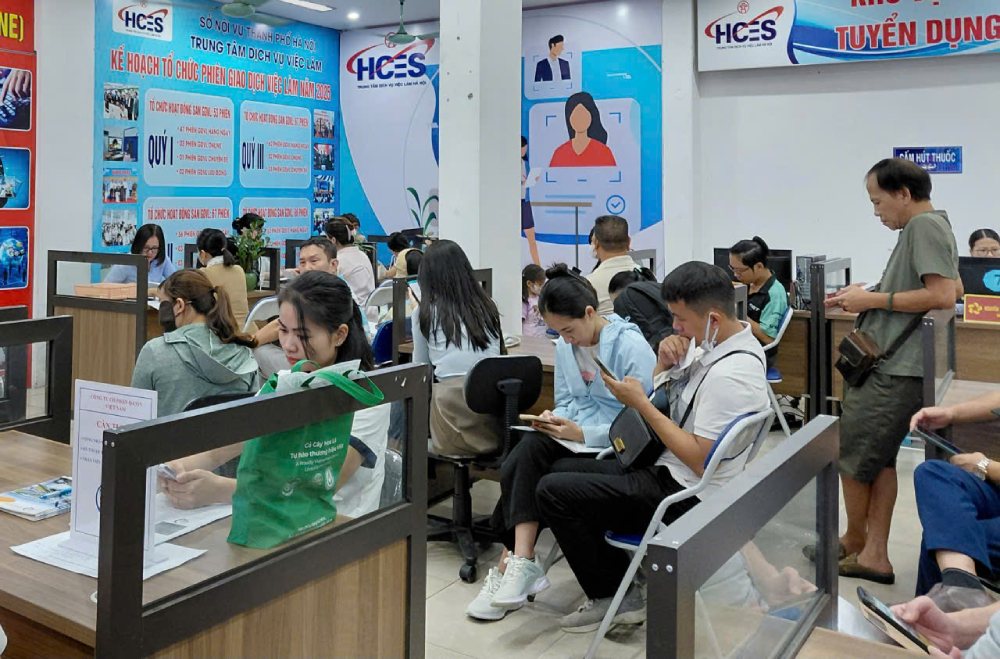
Also according to Mr. Thanh, the increase in the unemployment rate in the fourth quarter of 2025 is an early warning signal for labor-employment policies. Without timely solutions, prolonged unemployment may lead to reduced income, declining quality of life, increasing labor leaving the social insurance system and creating pressure on social security in the medium term.
Mr. Thanh believes that businesses need to consider investing in labor skills as a long-term solution, in addition to adjusting production, instead of just cutting working hours to cope in the short term. For workers, accepting re-study, extra classes, changing jobs or job transfer is no longer an option, but a necessary condition to avoid falling into the "gray zone" of prolonged job shortages.


