
In recent years, disruptions to the global supply chain have directly impacted the field of aircraft maintenance.
The shortage of supplies, especially specialized chemicals and paints, has tightened the repair time and increased the workload at technical workshops.
In that context, Mr. Pham Nguyen Hoang Trung - Deputy Team Engineer in charge of Aircraft Structure Repair and Painting (SCCT & Painting) at Aviation Engineering Co., Ltd. (VAECO) - and his teammates did not choose to passively wait.
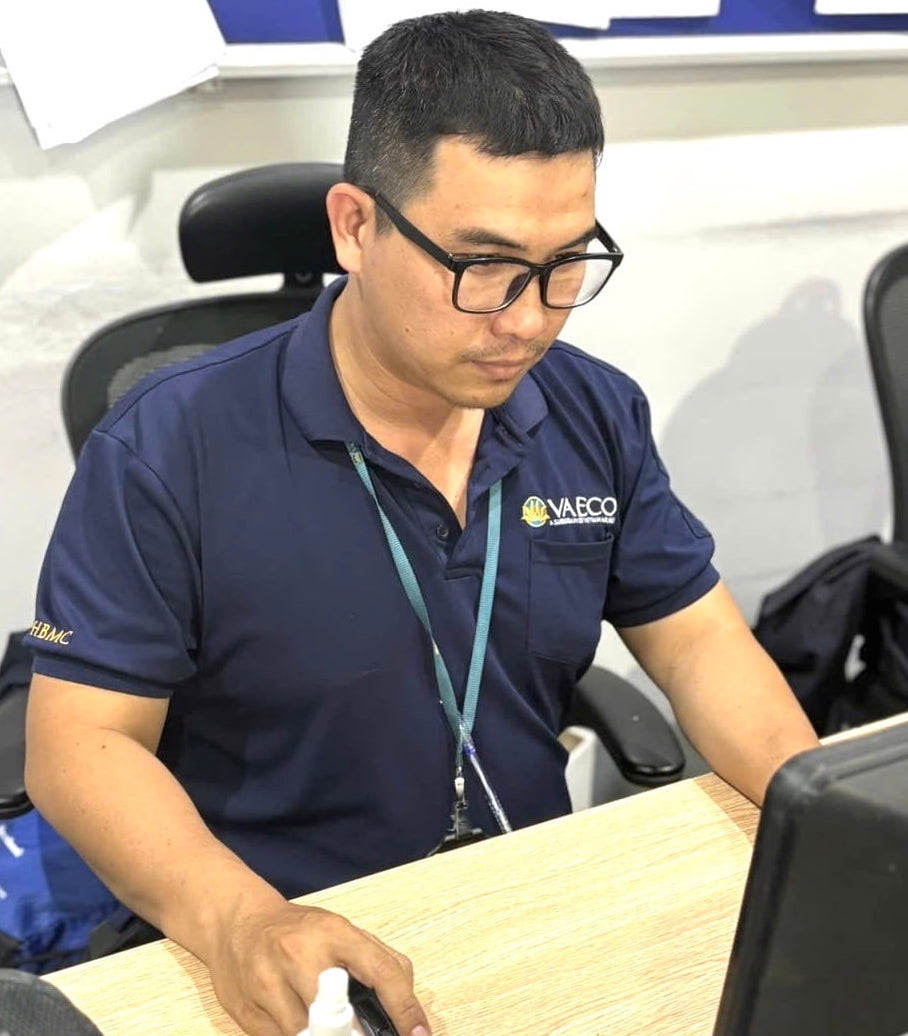
Instead, they proactively "go one step ahead" by predicting early breakdowns, accelerating inspections, placing supplies early and developing many contingency plans.
When materials arrive late, we maximize available resources, and at the same time improve the process to shorten repair time, ensuring that the overall progress is not affected," Mr. Trung shared.
Not only stopping at technical solutions, the team of engineers also promotes the application of digital technology in management and operation. The effective exploitation of the AMOS system, the implementation of continuous innovation initiatives (CI) helps optimize processes, reduce waiting times and improve labor productivity. Thanks to that, the "speed - quality" problem is gradually solved in a sustainable direction.
Owning the SCCT L3 certificate (high level of corrosion control), Mr. Trung understands clearly that the lifespan of an aircraft is not only in large items but starts from the smallest details. From the treatment of metal surfaces after processing to each layer of finishing paint, everything must strictly comply with the manufacturer's process.
That meticulousness creates a multi-layered "armure layer", helping the aircraft structure withstand harsh environments well. For him, each accurate operation today is a long-term protection for tomorrow.
Rarely appearing in public, SCCT & Painting engineers are likened to "silent warriors" behind each safe flight. Their work requires high precision to the millimeter, from measuring and checking non-destructively to detect deep cracks, to "reading" technical documents and proposing appropriate handling plans under strict time pressure.
Each technical decision is not only related to costs but also directly related to the safety of hundreds of passengers," Mr. Trung emphasized.
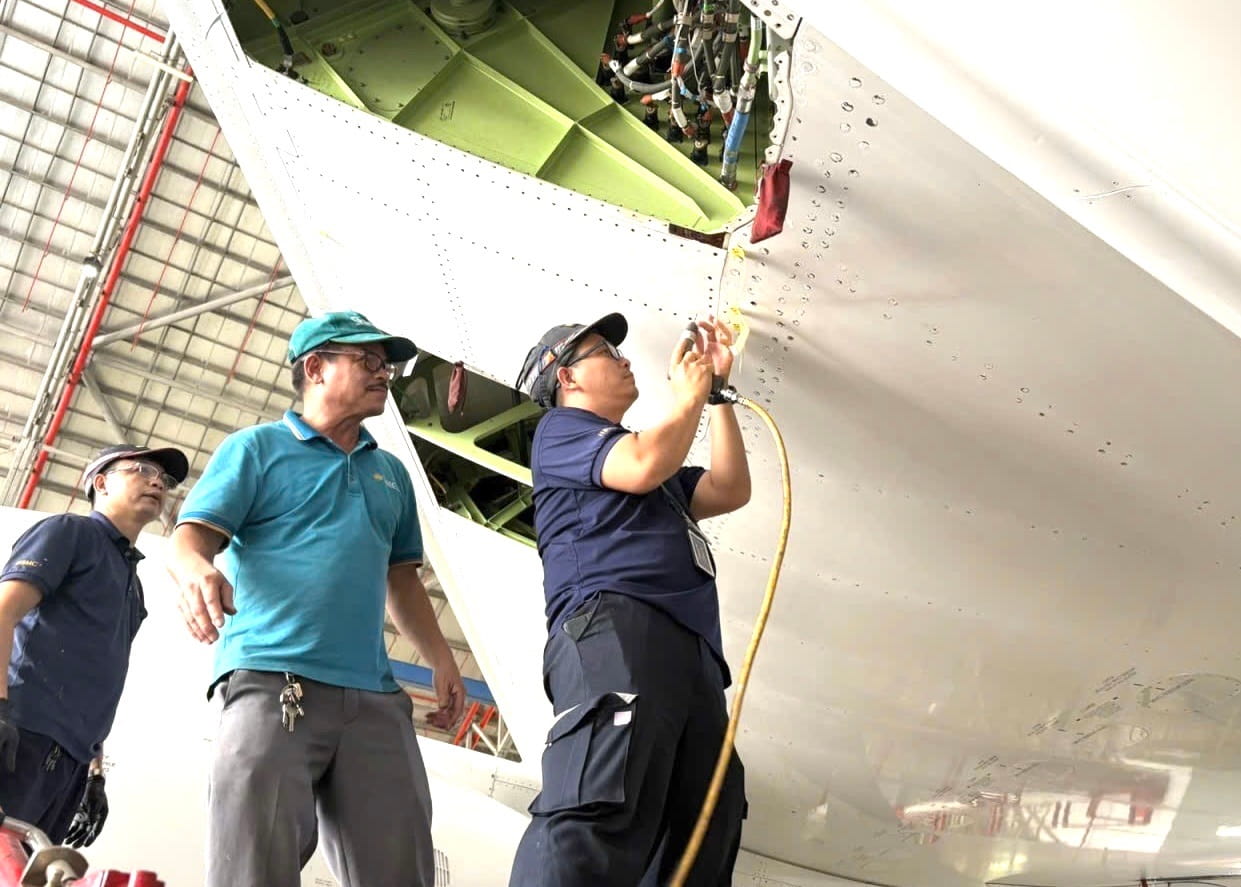
In reality, just a small lack of supplies can disrupt the shipment progress. Therefore, the engineering team always prepares many scenarios: order early, work with manufacturers to find replacement solutions, and even prioritize repair instead of replacement when conditions permit.
These efforts not only help the aircraft leave the factory on time but also ensure aesthetics and the highest safety standards.
According to Mr. Trung, to balance speed and quality - two irreplaceable factors, besides technology, the human factor still plays a key role. Improving skills, maintaining the spirit of learning and connecting generations of engineers is the foundation for the sustainable development of the maintenance industry.
For young engineers, he believes that passion is a prerequisite, along with the willingness to adapt to the nature of multi-shift work, high pressure. "The most important thing is to dare to do, because only reality can train professional bravery," he said.


