
From resources to data
In 2025, Vietnam tourism welcomed about 21.2 million international visitors, served 137 million domestic visitors, and total revenue reached about 1 million billion VND. These figures reflect a strong recovery after the pandemic, but also reflect a familiar paradox: the faster the growth, the greater the pressure on the system.
At some famous tourist destinations such as Sa Pa, Trang An, Da Lat..., seasonal localized overload occurs frequently. Tourists gather for a short time, while infrastructure and service capacity are limited. Conversely, the low season falls into a state of overcapacity. This shows that the problem is no longer to increase the number of visitors, but to reorganize the flow of visitors.
In that context, data is considered a new resource. When grasping tourist behavior such as tourist sources, itinerary, spending... the tourism industry can shift from passive to proactive coordination.
Mr. Vu The Binh - Chairman of the Vietnam Tourism Association said: "Digital transformation is no longer an option but has become a practical requirement... If we want to develop faster, more sustainably and be better competitive, Vietnamese tourism must strongly shift to a model based on technology, data and smart management.
Data not only serves statistics but becomes a decision-making platform. When connected and analyzed, data helps forecast trends, identify needs and adjust products in real time.
Dr. Nguyen Anh Tuan - Director of the Institute of Tourism Economics - commented: "Previously, competition was based on resources and infrastructure, but now it is necessary to add digital transformation capacity. The question is no longer whether there is transformation or not, but how fast, how deep and how effective it is.
According to him, many countries have built integrated digital tourism ecosystems at the national level, where data is shared between management agencies, businesses and tourists. In that ecosystem, AI plays a central role, turning data into action.
AI enters operational core
If data is the foundation, AI is the tool to bring change into reality. In Vietnam, this process is taking place with many specific applications.
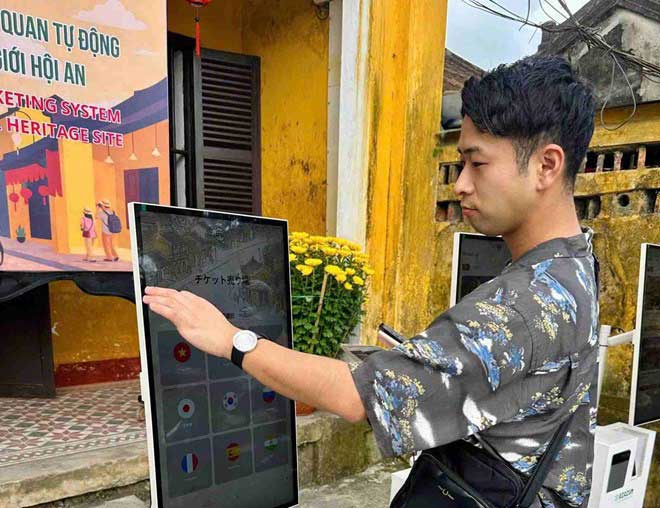
In tourist cities such as Da Nang, smart kiosks appear at airports, information centers and crowded areas. Tourists can interact by voice or text to receive itinerary suggestions, dining locations or short-distance travel plans. The way information is provided therefore shifts from static to contextual interaction.
Tests in Phu Yen (Dak Lak) or Bui Vien neighborhood (Ho Chi Minh City) show a different direction when two-way translation technology is integrated into walking tours. Vietnamese-speaking tour guides, tourists can hear in their language and respond similarly, helping to reduce communication barriers.
Mr. Nguyen Thanh Huy - representative of Vietnam Artificial Intelligence Joint Stock Company - said: "AI systems can currently communicate in about 50 languages. Tourists can ask anything from what to eat, where to go to detailed schedules and receive answers immediately. AI can also guide, guide and support two-way translation.
Internally within the business, AI is also changing its operating methods. Mr. Pham Ha - Chairman, Founder and CEO of LuxGroup, Vice Chairman of Vietnam Green Tourism Association - said that the data-based model has become inevitable, when all decisions from marketing, sales to product development are linked to customer data and market trends. Thanks to that, businesses can streamline their apparatus, reduce costs but still maintain efficiency.
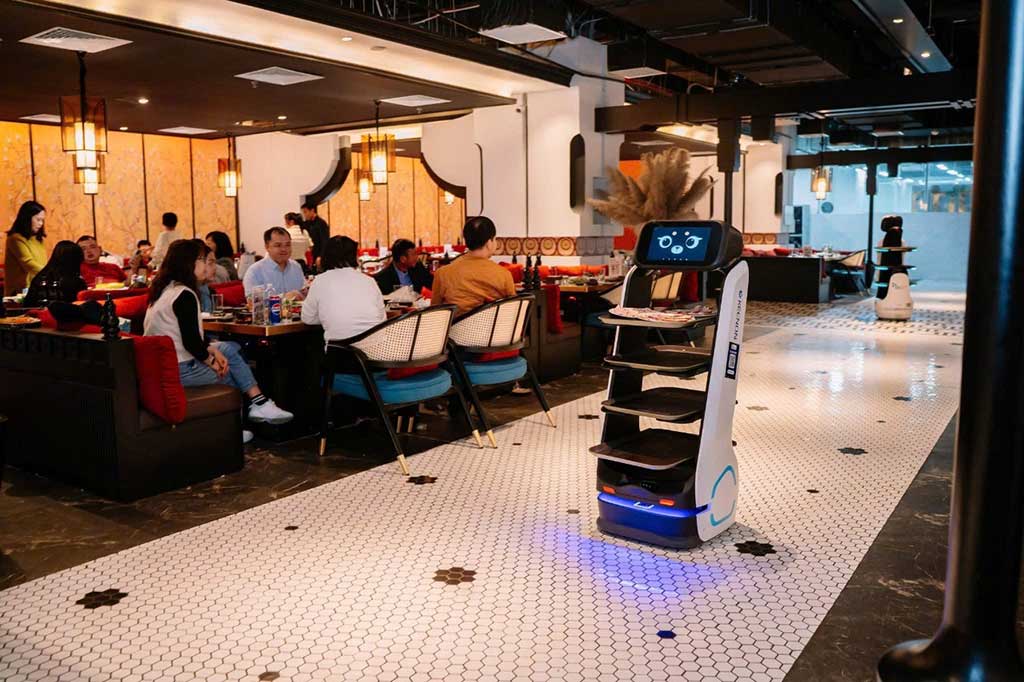
In the market, more and more tourists are using AI to search for information, compare experiences and make decisions before buying services. This forces businesses to build clear enough data and content so that AI systems can understand and propose.
Regarding management agencies, Mr. Pham Van Thuy - Deputy Director of the Vietnam National Authority of Tourism said that AI opens up the ability to operate in real time, instead of relying on periodic reports. Analysis tools help forecast demand, monitor fluctuations and adjust operations more flexibly.
Mr. Thuy emphasized: "AI is no longer a distant concept but has become a "powerful assistant" in every stage of the tourism value chain. From behavioral analysis to personalize experiences, optimize operations, to market trend forecasting, artificial intelligence is reinventing the operating and development methods of the tourism industry.
Overall, the story of AI does not stop at technology, but is associated with the way the tourism industry reorganizes itself. As Dr. Nguyen Anh Tuan affirmed: "In the digital age, whoever grasps data, masters technology and builds an effective digital ecosystem will have a competitive advantage. To develop quickly, digital transformation is needed, to be sustainable, AI must be applied intelligently and responsibly.
To go further, the tourism industry cannot stop at technology but needs to change thinking, institutions and approaches. This will be a decisive factor in whether AI is just a supporting tool or becomes a development platform for the entire industry.


