
Exploiting natural advantages, opening new directions
At an altitude of over 20,000m above sea level, Y Ty commune, Lao Cai province has long been known for its year-round cool climate, high humidity and rich ecosystem.
Not only is it an attractive tourist destination, this highland land is gradually forming new agricultural development directions, in which the model of growing moss - a substrate that is being favored by the market in orchid production and high-tech agriculture - stands out.
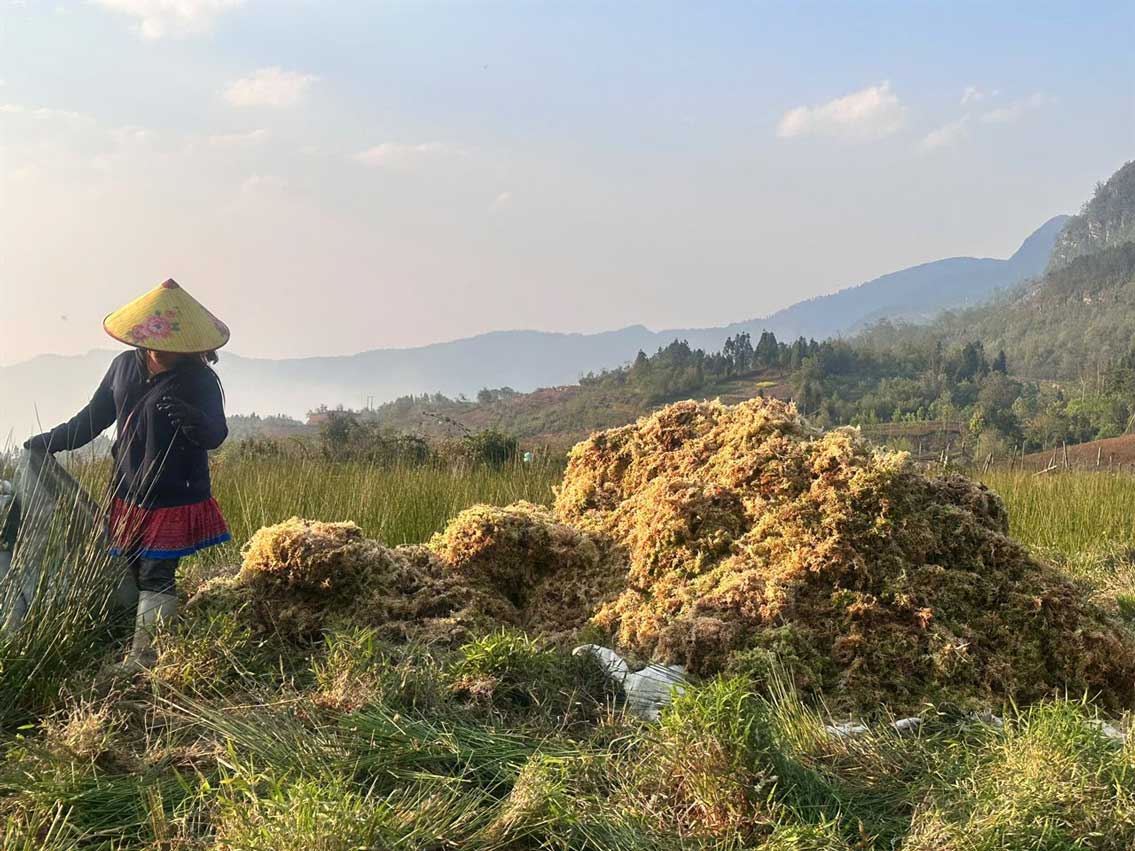
From the reality of production, Mr. Nguyen Van Hung - who has more than 10 years of experience in growing and caring for orchids, realized that local moss in Y Ty has many characteristics similar to imported high-grade moss. This is the basis for him to boldly bring the moss growing model to Nhiu Co San village, taking advantage of the local natural advantages.
Previously, the source of moss substrate serving the domestic orchid growing industry largely depended on imports, mainly from China and Chile.
Fluctuations during the epidemic period once caused supply disruptions and increased costs, raising the requirement to proactively source domestic raw materials. In that context, the research, domestication and development of indigenous moss have opened up many potential directions.
Starting from ineffective single-crop rice fields leased by people, Mr. Hung proceeded to trial plant moss in natural conditions.
The initial stage faced many difficulties due to lack of experience, but now the production process has gradually been completed. Earth moss grows well in a humid environment, with constant water flow, propagated from the mother stem and can be harvested after about 1.5 years of care.
Compared to traditional substrates such as coconut fiber, earth moss has many advantages such as high durability, elasticity, long shelf life, water retention and good nutrition. Thanks to that, this product is especially suitable for orchids, ornamental plants and many other crops. On the market, dry earth moss is currently sold at prices from 70,000 - 85,000 VND/kg, bringing significant economic value.
Increase income, promote crop restructuring
After a period of implementation, the moss growing model in Nhiu Co San village has been expanded to nearly 3ha, creating regular jobs for about 10 local workers, with a stable income of 8 - 10 million VND/person/month.
In the harvest season, the demand for labor increases, contributing to solving seasonal jobs for many households.
Not only bringing direct income, this model also contributes to promoting crop restructuring in the locality.
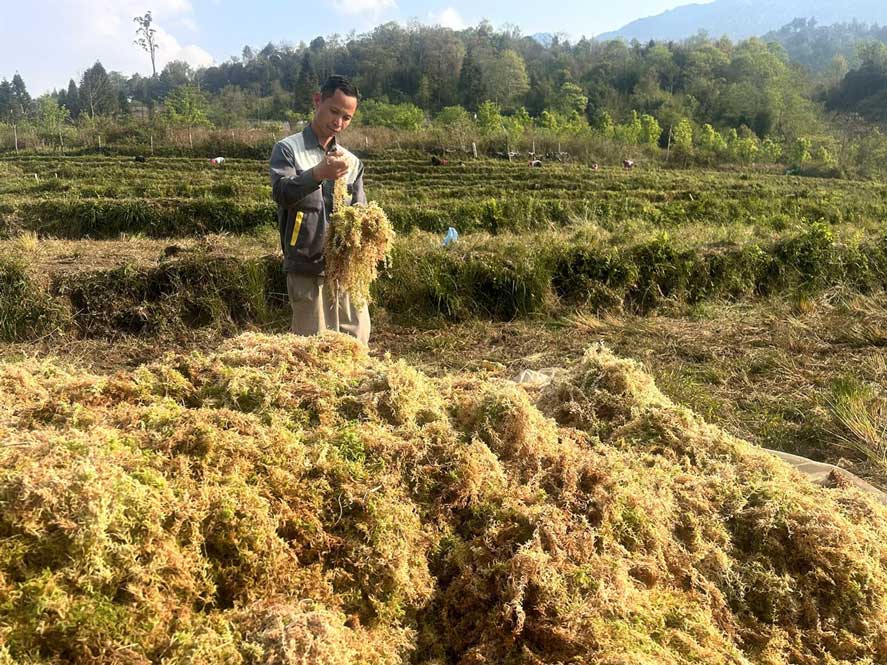
Compared to rice on one-crop fields with low efficiency, moss shows suitability for the climate and soil conditions of the highlands, while creating higher added value.
Notably, the domestic consumption demand for earth moss is still very large as most of the market still depends on imports. This is room for the model to continue to expand its scale.
In order to develop a stable raw material area, Mr. Hung has linked with people in the form of technical support, advance payment of costs and commitment to consume products.
Reality shows that the development of earth moss not only brings immediate economic efficiency but also aims for sustainable and environmentally friendly agricultural production.
The model is consistent with the policy of crop restructuring, effectively exploiting land potential, contributing to sustainable poverty reduction for people in mountainous areas.
From a rarely noticed natural plant, earth moss is gradually becoming a new "wealth tree" in Y Ty.
With the proactiveness of the people and the support orientation from local authorities, this direction is expected to continue to be replicated, contributing to the development of agricultural economy towards commodity, increasing income and improving the lives of people in mountainous areas.


