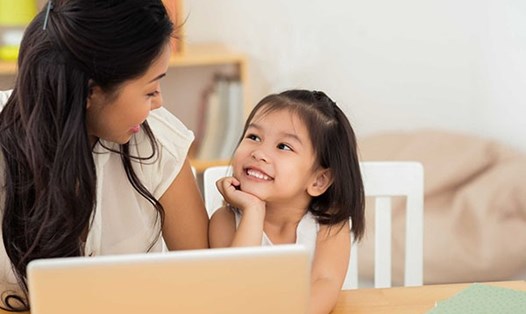
Many parents often think that their children are still young and "know it naturally when they grow up". But in reality, politeness does not come naturally. A child lacking behavioral skills will easily be shunned by friends, teachers will not have good feelings, and even when they grow up, they will have difficulties in the learning and working environment.
In modern society, what makes others appreciate a child is not only academic achievements, but also the way children talk, behave and respect those around them. And the most regrettable thing is that many children are not spoiled, it's just that parents haven't taught them right from the beginning.
Below are 25 minimum politeness rules that parents should teach their children as soon as possible.
25 minimum politeness rules parents should teach their children
1.Know how to greet when meeting adults.
2.Know how to say thank you when being helped.
3.Know how to apologize when doing wrong.
4.Know how to say thank you when asking others.
5.Do not speak blankly to adults.
6.Do not interrupt when others are talking.
7.Know how to listen when others are speaking.
8.Do not point fingers at other people's faces.
9.Do not laugh at anyone's appearance or shortcomings.
10.Do not talk too loudly in public.
11.Know how to ask permission before taking other people's belongings.
12.Know how to knock on the door before entering the room.
13.Do not arbitrarily open the cabinet, open other people's belongings.
14.Know how to give a chair to the elderly and pregnant women.
15.Do not litter indiscriminately.
16.Know how to queue and wait for their turn.
17.Do not compete for toys with friends.
18.Know how to share when playing with others.
19.Do not lie to avoid mistakes.
20.Do not whine unreasonably to harm friends.
21.Know how to keep promises even if it's a small Know how to ask when someone is sad or has something bad happen.
Why are these 25 polite rules important?
Many parents only focus on teaching their children knowledge, but forget that behavior is what follows their children for life. A polite child will be easily helped, easily loved and also more confident in communication.
Conversely, a child who lacks politeness can be judged as impolite, even if the child is not intentional at all. Gradually, the child is easily separated from the collective, forming an opposing or self-conscious personality.
Parents who want their children to be polite must set an example first.
The most important thing is that parents cannot ask their children to be polite if they themselves often scold, say harsh words or behave disrespectfully towards others. Children learn by looking, not by listening.
If you want your child to know thank you, say thank you regularly. If you want your child to know sorry, parents should also apologize when they are angry.
Because politeness is not a lesson to memorize, but a habit forged from family.