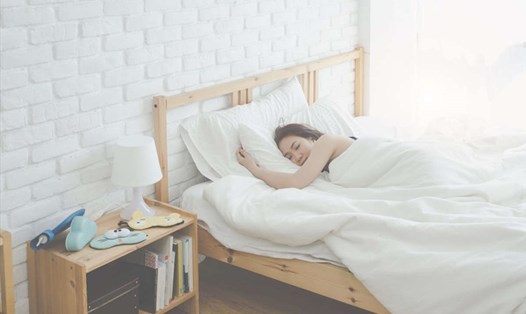
Sleep is considered the "golden time" for the child's brain to recover and develop. According to the Harvard Medical School, when children sleep enough and deeply, the brain will strengthen memory, increase learning ability and process information more effectively. Not only sleep time, some experts believe that sleeping posture also partly reflects the child's nervous state and level of psychological safety.
Below are 3 common sleeping positions that are often mentioned as positive signs in children with good thinking development ability.
1. Children sleep sideways naturally
Sleeping on your side is a posture that many experts assess as beneficial for the respiratory and circulatory systems. This posture helps the body fall asleep deeper, supports stable blood circulation and reduces restless sleep.
Deep sleep plays an important role because this is the stage when the brain processes information, consolidates memory and promotes learning ability. Children who naturally sleep sideways are also often able to adjust their bodies well, react quickly and adapt easily.
2. Children sleep spreading arms and legs like starfish
Some children sleep on their backs, arms and legs spread comfortably, like a star. Many psychologists believe this is a sign that children feel safe and relaxed.
Children who sleep in comfortable positions often have a stable nervous system and are less stressed. This helps children easily concentrate, increase observation, and form independent thinking earlier than children who often sleep shivering or startling.
3. Children sleep with pillows or stuffed animals
Many children have a habit of hugging pillows or stuffed animals when sleeping. Children being attached to a familiar object helps increase feelings of safety, reduce anxiety and support better sleep quality.
Good and regular sleep will have a great advantage in brain development, especially the ability to remember and connect information. In addition, many experts also believe that children who like to hug stuffed animals tend to be emotionally rich, have strong imagination and are prone to developing creativity.
Although sleeping posture may partly reflect personality and developmental status, experts emphasize that children's intelligence still depends on many factors such as nutrition, living environment and family interaction.