
Mr. Nguyen Dinh Phuc's family (Nam village, Quang Ha commune) raised about 10 tons of seedlings on an area of 3ha at Phu Hai beach from November 2024, expected to be harvested after the Lunar New Year 2026. However, from February 15, clams began to die and float en masse, size about 95 clams/kg.
Mr. Phuc said that in previous years, at the peak season, there was a phenomenon of clam death, but it was insignificant.
This year, clams died too much, the family suffered about 50% damage. With a price of about 20,000 VND/kg, the estimated damage is about 500 million VND," Mr. Phuc said.
According to farming households, clams die mainly on beaches with porous sand, while mud sand areas are less affected. The time of damage coincides with the transitional season, high temperatures, heavy fog, and oxygen-deficiency environment.
On March 24, 2026, the Quang Ninh Sub-Department of Livestock and Veterinary Medicine took samples for monitoring at Quang Minh 3 farming area (Quang Ha commune).
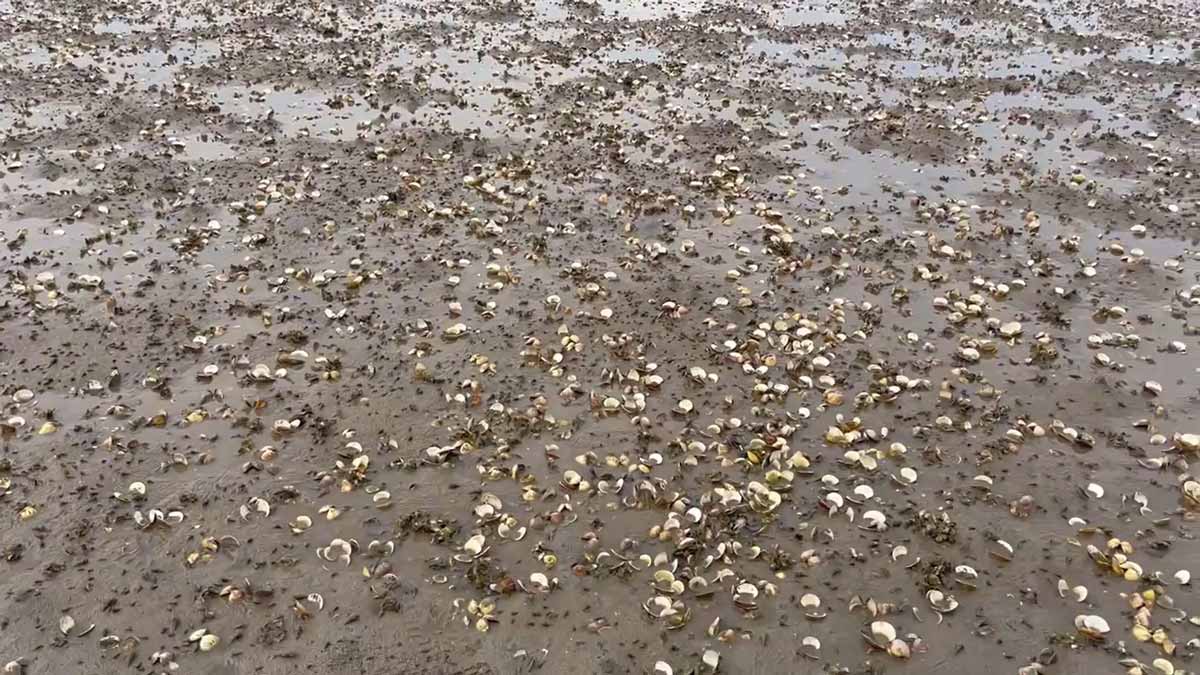
Test results showed that 2/3 of the samples were positive for the parasite Perkinsus olseni - an agent belonging to the Perkinsus sp group, causing dangerous diseases in bivalve molluscs such as clams, oysters, clams, which can cause livestock deaths of up to 95% when environmental conditions are unfavorable.
Through inspection, in addition to the epidemic factor, specialized agencies determined that many households released breeds with too high a density, in some places up to 600 heads/m2, 2-3 times higher than the recommended; breeds have not been strictly controlled; the bottom of the farming ground has not been renovated for a long time... increasing the risk of damage.
It is estimated that in Quang Ha commune, about 500ha of clam farming is affected, concentrated in Phu Hai and Quang Dien areas.
The level of damage is not uniform, some households lost 20%, but some households lost up to 80% of the area.
Clams are farmed objects with a growing period of 8 months to more than 1 year before harvesting, with an average yield of about 20 tons/ha/crop.
Faced with the above situation, specialized agencies recommend that farmers urgently harvest areas that have reached commercial size; level them sparsely, reduce the density to below 200 heads/m2; do not move mollusks from diseased areas to other areas.
Sanitation of farming grounds, collection of dead clam carcasses, clearing of flow, avoiding local pollution; not releasing new breeds during times of complicated epidemics; using breeds with clear origins and quarantine.
According to assessments, with the characteristics of open sea farming, disease control is difficult, so disease prevention is still a key solution to limit damage and protect livelihoods for people.


