
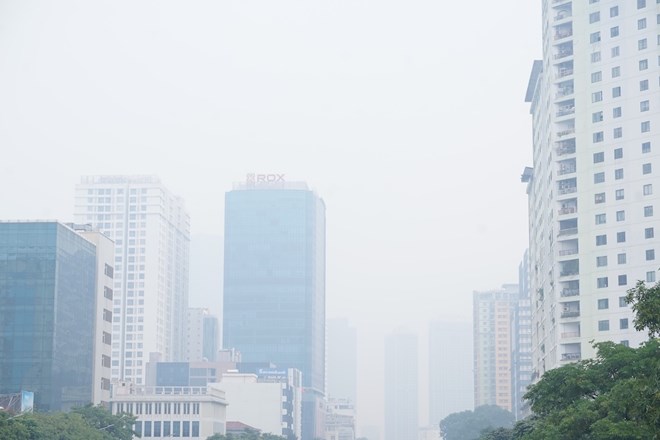
In early December, the capital entered a peak period of pollution, making the lives of millions of people suffocating.
Ms. Hoang Thi Duyen (30 years old, from Lang Son) recalled the last years of her life in Hanoi, opening the door every morning and feeling overwhelmed.
"I coughed all my pregnancy. The whole house is covered in smoke. When I went to work, I was so congested and dusty that I could only see gray at all, she said.
Her husband, Mr. Hoang Van Binh, an IT worker, every time he comes home from work, he feels dizzy: "The city has many real opportunities, but the days when AQI hits the danger threshold, wherever he goes or does anything, it feels suffocating".
Both of them believed that Hanoi would be a place to start a long-term career. However, pollution, congestion and cost pressure make that choice increasingly difficult.
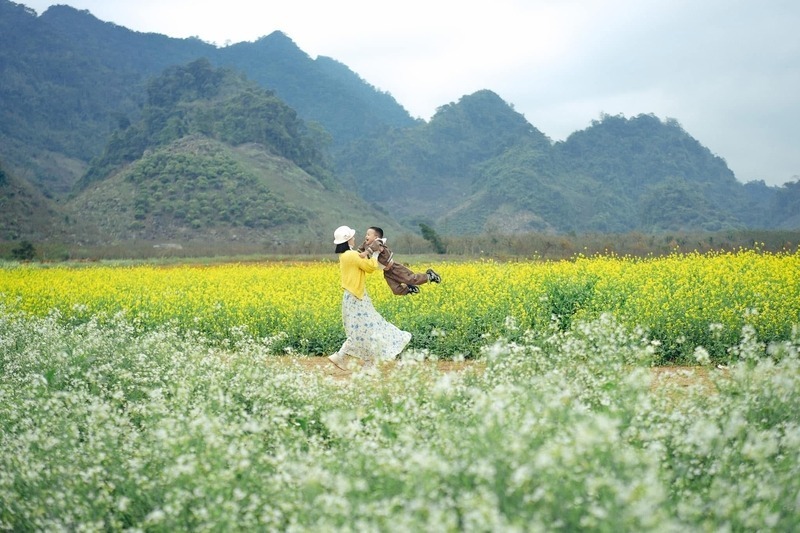
In June this year, when they took their children to go to the countryside for a summer vacation in Huu Lung commune, they decided to stay.
"When I opened my eyes in the morning, I saw mountains and fog flying. Take a long breath to feel more light. I suggested it to my husband, without hesitation, he nodded in agreement," Ms. Duyen said.
Quitting their stable job, the couple chose to work remotely, growing vegetables and raising chickens. The parents' nearly 2,000m2 of land was enough to build a small house by the stream.
After 5 months of living in the forest, Mr. Binh said that he had never seen that decision as correct as it is now: "We no longer trade our health for money. I don't have to wear a mask all day. In the morning, instead of car horns, I heard a bird, so I was lucky.
In the countryside, near relatives, the whole family occasionally goes to the market, going to " supermarket to get money". The children are excited, and the grandparents are also happy to be close to them".
In contrast to that peace, the family of Mr. Nguyen Hoang Lam (34 years old, from Tuyen Quang) is still struggling to stay in Hanoi and return to his hometown.
They currently live in a 55m2 apartment in Nam Tu Liem district. The combined income is more than 30 million VND/month, enough to maintain a life but always in a state of "the same as a rope", especially when Hanoi has continuously experienced many days of pollution at a dangerous level.
"Every morning when I look at the balcony and see the sky is white, I just want to let my child stay home from school. But I can't take a long break. The house is 3km from the school and every day when it comes to the nose, the backpacks of children are covered in dust," said Ms. Tran Quynh, Mr. Lam's wife.
They have calculated to try for a few years in the capital to accumulate and then calculated. But housework, parking, preschool tuition, medical expenses for every time a child has respiratory infection... all come together as invisible pressure.
Tuyen Quang village is more than 150km from Hanoi, with fresh air and spacious land. Both sides are in favor of returning, and Mr. Lam's parents are even willing to give him land to build a house. But the biggest concern is still work.
"My husband has just become accustomed to the corporate environment, while I work as a communications artist for a business. If they return to their hometown, they may have to reduce their income or change jobs. The couple is still very hesitant, Ms. Quynh sighed.
During the days when AQI in Hanoi was covered in red and purple, concerns about health arose. At times, they planned to let their children return to their hometown to live with their grandparents for a while, but they were worried about studying and the distance from their children.
After the September 2 holiday, taking her child back to her hometown for 5 days, she almost did not cough and slept better. After returning to Hanoi for a week, the child was weak again.
The couple started to learn about the model of working remotely, opening a small store in the countryside, or looking for a job in the old district center.
"We may not go yet, but we will go," Mr. Lam affirmed.
According to the monitoring system of the Department of Environment, at 7:00 a.m. on December 8, at the Hanoi University of Science and Technology gate measuring station, the AQI was at 172. By 8:00 a.m., AQI increased to 175 - a bad level, starting to affect the health of normal people, while sensitive groups may have more serious problems.


