
Every Saturday, reality TV shows with music confrontation formats air simultaneously, with episodes with a duration of up to 4-5 hours.
After each show is broadcast, social networks almost always repeat a familiar scenario: viewers argue because a performance is highly appreciated in the studio but does not create an effect when it airs, or vice versa, a performance that makes television viewers explode with emotions but the live voting results are quite modest.
That is not necessarily a sign of an "unfair" result, but reflects the paradox of reality television: the competition is decided by the emotions of a group of audiences at the scene, while the value of the performance is evaluated by millions of viewers through the screen.
Two different reference systems almost cannot create the same answer.
With "Anh Trai Vuot Ngan Chong Gai" or "Tinh Ha Say Hi" causing a fever recently, the most noticed performances after each performance night often receive unlucky results.
2 performances "Xa" (2.8 million views) and "Let me go" (1.9 million views) are having the best performances, being most interested by the audience after the performance of "Anh trai vượt ngàn chông gai" (Older Brothers Overcoming Thousands of Hardships). However, both performances lost, falling into the dangerous group.
In Tinh Ha Say Hi, the song "Mua vội phóng" by Wren Evans' team was rated as new and impressive but only ranked 4th, while the higher-ranked performances were considered safe but still ranked high due to having a cast of singers with a large fan base.
Previously, "Hello Brother", "Em xinh say hi", "Sisters Who Make Waves" with similar voting rules also received many mixed opinions each time they were released.
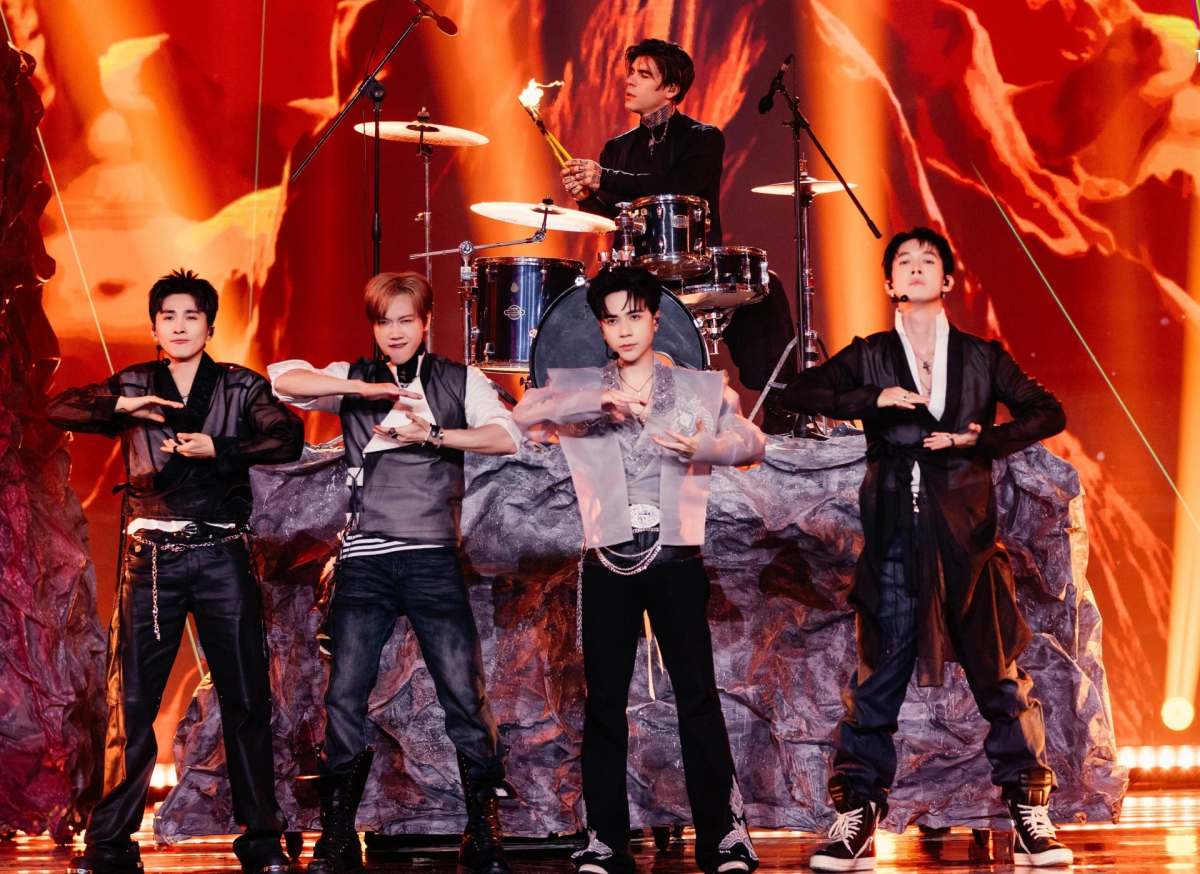
In fact, this is not a private story of programs in Vietnam. From American Idol, The X Factor, Produce 101 to many music shows in Korea, England or the US, the voting results are always the source of prolonged debates.
In fact, studio audiences and television audiences are enjoying "products" in 2 completely different spaces.
At the scene, viewers were strongly affected by physical sounds, cheers of hundreds of people, lighting effects, the stage and the collective atmosphere.
A climactic segment or explosive dance break can make the whole auditorium stand up and cheer and promote voting emotions almost immediately.
Meanwhile, television viewers receive a post-processed version. Close-up angles, scenes, are meticulously crafted, and sound has been carefully processed to help viewers easily feel expressions, storytelling, and more subtle artistic details.
Therefore, there are performances that do not create "seismic shock" at the studio, but after being broadcast, they receive overwhelming shares on social networks.
Another factor that makes voting results often controversial is that the nature of voting is more emotional than professional grading.
Studio audiences do not have criteria for vocal technique, choreography or stage structure.
Their votes are influenced by many non-professional factors: level of interest in artists, personal stories, stage appeal, even performance order.
A study on EPJ Data Science shows that with reality shows like American Idol, the winner is sometimes the person who activates the voting action of a group of viewers, not necessarily the person who creates the most appreciated performance.
However, that division is also part of the "success formula" of reality television.
Debates after each qualifying round help the performances continue to spread on social networks, prolong the media heat and keep viewers coming back in the next episode.
Reality TV has long been no longer simply a professional competition, but a combination of performing arts, the ability to connect the public and the strength of the fan community.
When accepting that rule of the game, it is also necessary to accept that there will always be a gap between "best performance" and "best voted performance".


