
The opening day only had a small cake
In the atmosphere of the whole country joyfully entering the new school year, the Tan Thoi Hiep ward general education class managed by Mr. Huynh Quang Khai still takes place as usual. For nearly 19 years, this place has never held a proper opening ceremony.
According to Mr. Khai, the class is small in scale, students are of many ages and levels. They also regularly enter and exit the class, there is no fixed enrollment time, while the program of the previous school year is sometimes not yet completed. Therefore, organizing the opening ceremony like regular schools is almost impossible to implement.
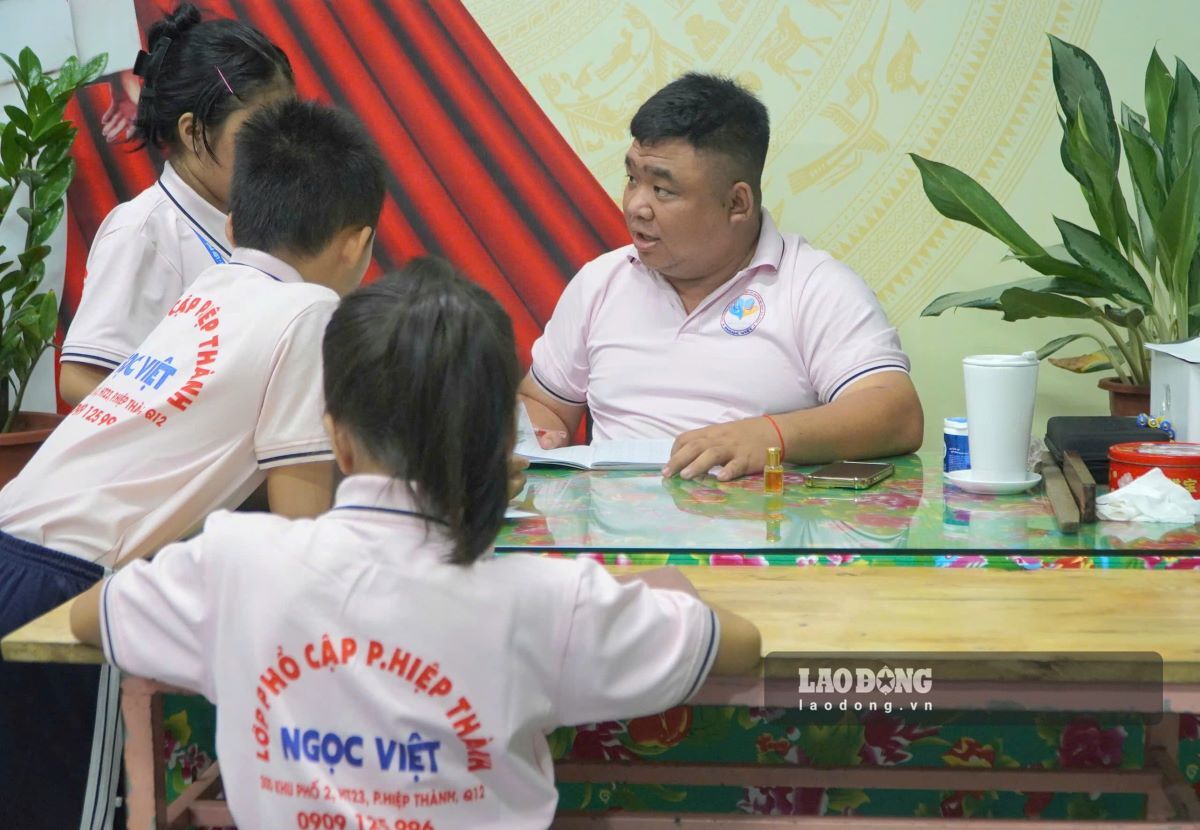
Even so, for Mr. Khai, the opening day still has special meaning, like "the first day of the new year for students". Every occasion, he often buys a small cake to share the joy with teachers and students. After that, the students sit down at the table again, continuing their familiar class.
“The students are not sad because the class has not organized the opening ceremony before. Just having a small cake, hearing a New Year's greeting letter and then studying together makes them happy,” Mr. Khai shared.
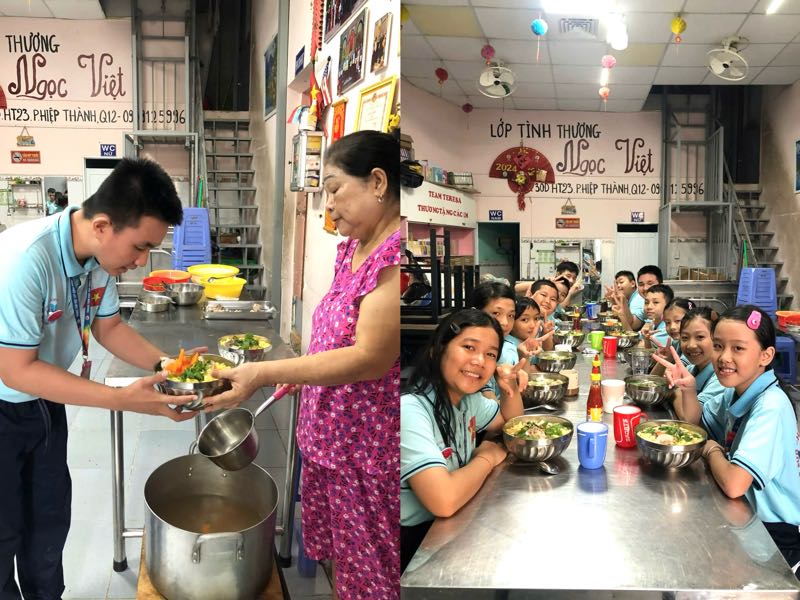
Currently, the class has 26 students, the youngest is 8 years old, the oldest is 16 years old. They study together from 4:30 PM to 8:30 PM daily. Most students are in difficult circumstances, some children have lost their parents or relatives, about 6-7 children are slow to develop or have neurological problems.
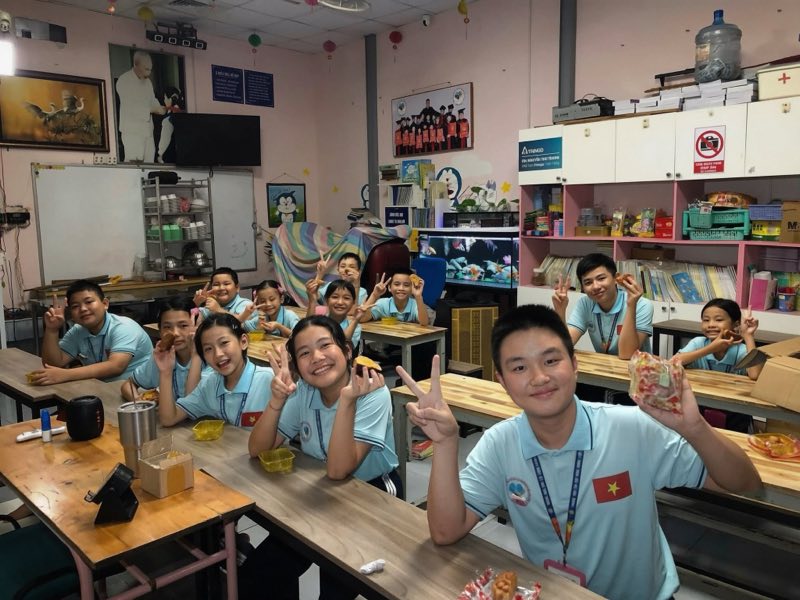
Because students are of different ages and ability to absorb, the teaching content is adjusted according to each student, mainly focusing on Math, Vietnamese and occasionally adding English.
For new students, Mr. Khai is not in a hurry to teach literacy. In the early stages, they are guided on how to behave, cultivate discipline and demeanor. According to him, knowledge is very important, but children need to learn how to live, know how to respect everyone and be responsible for themselves before entering life.
Many people can teach literacy, but not everyone can teach how to be human. When children have discipline, know how to behave and have more knowledge, they will have the opportunity to become good people," Mr. Khai said.
Keep the children with the letters
The biggest difficulty for the class is not only funding, textbooks or teaching many levels, but also how to persuade parents to let their children continue to go to school.
According to Mr. Khai, many families only want their children to know how to read and write. When children are about 12-15 years old, parents often want their children to drop out of school to work and help with the economy.
He called it a "circle" that tormented him. Parents used to drop out of school early to make a living, and when they had children, that choice continued to be repeated.
In the class, there is currently a female student about 14-15 years old. Her mother has repeatedly wanted her child to drop out of school to work, while the father tried to ask for her to continue going to class. Knowing that she might have to say goodbye to books, every time she hears about dropping out of school, she sits and cries.
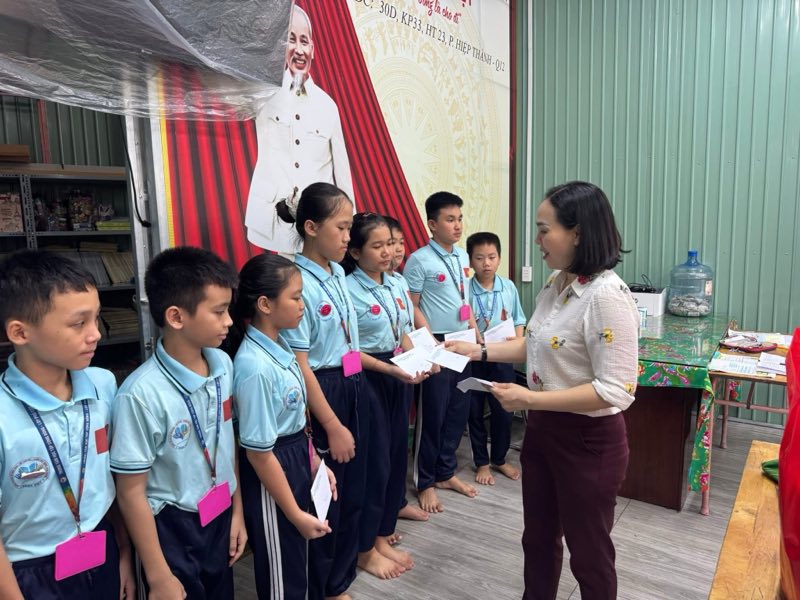
After the age of 15, the number of students who can continue to study is very small. Some students want to study but cannot decide their own future," Mr. Khai worried.
In this school year, Mr. Khai plans to receive more children with developmental disabilities and neurological problems in difficult circumstances. Teaching them is much more difficult, requiring teachers to persistently learn about their interests, strengths and things that make children feel safe.
Some children, when they first come, almost do not communicate, and even have behaviors that hurt themselves. Mr. Khai started by observing, chatting, and approaching things that children love such as dogs, cats, or pets.
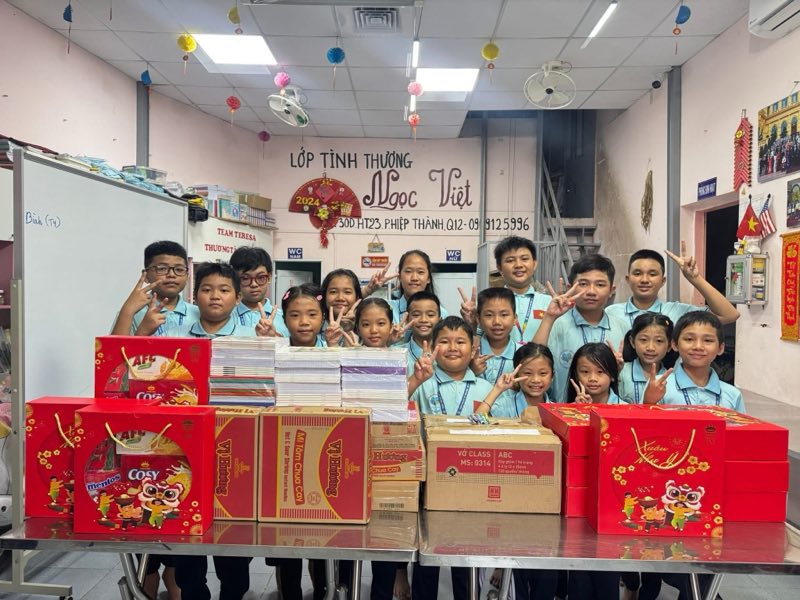
Each child has one strength and one weakness. When I understand them, I believe I can teach them. Just give me time," he said.
On September 26th, the class will enter its 19th year. When asked what helped him be so persistent, Mr. Khai admitted that he had not found a complete answer. On the first day of opening the class, he only felt sorry for the disadvantaged children around the neighborhood. As a fatherless person, he saw a part of his childhood of hardship in the circumstances of the children.
From initial empathy, the class became a place he has been attached to for nearly two decades. There was no school opening bell, but every page of books opened, every child still sitting with letters, was already a hopeful start.


