
The indispensable role of "resistance" in schools
School staff – including accountants, clerical staff, libraries, equipment, school health, security, contract staff 68... have just sent petitions to the Ministry of Education and Training, the Ministry of Home Affairs and functional agencies on considering raising the preferential allowance level by profession to 30%, instead of the current proposal of 20%.
According to school staff, the 20% allowance level is not commensurate with their role, workload and actual difficulties they are facing, especially in the context of escalating prices and increasing job requirements.
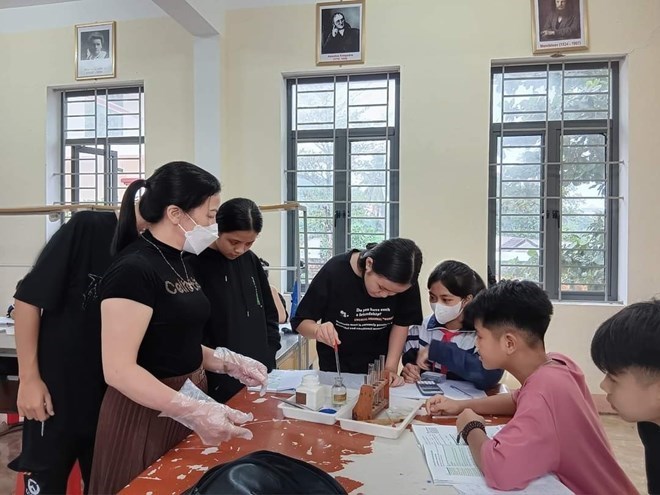
Although not directly teaching, school staff are the force playing a fundamental role in maintaining the stable, safe and effective operation of the school. From financial management - budget, administrative records, teaching equipment, school health to ensuring security, order and school hygiene, all operational stages are closely linked to this team.
Reality shows that if there is a shortage of accounting staff, spending, procurement, and budget finalization activities are stalled; the shortage of clerical staff, records, and school data cannot operate smoothly; the shortage of medical staff, health care, and disease prevention work in schools are threatened. These are positions that directly contribute to the quality of teaching and learning, even if they are not present on the podium.
Low income, many years without promotion
According to the reflection in the petition, the work of school staff requires accuracy, timeliness and very high responsibility. Accountant staff must manage all finances and budgets, and be responsible before the law if errors occur. clerical staff and equipment staff must process large volumes of dossiers, documents, and digital data in the context of digital transformation and smart schools. Medical staff both take care of students' and teachers' health, and participate in disease prevention and control, and handle emergency situations.
Many positions also have to work overtime, on duty 24/24 like school security guards, but the current remuneration regime does not accurately reflect the level of pressure and occupational risks.
One of the major inadequacies raised is that most school staff are receiving intermediate and college salaries, because they have not been considered for promotion to professional titles for many years. Meanwhile, they have never received professional preferential allowances like teachers, or have only been proposed a level of 20% in the early stages.
According to statistics from the petition team, the whole country currently has tens of thousands of school staff in accounting, medical, library, and equipment positions... with low salary coefficients, unstable incomes, and difficulty ensuring life under increasing pressure from living expenses.
The 20% level is not enough to compensate for actual difficulties
According to the Draft Decree stipulating the preferential allowance regime for civil servants and employees working in public educational institutions (the Ministry of Education and Training is submitting to the Ministry of Justice for appraisal), it is proposed that the preferential allowance level be 20% from 2026 to the end of 2030 for school staff.
However, according to the school staff, this level is not enough to compensate for the difficulties in living conditions, especially in mountainous, remote and isolated areas.
While teachers are entitled to many types of allowances depending on region, seniority, and professional characteristics, school staff are only entitled to a common allowance level, which does not accurately reflect the difference in working conditions and hardship levels.
Proposal to apply 30% from 2026
From the above reasons, the school staff proposed to immediately apply the 30% allowance from January 1, 2026, and at the same time have a roadmap to gradually increase it by region in the following years. According to them, the 30% level is the minimum to ensure fairness, encourage morale and keep the staff permanently attached to the Education sector.
The adjustment of allowances not only has the meaning of improving income, but is also a worthy recognition of the silent contributions of the school staff.


