
Prioritize experience, enhance life skills
Every summer, instead of letting their children spend too much time on phones or extra classes, many parents choose experiential summer camp courses as a way for their children to have more life skills and opportunities to explore reality.
Ms. Nguyen Thi Ly - a parent of an 8th grade student in Nghia Do ward (Hanoi) said that her daughter has participated in summer camps continuously for the past 3 years. For the family, this is not simply a fun activity during the holidays but also an opportunity for her child to grow up after each trip.
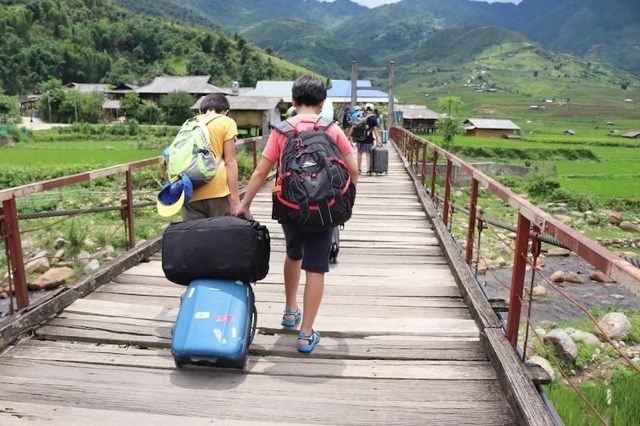
Among the programs she has participated in, the trip that her daughter remembers most is the experience journey in the highlands. Here, children are immersed in the life of local people, picking vegetables to prepare dinner themselves, learning how to make dried bamboo shoots, weave bamboo baskets or dye fabric with indigo bark. In addition, children also explore nature, cook by the waterfall and participate in sports activities with children in the highlands.
According to Ms. Ly, what makes her most satisfied after each summer camp is not how many places her child goes, but the change in her child's thinking and personality. "After each trip, her child becomes more confident, more proactive in daily activities and knows how to share with everyone around. There are things that her child used to be very reluctant to do, now she can do it herself" - the parent shared.
The summer camp course lasts 7 days with a cost of about 10 million VND. Ms. Ly believes that this is a worthy investment because her child not only has fun but also learns many practical skills that are difficult to find in books.
Currently, along with the diversity of summer camp models, many parents also prioritize choosing programs that focus on experiences, life skills and exploring nature instead of just focusing on learning knowledge. For many families, summer is not only a time for rest but also an opportunity for children to have more experiences and learn how to grow up after each journey.
Avoid creating pressure or overload for children during the summer.
As someone with experience in designing some summer camps for students, psychologist Nguyen Manh Cuong - NHC Vietnam Center for Human Development and Psychology - said that summer camp programs today are having a clear change compared to about 5-7 years ago. If previously, most summer courses focused on learning more knowledge, reviewing for exams or learning foreign languages, now, many parents have paid more attention to developing skills and life experiences for children.
Many programs are designed in the direction of training soft skills such as communication, teamwork, emotional management or leadership skills. In addition, nature experience activities, field exploration, returning to the countryside or participating in challenges such as mountain climbing are also increasingly popular.
According to Mr. Cuong, this is a positive trend in the context of modern life when parents not only want their children to study well but also want children to understand themselves, know what they want and be more responsible for life.

Psychologist Nguyen Manh Cuong also noted that parents need to avoid turning summer into a "third semester" with a dense schedule of classes and experiential activities. Children, especially at the primary and secondary school age, really need time to rest, play freely to regenerate energy and develop naturally.
He believes that parents should not arrange too many organized activities in one summer. Each program needs to have an appropriate break for children to recover, avoiding just finishing this activity and continuing to participate in another program, causing children to be pressured and overloaded.
In addition, experts also remind parents not to let expenses become a psychological burden for their children with reminders such as "parents work hard to earn money for their children to experience". This can easily make children lose comfort and joy when participating.
In particular, if children show signs such as irritability, loss of interest in participating, and frequently complaining of headaches and abdominal pain of unknown cause, parents need to listen and review the schedule instead of continuing to force their children to participate in summer activities.


