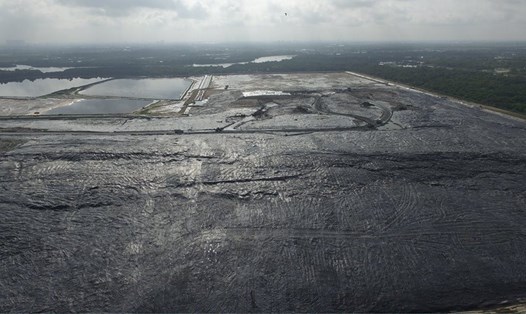
Overload burial, burning garbage for electricity still... waiting
Recently, Ho Chi Minh City has issued a document requesting the Ministry of Agriculture and Environment to support Vietnam Waste Solutions Co., Ltd. (VWS - the investor of Da Phuoc landfill) to complete procedures to increase the receiving capacity of this landfill from 24 million tons to 41 million tons, nearly double the initial designed capacity.
After merging with Binh Duong and Ba Ria - Vung Tau, the total amount of domestic solid waste generated in Ho Chi Minh City is currently about 14,000 tons/day. Of which, the Ho Chi Minh City area previously generated about 10,500 tons/day, the Binh Duong area about 2,400 tons/day and Ba Ria - Vung Tau about 1,100 tons/day.
Specifically in the Ho Chi Minh City area before, domestic waste was being coordinated to two centralized treatment areas including the Northwest Solid Waste Treatment Complex (Thai My and Tan An Hoi communes) and the Da Phuoc Solid Waste Treatment Complex (Hung Long commune).
However, most of the current waste is still treated by landfilling, posing a risk of environmental pollution due to the generation of leachate, emissions and prolonged odors.
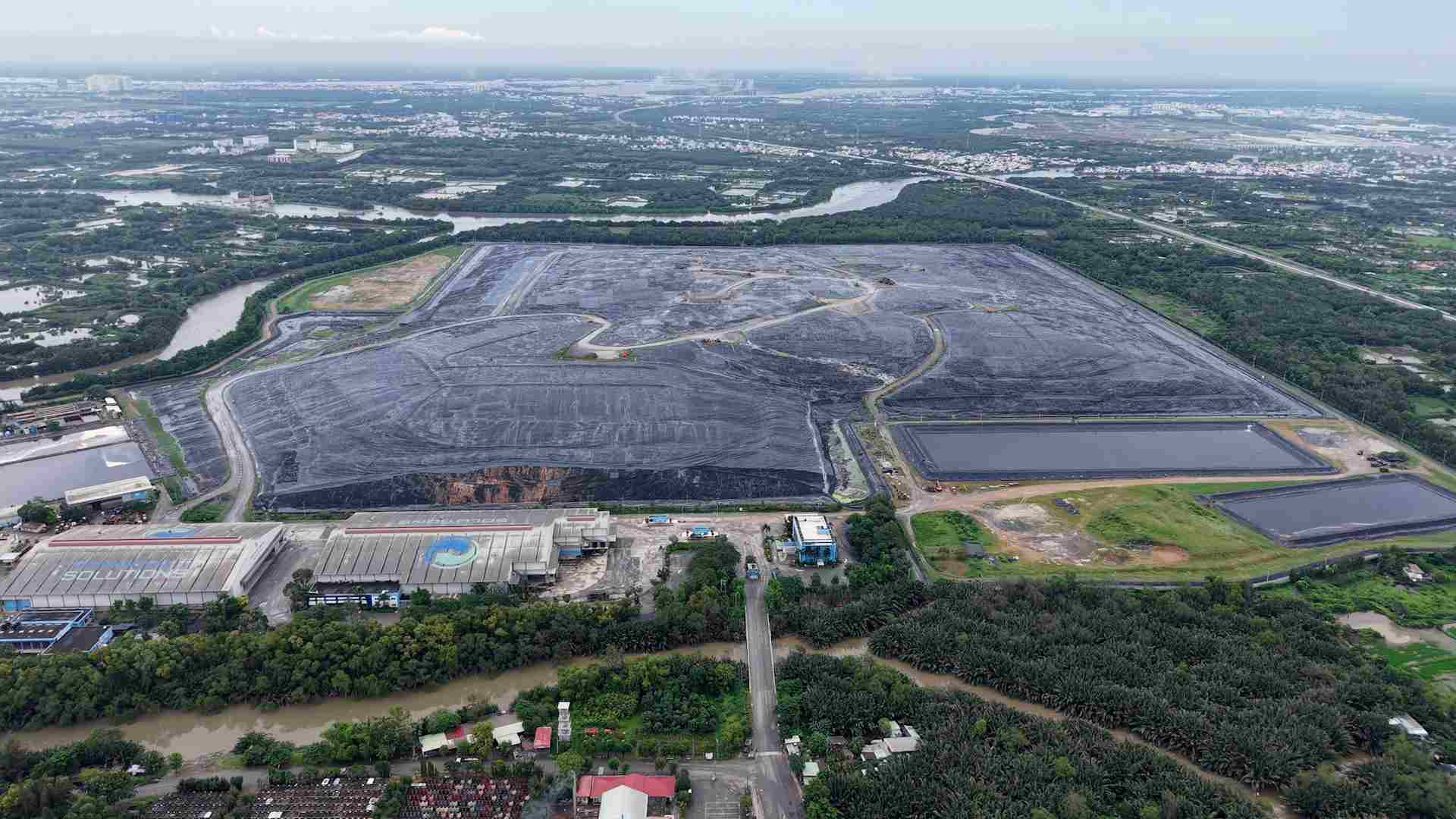
In which, Da Phuoc landfill currently receives about 4,000 tons of garbage/day, equivalent to about 40% of the total amount of garbage in the Ho Chi Minh City area before. In fact, this landfill has received about 31.5 million tons of waste, far exceeding the designed 24 million tons.
This landfill has been repeatedly complained about by people in South Saigon area for causing odors and affecting daily life, forcing the authorities to request remediation.
Previously, leaders of the Ho Chi Minh City environmental sector said that Da Phuoc landfill was expected to be full capacity and closed from 2024. However, so far, instead of closing, the city has considered expanding the reception capacity because there is no large enough replacement solution.
Ho Chi Minh City once set a target to reduce 80% of landfill waste by 2025, switching to waste burning technology for electricity generation to reduce environmental pollution and utilize energy from waste. However, this plan has not yet been achieved.
Two projects, Tam Sinh Nghia Waste Incineration and Power Generation Plant and VietStar Waste Incineration and Power Generation Plant - each plant with a treatment capacity of about 2,000 tons/day - are continuously behind schedule. This makes Ho Chi Minh City continue to depend heavily on Da Phuoc landfill to avoid overloading the treatment system.
Should not continue to expand burial at Da Phuoc
The excessive dependence on Da Phuoc landfill also makes Ho Chi Minh City's waste treatment system fragile. Just an incident at this treatment area, the entire waste collection and transportation operation in the city is at risk of being affected in a chain reaction.
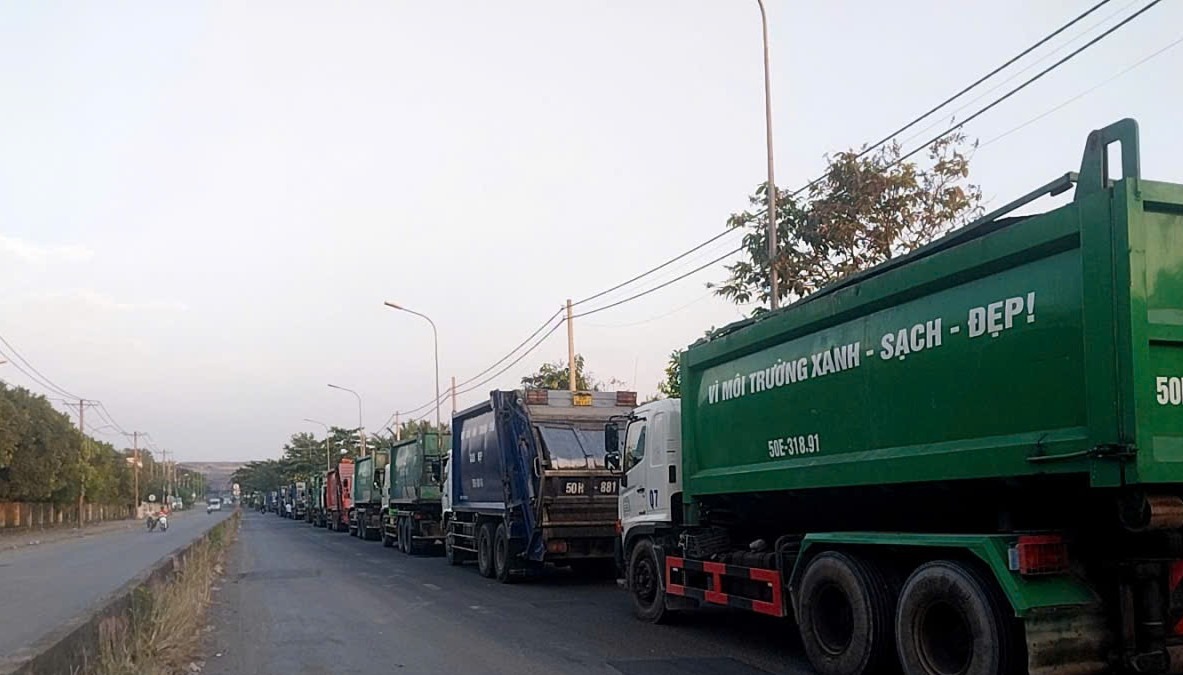
The night of January 23, 2025 is a typical example when Da Phuoc landfill stopped receiving garbage because workers stopped working collectively because they had not been paid salaries and Tet bonuses. Hundreds of garbage trucks were congested for more than 1.5 km from National Highway 50 to the treatment area. Functional forces had to urgently coordinate, divert traffic, and transfer a part of the garbage to another treatment area to avoid backlog.
Or from December 1, 2025, Da Phuoc only receiving garbage from 6 pm to 6 am the next morning, instead of operating all day, also makes the city face the risk of widespread garbage congestion. To reduce pressure, Ho Chi Minh City is forced to coordinate a part of garbage from central wards to the Northwest Waste Treatment Zone.
Talking to Lao Dong Newspaper, Dr. Tran Quang Thang - Director of the Institute of Economics and Management of Ho Chi Minh City - said that the city cannot continue to expand landfilling in Da Phuoc when this landfill has exceeded the designed capacity and caused prolonged pollution to the Southern region. Increasing landfilling capacity goes against the goal of green urban development.
According to Mr. Thang, to thoroughly solve the overload and pollution situation in Da Phuoc, Ho Chi Minh City needs to stop expanding landfills, accelerate waste electricity, implement waste sorting at source and gradually relocate landfills out of urban areas.
This is the only way for Ho Chi Minh City to achieve the goal of a green - clean - modern city" - Mr. Thang assessed.