
Although entering the peak period at the end of the year, the traffic situation on many key routes and intersections of the Capital is recorded to be more smooth than in previous years. This result comes from the synchronous implementation of traffic organization solutions, infrastructure renovation and promoting the application of technology in management and operation.
In the days leading up to Tet, people's travel and cargo transportation demand is increasing. However, unlike the prolonged congestion often seen at the end of the year, traffic in the inner city of Hanoi this year is not too stressful, and many roads maintain a stable traffic state.
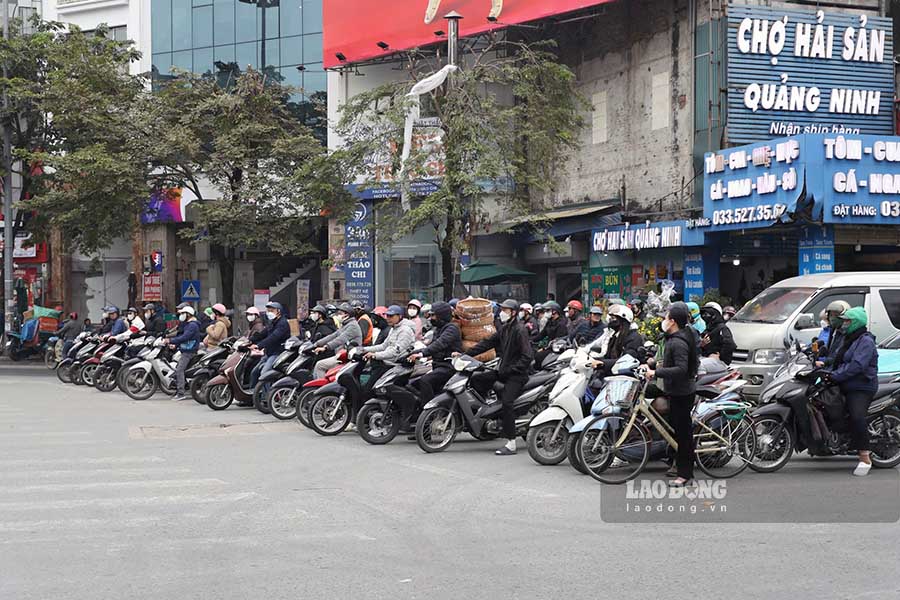
Reporters' records on January 22nd and 23rd, 2026 at some intersections that were once considered "black spots" of congestion such as the Le Van Luong - Hoang Minh Giam - Nguyen Tuan area... show that the congestion situation has clearly decreased. During peak hours, vehicles only need a signal light to get through the intersection, instead of having to wait for many cycles as before.
Mr. Nguyen Thanh Tung (resident in Thanh Xuan district) said that before, each time passing through this area usually took 3-5 minutes, even up to 15 minutes during rush hour. “Now it only takes about 1-3 minutes to get through the traffic lights. The road is more clear, less scenes of jostling or motorbikes climbing onto the sidewalk as before,” Mr. Tung shared.
According to people's assessment, one of the reasons helping traffic improve is the limitation of large trucks and passenger cars operating in the inner city area according to time frames. Along with that, the traffic light system is adjusted more reasonably, reducing conflicts between vehicle lines.
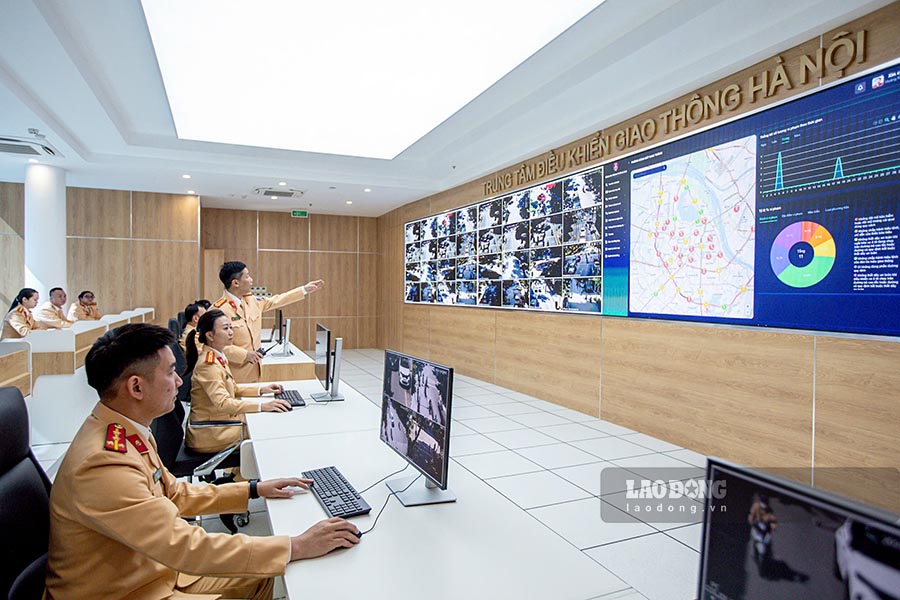
Information from Hanoi City Police said that, through review, there are currently 51 points in the area that frequently experience congestion, mainly concentrated in the inner city area. Among these, 16 congestion points originate from barriers serving the construction of works and projects; 35 points due to traffic volume exceeding the capacity of existing traffic infrastructure.
To reduce traffic pressure, functional forces have implemented a series of solutions such as adjusting and maintaining the paint line system, installing and adjusting no-turn and no-turn signs; limiting vehicles according to time frames at many intersections. At the same time, relevant units organized to narrow down and remove construction barriers, and revoke parking spots that obstruct traffic.
Notably, the emergency plan to reorganize traffic in the southern gateway area of the Capital has brought clear efficiency. The Traffic Police force has proactively reviewed and proposed solutions to handle "blockages" at key intersections, including expanding some branch roads, directly connecting with the expressway to reduce pressure on the main axes.
Representatives of the Hanoi Department of Construction said that out of a total of 12 intersections and roads invested and adjusted in the past time, 9 projects have been completed and promoted efficiency. Through actual inspection and assessment, the initial solutions meet the goal of reducing traffic conflicts, increasing traffic capacity and ensuring safety for people and vehicles.
Traffic experts also highly appreciate Hanoi's efforts in traffic organization, especially the application of technology. The traffic light system is controlled by artificial intelligence, allowing for adjusting the light cycle in real time, contributing to reducing congestion at many important intersections.
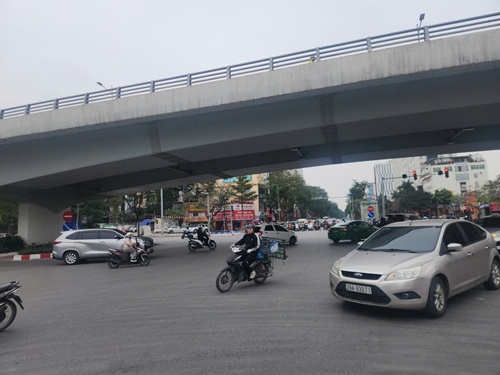
According to Dr. Phan Le Binh - traffic expert, Head of OGC Japan Office in Vietnam, Hanoi has implemented many effective traffic organization solutions, especially expanding intersections, narrowing the scope of construction sites and promoting technology application, thereby helping traffic operate more smoothly.
Dr. Phan Le Binh also highly appreciated Hanoi City's putting into operation an AI-controlled traffic light system, allowing for adjusting the light cycle in real time, contributing to reducing congestion at intersections. This is considered a very effective solution in the current urban traffic conditions.
However, experts also believe that to ensure long-term efficiency, Hanoi needs to continue to improve the public transport system, especially large-capacity transport routes. In the context of the number of personal vehicles continuing to increase rapidly, the development of public transport is considered a fundamental solution to reduce congestion, towards sustainable transportation for the Capital.
Reality before Tet shows that positive changes in traffic organization and management are bringing clear efficiency. However, to maintain smooth and stable flow, synchronous coordination between functional agencies and compliance awareness of traffic participants is very necessary.


