
According to the National Center for Hydro-Meteorological Forecasting, currently (January 23), cold air has affected most places in the Northwest and Central Central regions.
Lowest temperature in Mau Son 1 degree C
The Northern, North Central and Central Central regions have scattered rain; temperatures have decreased from 2 - 5 degrees Celsius. The Northern and Thanh Hoa regions have experienced widespread severe cold and harmful cold; especially Lai Chau and Dien Bien are cold, with severe cold and harmful cold in some places.
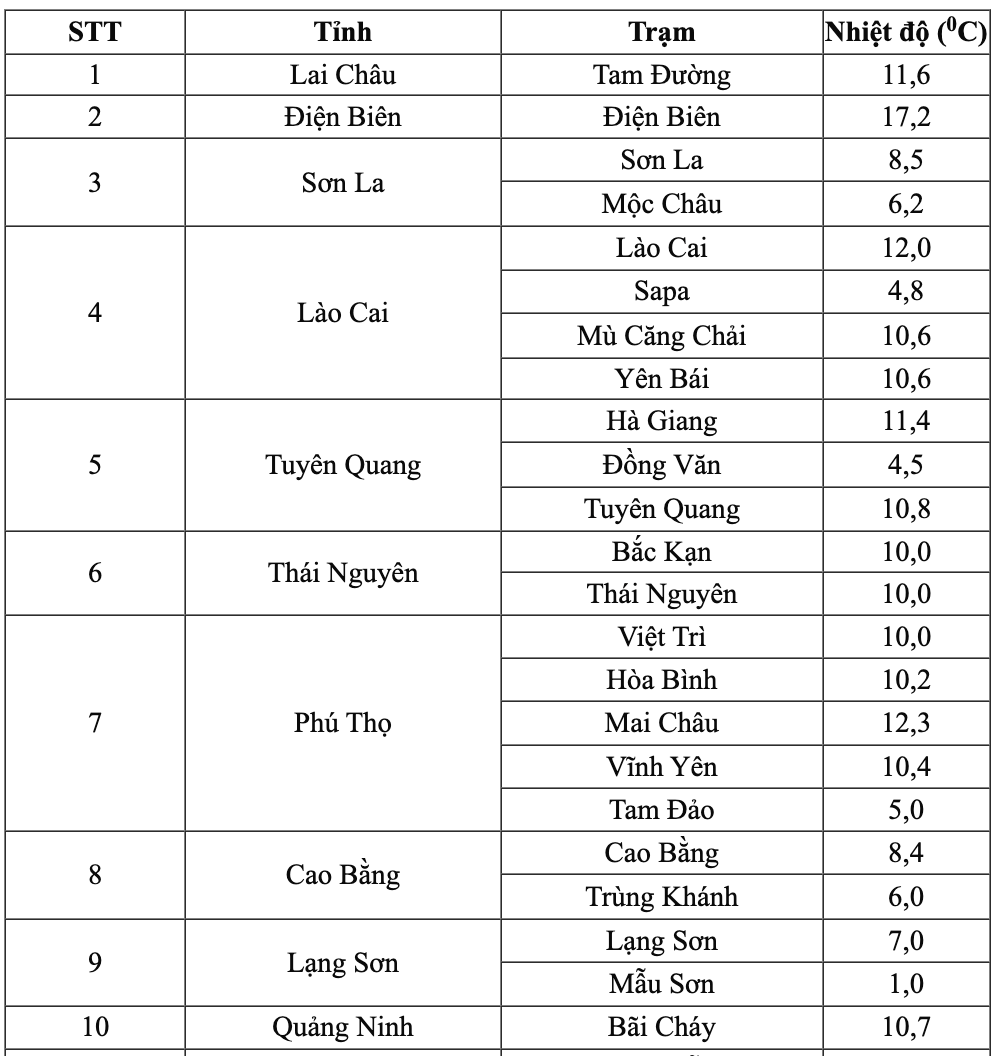
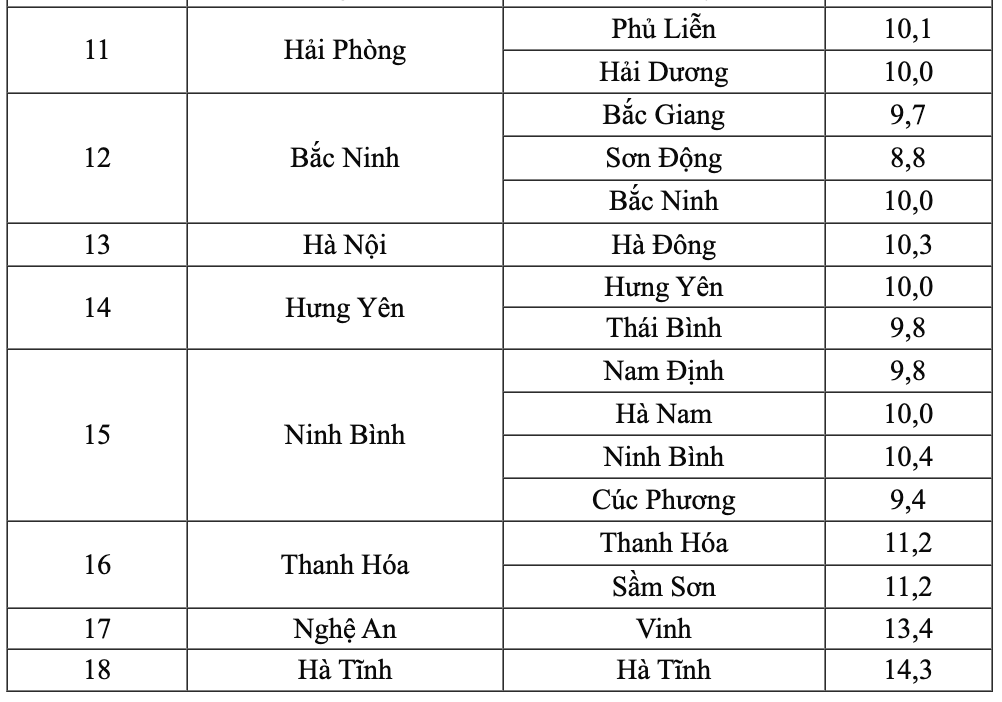
According to observation data this morning, January 23, cold air continues to cause the North and North Central regions to maintain widespread cold. Mountainous and high mountainous areas are deeply cold, Mau Son (Lang Son) dropped to 1 degree C, Sa Pa (Lao Cai) 4.8 degrees C, Dong Van (Tuyen Quang) 4.5 degrees C, Tam Dao (Phu Tho) 5 degrees C.
The Northern Midlands and Plains region is commonly 9 - 11 degrees Celsius, Ha Dong (Hanoi) 10.3 degrees Celsius, Bac Ninh and Hung Yen are also 10 degrees Celsius.
From January 25th, the temperature tends to increase
The Northern region and Thanh Hoa on January 23rd, it will be severely cold and harmful; the Northern mountainous region will be severely cold, especially Dien Bien and Lai Chau will be cold, with places experiencing severe cold. On January 24th, the Northern region will still maintain severe cold; the area from Nghe An to Hue city will be cold. High mountainous areas in the Northern provinces should be wary of frost.
On January 23rd, day and night, the Northern mountainous region has the lowest temperature of 8-11 degrees Celsius, high mountainous areas in some places below 6 degrees Celsius; especially Dien Bien and Lai Chau 11-14 degrees Celsius. The average temperature is commonly 10-12 degrees Celsius, especially Dien Bien and Lai Chau 15-17 degrees Celsius.
Central Highlands, the Northern Delta and Thanh Hoa have the lowest temperature of 10-13 degrees Celsius, the average temperature of 13-15 degrees Celsius.
The area from Nghe An to Hue City has the lowest temperature of 13-16 degrees Celsius, the average temperature of 16-18 degrees Celsius.
On the day and night of January 24, the Northern mountainous region has the lowest temperature of 9-12 degrees Celsius, the high mountainous region has places below 8 degrees Celsius; especially Dien Bien and Lai Chau 12-15 degrees Celsius.
The average temperature is commonly 11-13 degrees Celsius, especially Dien Bien and Lai Chau 16-18 degrees Celsius.
Central Highlands, the Northern Delta and Thanh Hoa have the lowest temperature of 11-14 degrees Celsius, the average temperature of 14-16 degrees Celsius.
The area from Nghe An to Hue city has the lowest temperature of 14-17 degrees Celsius, the average temperature of 17-19 degrees Celsius.
Hanoi area on January 23rd, forecast no rain, severe cold, severe cold; January 24th still maintains severe cold. The lowest temperature is commonly 11 - 13 degrees C.
The area from Ha Tinh to Da Nang city and the eastern provinces from Quang Ngai to Gia Lai will have rain, showers, locally moderate rain, heavy rain and thunderstorms during the day and night of January 23 due to the influence of cold air. In thunderstorms, there is a possibility of tornadoes, lightning, hail and strong gusts of wind.
Localized heavy rain is likely to cause flooding in low-lying areas; flash floods on small rivers and streams; landslides on slopes; heavy rain in a short time causes flooding in urban areas and industrial parks.
According to Mr. Nguyen Duc Hoa - Deputy Head of the Climate Forecasting Department, National Center for Hydro-Meteorological Forecasting, compared to the average of many years and cold years, this winter has a higher temperature.

Mr. Hoa said that it is forecast that in January and February - still in the main winter months, cold air will continue to operate weaker than the average of many years, the temperature will remain approximately average.
However, it is still necessary to be wary of strong cold air waves that may cause the lowest temperature to drop deeply in the northern mountainous provinces during this period, accompanied by the risk of frost and frost" - Mr. Hoa said.
Mr. Hoa added that it is forecast that from the second half of February to March, the North will have light rain, drizzle, and humidity with an intensity equivalent to every year.


