
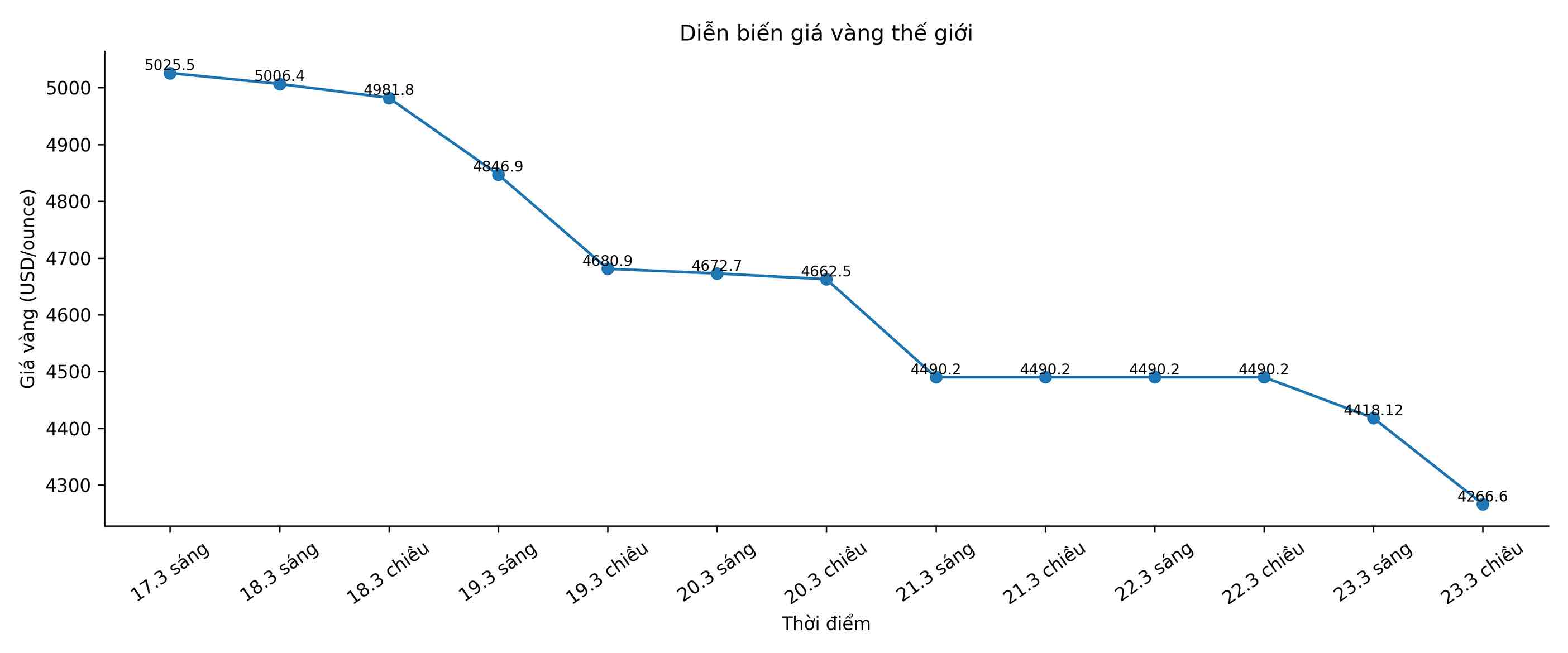
Gold prices wiped out the entire increase from the beginning of the year and continued to fall for the 9th consecutive session, amid tensions in the Middle East leading to widespread sell-offs in many financial markets. Silver prices also fell by more than 10% at times.
Spot gold prices once fell as much as 8.8%, to near the 4,200 USD/ounce mark. Since the conflict broke out in the Middle East, this precious metal has lost more than 20% of its value and just recorded its strongest weekly decline since 1983. Part of the selling pressure comes from the increased demand for cash holdings of investors during the volatile market period.
Mr. Johan Jooste – CEO of Pangaea Wealth AG said that the rapid decline in gold mainly reflects increased liquidity demand in the financial market. According to him, if tensions continue, gold prices may still face further adjustment pressure in the short term.
In addition to liquidity factors, the diễn biến of the USD and global monetary policy expectations are also significantly impacting the precious metal market. In an environment where interest rates remain high, gold - a non-rotating asset - is often under competitive pressure from other investment channels.
A similar development once appeared after Russia launched a military campaign in Ukraine in 2022. At that time, gold prices initially increased sharply but then entered a prolonged correction phase in the context of the market repositioning global monetary policy expectations.
Mr. Wayne Gordon - investment consultant at UBS Group AG's asset management department, said that the scale of the current adjustment is not unprecedented, but the rate of decrease is happening much faster than in previous periods.
Selling pressure also spread to many investment channels related to gold. The total volume of gold futures contracts opened on the Comex exchange has fallen to its lowest level since 2018, showing that speculative positions are being significantly narrowed. Meanwhile, holdings in gold-backed exchange-traded funds (gold ETFs) have also shifted to a net withdrawal of about 11 tons since the beginning of this year.
Gold prices closed last year at 4,319.37 USD/ounce before rising to a historic peak of over 5,595 USD/ounce at the end of January this year. After a period of prolonged strong increase, the market is currently entering a correction phase as investors reduce their holdings and increase cash holdings.
Last weekend, US President Donald Trump issued an ultimatum requesting Iran to reopen the Strait of Hormuz within two days, otherwise it would face attacks targeting the power system. In response, Iran announced that it would completely close this strategic shipping route if power facilities were attacked.
In the short term, gold price movements are expected to continue to depend mainly on capital flows in the international financial market and policy orientations of the US Federal Reserve (Fed), as investors closely monitor monetary management signals and portfolio restructuring activities after the recent period of strong fluctuations.


