
Of which, about 326,000 hectares, equivalent to 75% of the forest area, are in a state of poor and depleted forests. This is a challenge in improving forest quality, but also opens up great room for forest restoration, thereby increasing carbon absorption and storage capacity.
With a large natural forest area and the orientation of developing macadamia and coffee, Dien Bien is assessed to have a lot of room to develop carbon credit projects, creating more resources for forest protection and people's livelihoods.
According to experts, Dien Bien has a clear advantage in two methods of creating forest carbon credits, REDD+ and AFP.
In which, REDD+ (reducing emissions from deforestation and forest degradation) is assessed to have great potential thanks to the large area of natural forest and the province has a project framework.
This is considered a direction that can create more resources for forest protection, while gradually making carbon value a source of income from forest resources.
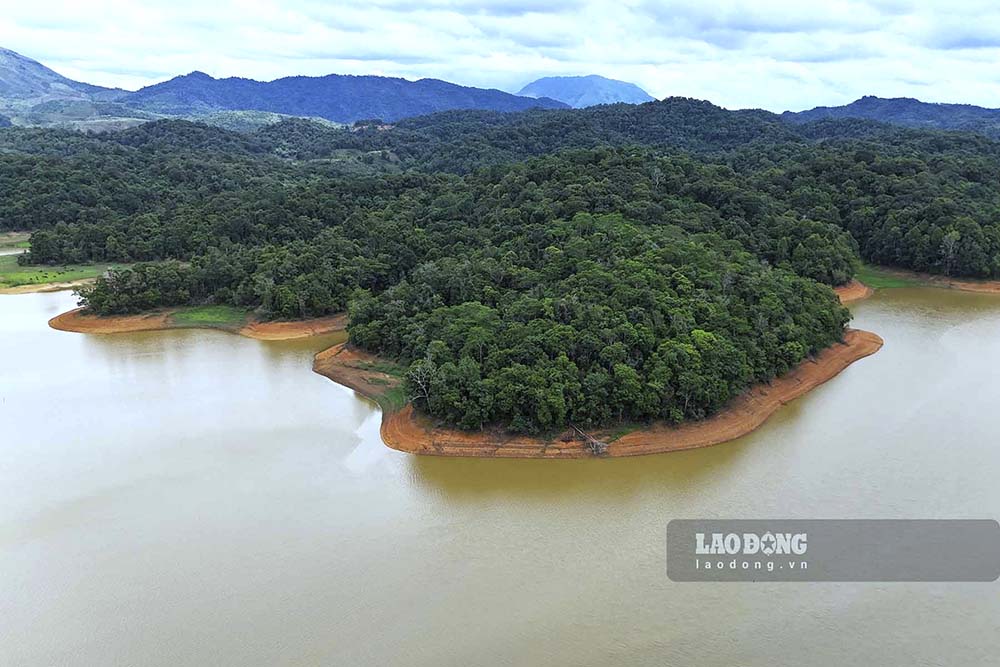
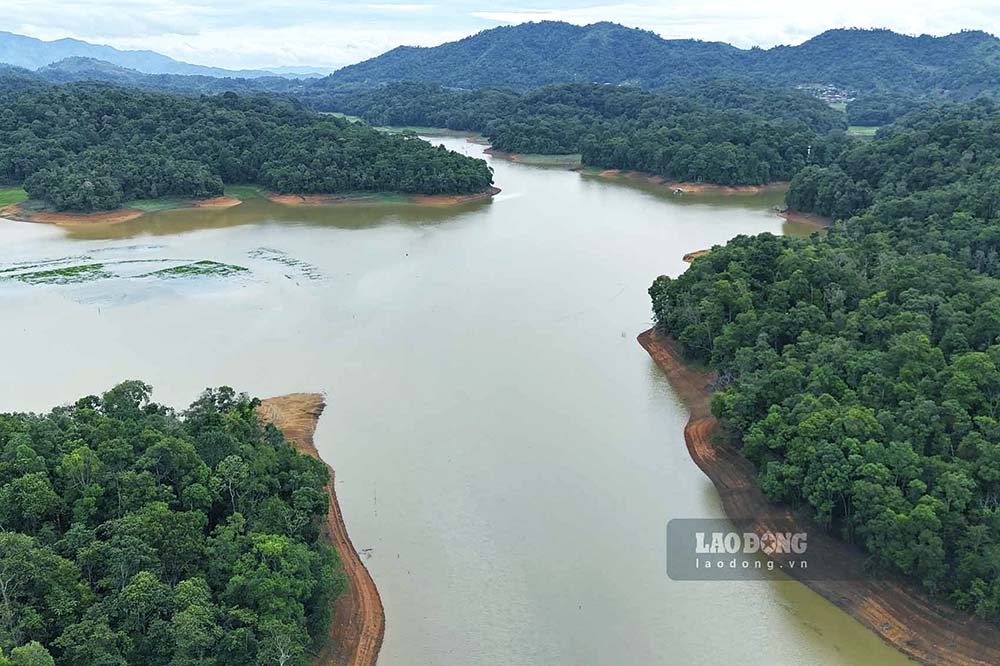
Besides REDD+, the AFP method (combined agro-forestry farming, dispersed crops) is also assessed to be suitable for the agricultural economic development conditions of Dien Bien.
In particular, the orientation to expand the area of macadamia and coffee can create space to combine agricultural production with increasing carbon absorption capacity.
However, to turn potential into specific carbon credit projects, Dien Bien still has to meet many requirements in terms of data, technology and resources.
First of all, it is necessary to build a reliable data system on the current status of forests, reserves, biomass and carbon.
Along with that is the application of remote sensing technology, geographic information systems (GIS), inventory data and monitoring of forest developments.
This is an important basis for determining the amount of carbon that can be generated, monitoring fluctuations and ensuring transparency when the project participates in the carbon market.
On August 10, in an exchange with a reporter from Lao Dong Newspaper, Mr. Le Xuan Canh - Director of the Department of Agriculture and Environment of Dien Bien province - said that in the coming time, the province will develop a project on the carbon economy.
The project will comprehensively assess the potential and ability to increase carbon absorption in the area, thereby building a carbon potential map for the entire province.
Based on the overall assessment, the province will identify and list projects with the potential to build and develop carbon credits," Mr. Canh said.
According to Mr. Canh, regarding risk management, the legal framework related to the carbon market is currently relatively clear.
Regulations on forest carbon credits, including Decree 90 and Circular 31 of the Ministry of Agriculture and Environment, have specifically stipulated contents related to inspection, control, evaluation and confirmation of carbon credits.
An issue of particular concern is financial resources and the mechanism for profit sharing when implementing projects.
Benefits from the carbon market need to be harmoniously distributed between the State, forest owners, communities, people and investors.
In particular, people - those who directly participate in forest protection and development - need to have appropriate benefits mechanisms.
This is not only a matter of income but also a motivation for the community to maintain forests, limit forest loss and improve the quality of forest resources.


