
The largest forest area in the country
On June 28, the Department of Agriculture and Environment of Gia Lai province coordinated with consulting experts and the Forest Planning Research Institute to conduct surveys and appraise the results of emission reduction in some localities and forest owners in the area.
According to the assessment of functional sectors, to effectively participate in the forest carbon credit market, Gia Lai needs to continue to standardize management, strengthen emission monitoring and transparency of data to meet international standards.
Gia Lai is one of the localities with a large forest area in the Central Highlands region. The whole province has a natural area of more than 2.15 million hectares, of which the land area with forest is nearly 988,000 hectares, including more than 692,000 hectares of natural forest and over 295,000 hectares of planted forest.
With a large forest scale, distributed on many types of terrain and ecosystems, Gia Lai has an advantage in carbon absorption and storage, an important factor for participating in the carbon credit market.
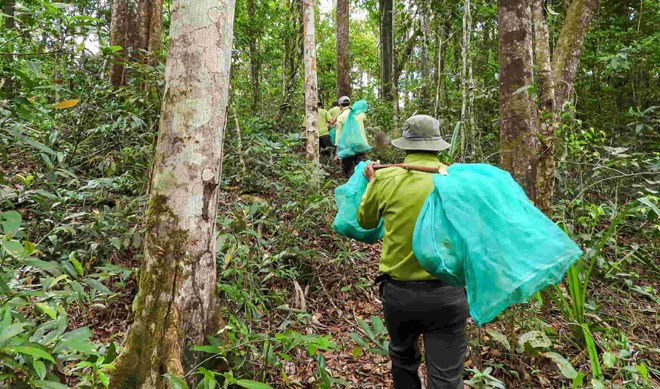
Currently, Kon Ka Kinh National Park manages and protects more than 42,000 hectares of forest, mainly natural forests with rich ecosystems and high biodiversity. This is considered one of the areas with great potential for carbon credit development.
Economic potential from carbon credits
According to the Gia Lai Provincial Forest Protection Department, with an average absorption capacity of about 5 tons of CO2/ha/year, the total forest area of the province can absorb about 4.9 million tons of CO2 per year.
If this CO2 is converted into carbon credits and traded at a reference price of about 10 USD/ton, the economic value it brings can be up to tens of millions of USD per year.
Forest protection and development associated with financial mechanisms from carbon credits not only creates additional resources for conservation but also contributes to improving the livelihoods of people living near forests through policies of contracting forest protection, supporting sustainable livelihood development and ecotourism.
According to the Forest Protection Department, Gia Lai has many potentials and advantages to develop forest economy in a sustainable direction. In the coming time, the unit will continue to coordinate in implementing policies of contracting and receiving forest protection contracts, creating stable livelihoods for people living near the forest.
In addition to developing models of growing medicinal herbs under the forest canopy and ecotourism, the value of carbon credits in the coming time is expected to open up new revenue sources, contributing to promoting socio-economic development associated with forest resource protection.


