Gold prices fell as US airstrikes in the Strait of Hormuz weakened expectations of progress in negotiations to unlock this strategic energy transport route, thereby continuing to maintain concerns about inflation in the market.
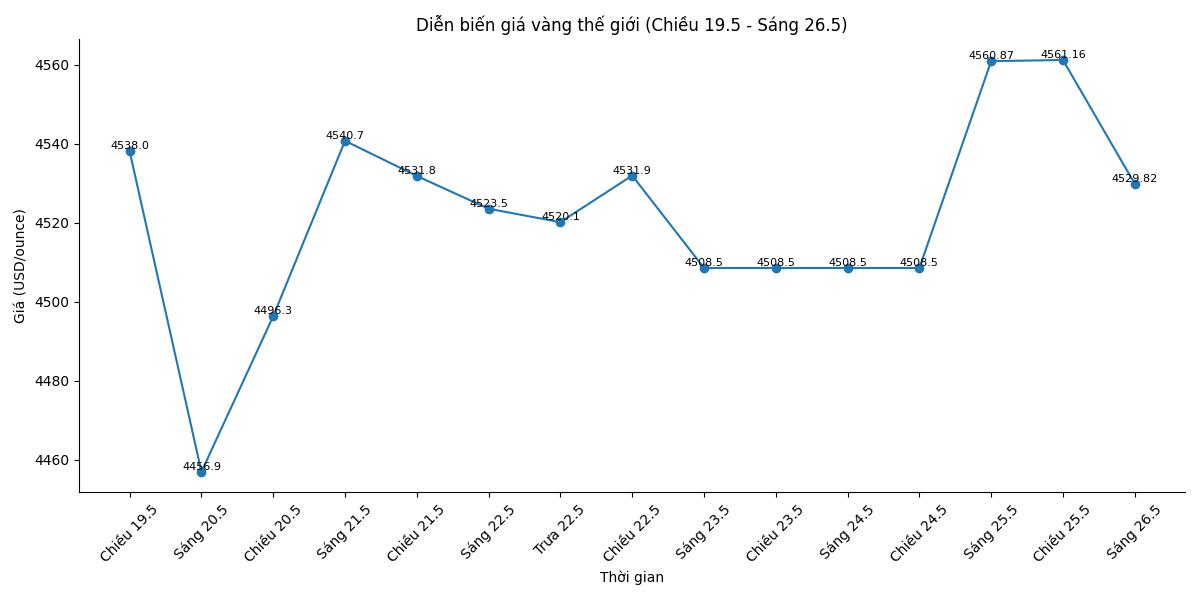
Gold prices at one point fell by 0.7%, retreating to around the 4,540 USD/ounce mark after rising in the previous session. The decline took place in the context of market concerns that new attacks could derail the peace process.
The US Central Command said US forces attacked missile launchers in Iran and ships suspected of deploying naval mines at sea. According to Captain Tim Hawkins - a spokesman for the US military, these are defensive attacks aimed at "protecting US soldiers from threats from Iranian forces".
Brent oil prices rose more than 2% after the above information as the market worried about the risk of prolonged supply disruptions due to the fact that the Strait of Hormuz continues to be blocked.
In another development, Israel announced that it would increase attacks on Hezbollah while the US and Iran are still in negotiations. Iran affirmed that ending the conflict in Lebanon must be part of any peace agreement.
New developments appeared just one day after US President Donald Trump said negotiations with Iran on a temporary agreement to extend the ceasefire and ease travel restrictions through the Strait of Hormuz are "developing quite positively".
Since the conflict broke out at the end of February, gold prices have now decreased by about 14%.
Traders have continuously increased bets on the possibility of the US Federal Reserve (Fed) raising interest rates as the war pushes energy prices up sharply and increases inflationary pressure. Higher interest rates are often disadvantageous for gold because this precious metal does not generate profits.
Mr. John Reade – Chief Strategy Officer of the World Gold Council (WGC) said that for gold to recover sustainably, the market needs to see this precious metal "escape the correlation with risky assets".
According to him, gold has more opportunities to recover at the end of the year even when the conflict ends at the present time, because the energy market needs more time to rebalance.
As of 11:36 a.m. Vietnam time, spot gold price decreased 0.91% to 4,529.82 USD/ounce. Silver prices fell 1.6% to 76.82 USD/ounce. Platinum and palladium also went down.
Meanwhile, the Bloomberg Dollar Spot Index - a measure of the strength of the USD - increased slightly after falling 0.3% in the previous session.