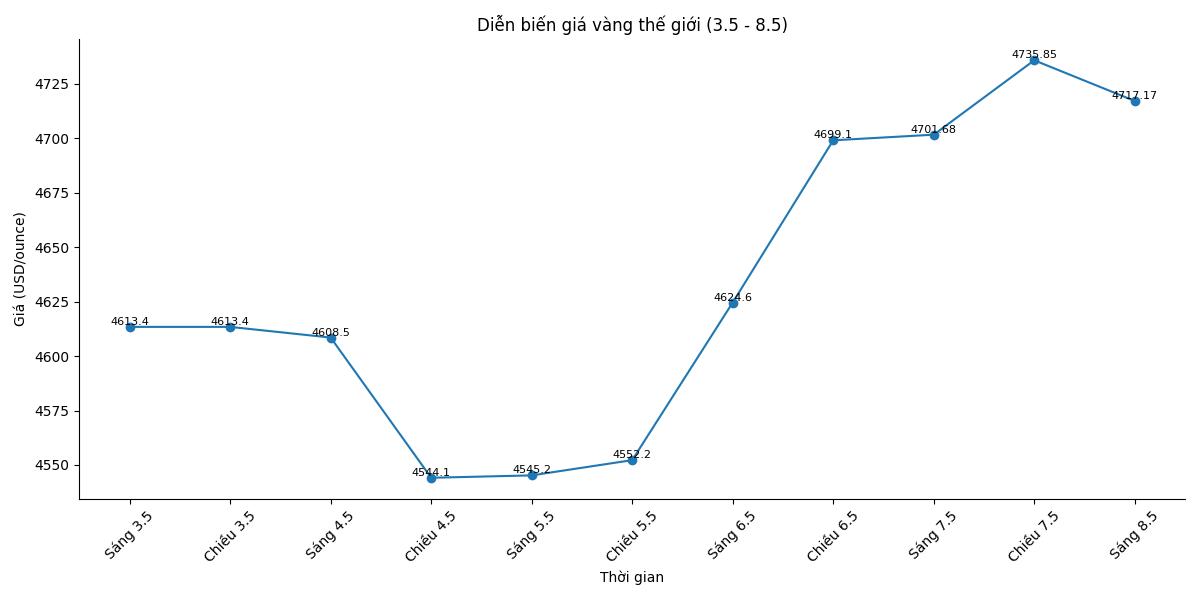
Gold prices remained stable as expectations for a reopening of the Strait of Hormuz weakened after information related to attacks targeting US naval vessels, raising concerns about inflation.
Gold traded around the 4,700 USD/ounce mark after closing the previous session with a slight decrease. The US attacked military targets in Iran after Tehran opened fire on three US naval destroyers moving through the Strait of Hormuz, a new development that has reduced expectations of a reconciliation agreement that previously supported the market.
New developments continue to increase tensions in the context of the US seeking to withdraw from the conflict that has entered its third month, while waiting for Iran to respond to the proposal to reopen the Strait of Hormuz - an important shipping route for global energy flow.
Gold prices have fallen by about 11% since the conflict broke out due to the risk of the Hormuz Strait being blocked and the energy price shock followed by concerns about high inflation, thereby increasing the possibility of interest rates remaining high for a long time. High interest rates and a strong USD often put pressure on gold because this precious metal is not profitable and is valued in greenbacks.
Investors are currently closely following the US non-farm payroll report expected to be released on Friday (May 8) to find more signals about interest rate prospects. Some Fed officials have recently also lowered the possibility of soon returning to a monetary easing cycle as the war is making economic prospects more unpredictable.
As of 9:34 am Vietnam time, spot gold prices increased by 0.72% to 4.717 USD/ounce and are heading towards an increase of 1.8% for the whole week. Silver prices increased by 0.6% to 78.93 USD/ounce, while platinum and palladium remained almost unchanged. The Bloomberg Dollar Spot Index – a measure of the strength of the USD – increased by 0.1% in the session but still decreased by 0.2% since the beginning of the week.